Activity
Mon
Wed
Fri
Sun
May
Jun
Jul
Aug
Sep
Oct
Nov
Dec
Jan
Feb
Mar
Apr
What is this?
Less
More
Owned by Danna
Stop replaying conversations in your head and start saying what you actually mean. For ambitious women ready to find their voice.
Memberships
Clief Notes
23.6k members • Free
Digital Income Society
69 members • Free
Faceless Youtube with AI
2.5k members • $5/month
Skool Reviews
44 members • Free
Business Builders Club
7.9k members • $11/month
AIpreneurs (Free)
10.3k members • Free
Austin TX Community Builders
45 members • Free
30 Day Challengers
187 members • Free
The Directory On Skool
491 members • Free
51 contributions to The Clarity Collective

Mar 23 •
Where We Last Left Things
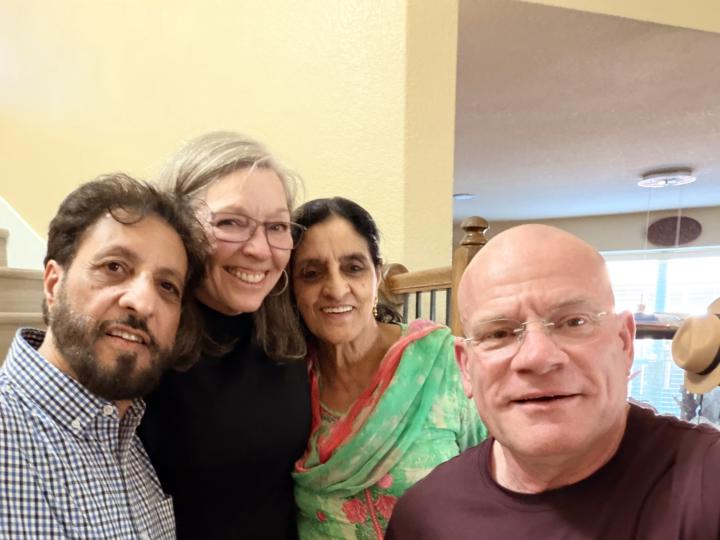
It’s been nearly fifteen years since I last sat across from my dear friend. The last time we were together, we were both in hard places, tired, stretched thin, carrying more than we could say out loud. Our conversations were heavy, honest, tear‑stained. It was a difficult moment to part, and for a long time I wondered if that was simply where the story would end. But this week, nearly fifteen years older, with more life lived and survived, we found our way back to each other. We acknowledged the hard years, yes, but more importantly, we remembered the joy. We caught each other up on the chapters we’d missed. We shared a meal. I met the older sister I had only ever known by name. He met my husband. We talked about the world, about family, about the strange and beautiful ways life keeps moving. And somehow, time felt irrelevant. We picked up exactly where we left off, as if the thread between us had never frayed. Before we parted, we made plans for the next meeting. This time in India, at his home, where we’ll celebrate our friendship again and tell the stories that have unfolded since this reunion. I know I’ll carry the anticipation with me, just as I did all those years ago. And if life allows, his sisters and my husband will be there too, and we’ll gather as we once did, older, softer, grateful. Friendship has a way of reminding us that some connections don’t disappear; they simply wait for us to return. If you’re holding a story of reconnection, of longing, of someone who remains woven into your life even across distance, I’d love to hear what’s stirring for you today.
2 likes • Mar 24
@Angela Walker Got it! Mum's the word!
0 likes • 29d
@Rhimah Ajlouni It is amazing how time just doesn't matter when it's the right person.
Mar 21 •
Book Club - CANCELLED!
Seems every one is out of pocket for today so we will plan to not meet for book club today. Enjoy your Saturday!
1 like • Mar 21
@Angela Walker No need to be sorry my friend. It's tax season and I am swamped. We are selling our house and Mike needs a hernia repair. It's just all a thing.
Mar 20 •
80-and-Go
🚿 The water heater hasn’t been getting the water very hot this week, so we’ve all been taking those quick, bracing, “character‑building” showers. Thankfully, the issue is fixed now. But the whole thing reminded me of something my grandmother used to say: “Now make sure and wash your 13 areas.” When I was a kid, I spent a lot of time on my grandparents’ farms; one in East Tennessee, one in West Tennessee. At the end of long days running wild, my grandmother would send us in to shower one at a time before dinner. There were six of us grandkids, and there was always some kind of shenanigan happening somewhere on that farm. No one wanted to miss anything, so showers were… let’s just say, not our top priority. Sometimes we’d go in the shower with dried dirt and come out with mud. Not because there wasn’t hot water, but because we were rushing to get back to whatever chaos we were sure was unfolding without us. Looking back, I’m pretty sure her “13 areas” rule was her version of an 80‑and‑go strategy. We didn’t have to be spotless. We just had to be reasonably clean. And in our little kid brains, the challenge of finding thirteen different “areas” to wash slowed us down just enough to get the job done. 🥰 It makes me smile now; how her simple, practical wisdom worked better than any lecture ever could. A gentle nudge toward “good enough,” wrapped in a bit of mystery and a whole lot of love. This got me thinking: What are the modern versions of “wash your 13 areas” that we use now. You know, those small, clever ways we help ourselves (and each other) do what needs doing without making it harder than it has to be?
1
0

Mar 18 •
Another month has almost come and gone...
I don't know about you but it's been some kind of March and I would love to hear from you if you are planning to participate in book club this Saturday. Don't worry if you haven't read the chapters. It's more important to be together and talk about what's on our minds than to have "finished an assignment". Let us know if you are planning to attend.
2 likes • Mar 18
@Betsy Moll We will miss you but would love to hear what you learn at the IRL event.
Mar 15 •
🌿 Beauty, When the Story We Tell Isn’t the Truth
Oriah, in the chapter "Beauty", writes, “Finding and acknowledging the truth is not always easy.” Later she adds, “It is easy to fool ourselves into believing the most exciting story.” Those lines stopped me for a moment, not because they were new, but because they named something I’ve watched play out in real time, in my own life and in the lives of people I love. It reminded me of something a woman, fifteen or more years my senior, once said to me: “She’s just making up a story she can believe.” You know that moment when someone names what you’ve been circling around, and your whole body says, Well of course. That’s it. I was talking about my mother, how she would tell people things about a situation without ever asking me what was true. These weren’t small misunderstandings. They were stories designed to carefully craft perspective. Stories that shaped how others saw me, and how they saw her. What I realized, though, was that her stories weren’t random. They supported what she wanted people to believe about her. Her goodness, her sacrifice, her certainty. Whether they reflected reality didn’t seem to matter. The story was doing a job for her. It was protecting something she needed to feel. And that’s the part that landed hardest: We all do this, in our own ways. We reach for the version of events that helps us feel safe, or right, or justified. We cling to the narrative that makes our choices make sense. We tell the story we can bear. But real truth asks something different of us. It asks us to pause. To look again. To notice where our stories are stitched together with longing, fear, or old wounds. And to ask, gently: Is this what actually happened? Or is this what I need to believe? It’s not easy work. But it is liberating work. Because when we stop confusing the story with the truth, we make room for something more honest, more spacious, and more healing to emerge. Do you have faith in truths' ability to find you?
2
0
1-10 of 51

@danna-owen-3843
Stop replaying conversations in your head and start saying what you actually mean. For ambitious women ready to find their voice.
Active 5h ago
Joined Jul 29, 2025
Georgetown, TX
Powered by