Activity
Mon
Wed
Fri
Sun
May
Jun
Jul
Aug
Sep
Oct
Nov
Dec
Jan
Feb
Mar
Apr
What is this?
Less
More
Memberships
Money Broker Society
14.3k members • Free
⚜️The Financial Way ⚜️
63 members • $88/m
Serving Humanity Community
2.3k members • Free
The Subconscious Estate ™️
62 members • $188/m
Critical Thinking Classroom
268 members • $149/m
7 contributions to The Subconscious Estate ™️

Jan 29 •
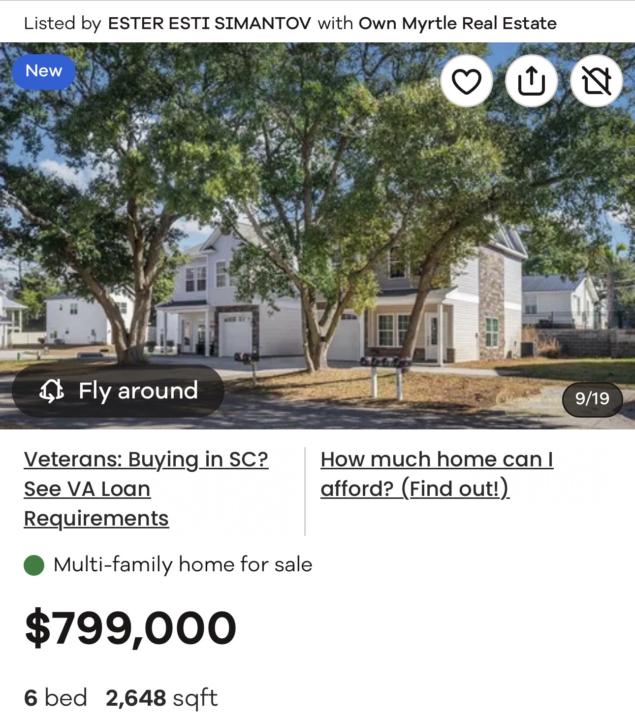
So Excited 💪🏿💪🏿💪🏿🔥🔥Thus a Dream Come True
Manifestation at its finest This is a 10 year old vision coming into fruition

4 likes • Jan 29
Congrats!
Dec '25 •
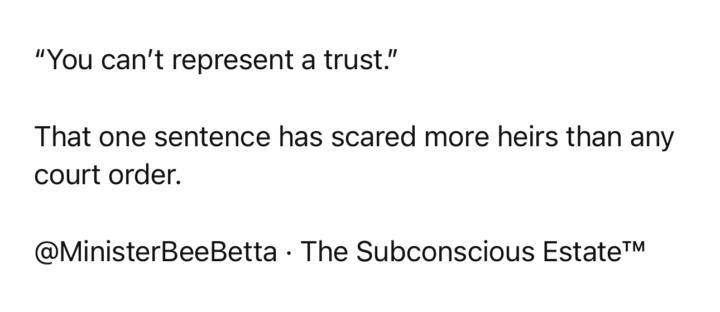
🔥🔥🔥Why would someone say this , Cause you can't represent a trust...
1. In court, you can only represent yourself pro se In the U.S., the general rule is: - A natural person can speak for themselves in court (pro se). - Separate legal entities (corporations, LLCs, and often trusts) must be represented by a licensed attorney in most courts. A trust is treated as a separate “person”/entity for procedure. So: - You (Norwood) can represent Norwood. - But you, as a non-lawyer, usually cannot show up in court and “represent” The XYZ Trust as if you’re its lawyer. If you try to file pleadings, argue motions, or appear in court on behalf of the trust, many judges will say you’re engaging in unauthorized practice of law. That’s the core behind: “You can’t represent a trust.” They’re talking about courtroom/legal representation, not everyday administration. 2. Trustee vs. attorney: different hats Even if you’re the trustee, that doesn’t automatically give you the right to be the trust’s lawyer. - Trustee = manages the trust, signs contracts, opens bank accounts, executes documents. - Lawyer = licensed to practice law, draft pleadings, represent entities in court. Most jurisdictions treat a trustee who goes into court “for the trust” as representing the interests of others (beneficiaries). That’s legal representation, which requires a law license. So a clerk, judge, or opposing attorney might say: - “You can’t represent a trust, you’re not an attorney.” - Translation: You, as a non-lawyer, cannot appear in this court as counsel for that entity. 3. You can still act for the trust outside of court Don’t confuse “represent in court” with “act on behalf of the trust” in life. You can, if properly appointed: - Sign contracts as “Trustee of [Trust Name]”. - Open bank/brokerage accounts. - Execute deeds, notes, bills of exchange, etc. - Send letters, notices, affidavits in your fiduciary capacity. - Administer assets and make decisions under the trust instrument. That’s not “practicing law” — that’s performing your fiduciary duties.
3 likes • Dec '25
Had no idea, very good! 🔥 ❤️
Nov '25 •
Please watch when you can everyone !
https://mega.nz/folder/3IVCiZZY#GsBBK6w0jegPhEzsp43bTA
2 likes • Nov '25
Thank you Bee
Sep '25 •
Will be Taking 2 Weeks with Family
Thanks in advance to all members and private clients for giving this time , after a great thing always storms will be back on schedule oct 14 will be moving all to that day
3 likes • Sep '25
Peace & Love to your family brother ❤️

4 likes • Sep '25
one of my coworkers had recommended this to me
1-7 of 7

Active 1d ago
Joined Aug 4, 2025
Powered by