Activity
Mon
Wed
Fri
Sun
Jun
Jul
Aug
Sep
Oct
Nov
Dec
Jan
Feb
Mar
Apr
What is this?
Less
More
Owned by Crystal
A supportive space for women entrepreneurs to turn passion into profit, build their brand, and gain clarity, confidence, and freedom.
Create beautiful digital products with AI & sell them on Etsy! Real tools, real community, real results. AI it. List it. Profit. 👑
Memberships
Skoolers
193.1k members • Free
Six Figure Etsy Club
516 members • Free
Digital Growth Community
59.8k members • Free
MAKEONCE
598 members • Free
✨ Digital Boss Hub ✨
717 members • Free
236 contributions to The Boss Babepreneurs
14d •
Hey my Boss Babepreneurs 🤍
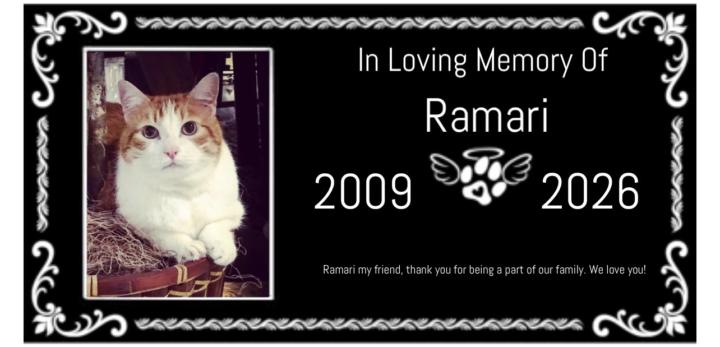
I wanted to come on here and be real with you for a moment… This past Sunday, I lost my cat Ramari. He was 17 years old and had been with me through so many seasons of my life. Losing him has been incredibly hard… and it comes just one month after losing my dog Miya, who many of you know meant the world to me. And on top of that, I’ve also been grieving the loss of a loved one in my family. If I’m being honest… 2026 has not been kind so far. It’s been one of those seasons where it feels like life just keeps throwing curveballs, one after another. And there have been moments where I’ve had to really dig deep just to keep my head above water. But I’m still here. Still standing. Still showing up. Still choosing to believe that things will work out. And that’s something I want you to hold onto too—because life will test you. It will stretch you. It will bring moments you never saw coming. But even in the middle of all of that, there is still something inside of you that keeps going… that refuses to give up. That’s where I’m at right now. I’m leaning into what feels aligned for me, which is why you’re seeing me shift more into Etsy. It’s something that not only resonates with me, but it’s also something that’s actually producing income—and right now, I need both alignment and stability. I’m not giving up on what I’m building here. Not even close. If anything, this season is reminding me why I started in the first place… to create something that gives me freedom, peace, and the ability to live life on my terms—even through the hard moments. So if you’re going through something right now too… just know you’re not alone. You can grieve, you can feel it all, and still keep moving forward at your own pace. We don’t have to be perfect to keep building. We just have to keep going. I love you all, and I’m grateful for this community more than you know 🤍
0 likes • 6d
@Monica Leon Thank you Monica. It has been a really rough road and when Ramari’s sign arrives, I will be doing up his whole area with flowers and such to make it really beautiful. Plus, my dog Miya’s spot. It has been a whirlwind for sure and it also helped me realize I was stretching myself to thin on something that just wasn’t feeling right. As hard as I tried I just couldn’t get where I wanted to with what I learned from DGC and the people there. I know my family, friends and animals have taught me some valuable lessons on being truly present and aligned with yourself and to not bend to something that just doesn’t work. At least now what I am doing feels truly aligned with myself since it is something I am actually already doing and making money at. I think I will feel way more comfortable talking about it and helping others get there too. It should be a fun process :) Looking forward to the new changes to help me through this.
1 like • 6d
@Monica Leon
6d •
Boss Babepreneurs… I’m Starting A New Community!
Over time, I’ve realized I don’t want to be spread across multiple directions anymore. I want to go all in on one clear, focused path—one that I know works, one that I genuinely enjoy, and one that I can teach at a deeper level. So I’m officially building a brand new community: ✨ Etsy Empire Builders ✨ AI it. List it. Profit. https://www.skool.com/etsy-empire-builders-9052/about This is a complete shift into creating consistent monthly income through digital products only. Just creating, listing, and getting paid. Here are the core benefits of selling digital products only, stripped down to what truly matters: 1. Unlimited inventory (no restocking ever) You create a product once, and it can be sold infinitely. There is no inventory ceiling, which means revenue is not tied to supply. 2. Near-zero marginal cost per sale After creation, each additional sale costs almost nothing to fulfill. Simple breakdown (example using Etsy fees): - Product price: $10 - Transaction + processing + listing fees ≈ $0.60–$1.00 - Profit per sale ≈ $9+ This creates high profit margins (often 80–95%), which is significantly higher than physical products. 3. No shipping, handling, or logistics - No packaging - No postage costs - No carrier issues - No fulfillment time Delivery is instant and automated. 4. No inventory risk (zero unsold stock loss) You’re not investing money into products that might not sell. This removes one of the biggest financial risks in traditional e-commerce. 5. Time scalability (decoupled from hours worked) Your income is not directly tied to time once the product is live. A single product can generate sales repeatedly without additional labor. 6. Fast product creation and testing cycles Using tools like: - Midjourney - Canva - ChatGPT You can: - Create products quickly - Launch fast - Test demand - Iterate without sunk costs This enables rapid validation, which is critical for consistent income.

1 like • 6d
@Monica Leon Monica, I got you in and thank you 💛 It’s been a journey getting to this point, but everything is finally clicking in a way that just feels right. Hearing that your heart is leaning toward digital products too is super exciting! The timing really does feel aligned, and I’m so excited you’re stepping into this direction with me. You’re going to do incredible things in this space, I can already feel it 🔥 And ahhh I’m so glad you love the name since you and Barbra both picked it out and made me solidify that name to go with. Keep an eye out for when I start dropping stuff. Plan to work on more this weekend to put some up. I get off work here at 2pm and then I plan to utilize my days off to really make it nice.
0 likes • 6d
@Monica Leon
15d •
Boss Babepreneurs 💖
I want to take a moment to speak to you all honestly. I know I haven’t been as present as I’ve wanted to be, and for that, I truly apologize. Life has had a way of shifting my focus lately, and I’ve had to take a step back to realign, refocus, and figure out the best path forward—not just for myself, but for all of us here building something meaningful. During this time, I’ve really taken a deep look at what’s working, what feels aligned, and where I can show up for you in the most authentic and impactful way. And here’s what I’ve realized… Etsy is currently where I’m creating consistent income online. It’s something I understand deeply, something I actively do, and something I can teach from real experience without overcomplicating it. So with that in mind, I’m considering a shift. Boss Babepreneur isn’t going anywhere—we are still that. Women building, growing, and creating our own paths to financial and time freedom. But I’m thinking about evolving this space into something more focused… something centered around building and growing income through Etsy. This means more clarity. More direction. More actionable guidance that actually works. Before I make any final decisions, I want to hear from YOU. ✨ Does this resonate with you? ✨ Would you be excited about a stronger focus on Etsy and digital product income? ✨ Is this something you’re currently interested in learning or growing? And as I move forward with this vision, I’ll also be exploring a possible new name for this space that reflects that focus—while still honoring the Boss Babepreneur spirit we’ve built together. Here are a few ideas I’ve been playing with: • Digital Etsy Empire • Etsy Freedom Society • Etsy Cashflow with AI • Etsy Empire Builders • The AI Etsy Academy But I would LOVE your input on this too—names, ideas, all of it. This is a new chapter. A more aligned chapter. And I truly believe it can create even more opportunities for all of us. Thank you for your patience, your support, and for still being here. It means more than you know 🤍

0 likes • 14d
@Monica Leon Monica, I really appreciate you 🤍 That focus on what’s actually working is everything—and that’s exactly why I’m leaning into Etsy. And “Etsy Empire Builders”… I love that you said that 👀🙌🏼 I’ll be sharing more soon so you can really see how it all comes together. Glad you’re here with me on this 🔥
0 likes • 6d
@Barbara Walsh Barbara, this made me smile so big—thank you. It really means a lot to feel your support, especially while I’m making this shift. It’s been such a pull on my heart to lean into what I actually love and what I know works, and hearing you say this just reassures me I’m on the right path. “Etsy Empire Builders” feels powerful to me too—like we’re creating something that truly changes lives, not just businesses. And knowing you’re right there cheering me on? That’s everything. I’m so grateful for you, truly. ♥️
25d •
Happy Easter Sunday 🐣
Happy Easter to my wonderful Boss Babepreneur family! Today I’m wishing each of you a beautiful day filled with love, peace, joy, and precious moments with the people who mean the most to you. No matter where you are on your journey right now, I hope you take a moment to be proud of yourself for how far you’ve come. You are building dreams, creating new opportunities, and planting seeds that will grow into something incredible. Even when the path feels slow or uncertain, keep believing in what you are creating. I am wishing each of you great success in all of your endeavors, whether you are growing your business, starting something new, chasing a dream, or simply taking the next small step forward. Your determination, heart, and resilience are inspiring, and I know amazing things are ahead for you. Enjoy this special day with your friends and family, make beautiful memories, and remember to give yourself grace too. You deserve happiness, rest, and all the blessings coming your way. Happy Easter, everyone! Sending you so much love. 🐣🌷💛
0
0

30d •
The Challenges We Face…
Life has a way of asking so much from us all at once. Work changes. Family needs us. Unexpected challenges show up. And somewhere in the middle of carrying everything, there is still that quiet dream inside of us asking for a chance. Sometimes building something new can feel impossible when we cannot yet see where it is leading. We want the whole map, the perfect plan, and proof that it will work before we take the first step. But some of the greatest opportunities in life begin long before we can see them. They begin with a feeling, a nudge, a small voice inside that keeps saying, “There is more for you.” The truth is, listening to that inner voice is not selfish. It is one of the most important things we can do for ourselves. Deep down, we often already know what is pulling at our heart. We know what lights us up, what gives us hope, and what kind of life we truly want to create. When we become aligned with that, the rest has a way of unfolding in the way it is meant to. No matter what path you choose, here are a few reminders as you work toward making your dreams your reality: • You do not need to have everything figured out to begin. The first step creates the next step. • Your current circumstances do not define your future. Where you are now is not where you have to stay. • It is okay to move slower than you planned. Progress is still progress. • Stop waiting for permission to pursue what is in your heart. You are allowed to want more for your life. • Every challenge you have faced has given you strength, wisdom, and a story that can help someone else. • Building a dream may open doors you cannot even see yet. Sometimes one small decision creates opportunities far bigger than you imagined. • Trust yourself. Your heart often knows the direction before your mind understands it. • Keep going, even if it is only one small step today. Tiny actions repeated over time create incredible results. You are not behind. You are not too late. You are becoming the person who is capable of creating the life you dream about, and that journey matters just as much as the destination.
0
0

1-10 of 236
@crystal-reign-3301
Proud mom of 3, Oma to 4 grandbabies & Etsy seller turned AI enthusiast! I create digital products I love & I'm here to show you how!
Active 10h ago
Joined Aug 21, 2025
Tulsa, Oklahoma