Activity
Mon
Wed
Fri
Sun
Feb
Mar
Apr
May
Jun
Jul
Aug
Sep
Oct
Nov
Dec
Jan
What is this?
Less
More
Owned by Craig
The Carnivore Diet is simple but not always easy. Our mission is to help our members thrive on their journey with clarity and accountability.
Memberships
Common Sense Carnivore
244 members • Free
Story Hacker Gold
1k members • $67/month
Lifestyle Foundr Group™
9.7k members • Free
Free Skool Course
25.3k members • Free
Customer Engine Academy
328 members • $149/month
Wizard Ai Video Agency
2k members • $4/month
Email School
261 members • $7/month
RemotePro™
683 members • Free
Main Way to Wealth
16.3k members • Free
2 contributions to Common Sense Carnivore

4d •
How Many Resolutions Actually Stick?
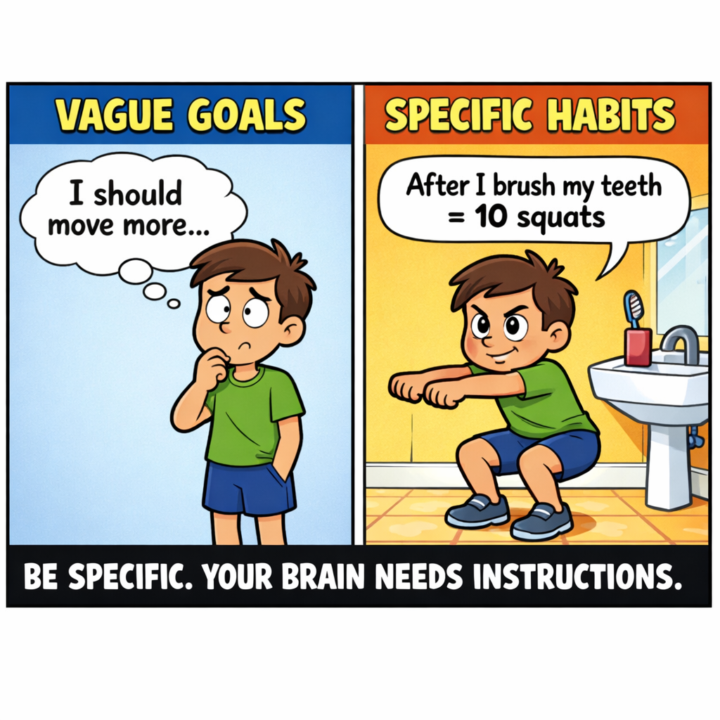
Happy 2nd of January! If you’re reading this, congratulations—you’re still at least pretending to chase down your New Year’s resolutions and haven’t yet succumbed to the gravitational pull of the Quality Street tin. This article is a follow-up to yesterday’s piece, where I mused that Spring is a much better time to begin a big new regime. But here we are—winter in the UK, the dark mornings stretching out like an empty credit card statement, and the gym suddenly full of people in suspiciously crisp sportswear. Let’s be honest: statistically, most New Year’s resolutions are about as persistent as the British sun in January. Recent figures show just under 1 in 10 people (about 8%) keep their resolutions for a single month, with only 22% still holding onto them by March. Most people start feeling the wheels wobble right about now, and by the time daffodils show up, gyms everywhere have tumbleweed rolling between the squat racks. Specifically, up to 80% of new gym members quit within five months—and a significant chunk have vanished by the end of February. So if you’re still lacing up your gym trainers by Pancake Day, you’re already in the upper decile! Building Habits: The (Not So) Magic Number You might have heard it takes 21 days to form a habit. Sorry to say, it’s a myth propagated by self-help books clinging on longer than your average January diet. The gold-standard research by Phillippa Lally at UCL found that, on average, it takes 66 days of consistent behaviour for a new habit to become automatic. For some people, it’s as short as 18 days, for others, a whopping 254 days—your mileage may vary depending on the habit, motivation, and your tendency to get distracted by reality TV. So, if you’re feeling disheartened by your mid-winter wobble, remember: you’re still well within the ‘normal’ teething period. Tips For Making Resolutions Stick - Start small: Minor, sustainable changes beat massive overhauls. - Habit stacking: Attach your new behaviour to an existing routine (e.g., do your push-ups while waiting for the kettle). - Track it: Don’t rely on memory—use a calendar or app to mark each day you complete your target. - Social support: Let friends, family, or an online community know your plans. They’ll help keep you honest (and it’s harder to skip leg day when your mates are watching). - Celebrate wins: Give yourself a mental gold star for progress, not perfection.

7 likes • 4d
I quit coffee 4 days ago and am now 100 percent carnivore. I was dependent on caffeine and it was running me down - and I've been carnivore for 5 years now. Up until last April I did about a year of making exceptions now and then (cheesecake was my weakness because it was mostly dairy - or so I told myself). And I'm talking about once or twice a month or fewer of these choices. But in April I went back to 100 percent meat for food ... and coffee. I say this because I don't rely on new years resolutions. I make choices based on a deeper belief - in this case, that coffee was harming me (it was). After 4 days the proof is arriving - I feel soooo much better without that last holdout. I've coached many people over the years and I've found that raw discipline isn't enough. They have to have a deeper reason/commitment to the new habit. I say all this because part of the reason I finally quit coffee was from looking at the biochemistry - and things I learned from Stephen Thomas videos. Once I had shifted my belief about what coffee really was doing to me, I had a deeper reason to quit. For anyone who is newer to carnivore, don't let the idea of 100 percent carnivore freak you out. This has been a 10 year journey for me and the first 5 were keto - and my first year of carnivore was more carnivore-ish because I had a hell of a time transitioning. But in time, I arrived where now it is easy for me to walk down any aisle in the grocery store and not be tempted - even by the cheesecake. First it was believe, then it was my microbiome that changed. And now I'd never go back. That may not be for everyone, I understand, but it's so much easier for me to be black and white strict than to have exceptions like coffee or keto treats. Happy New Year!
7d •
Welcome
Welcome to Common Sense Health: Joined Up Thinking This isn't another diet community. This is where physiology meets practicality, where we connect the dots between what you eat, how you move, when you sleep, and what your blood work is actually telling you. I'm Stephen Thomas, and for over a decade, I've worked with thousands of people to transform their health through low-carb, keto, and carnivore approaches. But here's what I've learned: the diet is just one piece of a much larger puzzle. Your health is a system, not a collection of isolated problems. In this community, we're peeling back the layers of conventional health wisdom to reveal what your body is really doing. We'll explore: Metabolic health through the lens of actual physiology—not headlines or health trends. We'll decode your blood tests together, understanding what those numbers mean in the context of low-carb metabolism, not outdated reference ranges designed for the standard Western diet. Circadian biology and why the timing of light exposure might be as important as what's on your plate. Your mitochondria don't operate in a vacuum—they respond to environmental signals that modern life has scrambled. Movement and exercise that align with your metabolic state and goals, not arbitrary fitness trends. Food as information, not just calories or macros. What you eat sends signals to every cell in your body. This is a place for questions, for challenging assumptions, and for learning to think critically about your health. I bring a degree in physiology, blood-testing expertise, and a thousand success stories. You bring the curiosity and commitment to understanding your own biology. We're done with reductionist thinking. We're done with "good" and "bad" cholesterol. We're done with fear-based medicine. Let's practice joined-up thinking together. What You'll Get: - Weekly live discussions where no question is off-limits - Access to my library of written guides and video content - A community of clear-thinking individuals who understand that metabolic health is the foundation - Evidence-based guidance that respects your intelligence and your body's complexity

5 likes • 5d
I've learned a ton from you - excited to be here. Happy New Year!
1-2 of 2

@craig-perrine-7808
Digital Marketer, Copywriter, BBQ Fanatic and Lifelong RV Enthusiast.
Active 19h ago
Joined Jan 1, 2026
Austin, Texas
Powered by