Activity
Mon
Wed
Fri
Sun
Aug
Sep
Oct
Nov
Dec
Jan
Feb
Mar
Apr
May
Jun
Jul
What is this?
Less
More
Owned by Claire
In depth training on aircraft detailing techniques. Business insights to price, market, and grow a detailing service.
Memberships
BEAST Club
6.3k members • Free
Skoolers
166.6k members • Free
15 contributions to Aircraft Detailing University

May 27 •
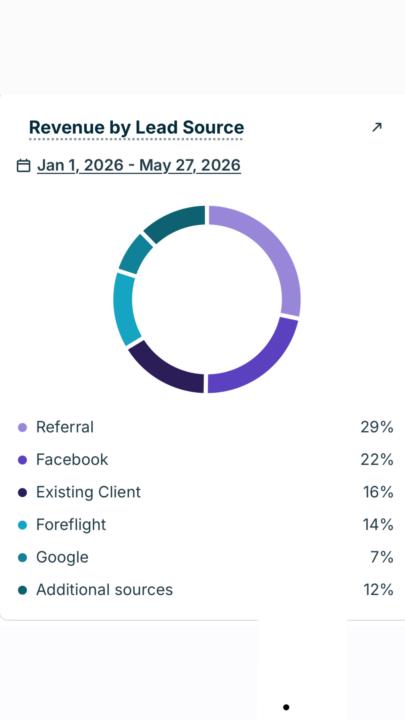
My Client Source Breakdown
Attached you can see my breakdown of where my clients have come in from over the last 6 months. Referrals always make up the majority of my new clients, I think this is REALLLLY important to keep in mind. It works both ways. A job might bring in two more clients, or it might scare away the client as well as give you a negative reputation. No matter what, do your absolute best to make sure that every client walks away happy. Aviation is an extremely small world and word gets around fast. The good news is that it goes both ways. A strong reputation will continue to bring new clients in, with no work required on your end. I have focused on posting blogs, social media, posters, business cards almost every day and still my marketing efforts bring in less than my referrals. That being said, social media can bring in a surprising amount of clients. It opens up your market in a way I never thought possible. I have clients that fly down from all over the country because they saw a Tik Tok or a post on Facebook. I have jobs coming up in multiple different states because they saw my content. If you are located in an area where you are constrained by lack of airports, consider becoming a travel aircraft detailer. It opens up your potential clients to the whole country. I can expand on that more if you would like! Please let me know if you have any more questions about where to get clients.
0 likes • Jun 4
@Gary Coates I use jobber and honestly it was a game-changing software. https://share.getjobber.com/mzJ6Eh1 If you use code CLAIREMAHER you should get a 30-day free trial. To does billing, scheduling, reports, employee time tracking, asks for reviews. Honestly I really enjoy it.

May 17 •
A few more questions on the insurance side😎
What type of insurance do you carry for the business and what's your annual cost roughly? Do you need aviation specific liability or does a standard commercial general liability policy cover you on the ramp? Did the FBOs require a certificate of insurance before letting you operate and what were their minimum coverage requirements? Who do you use or who would you recommend for an aircraft detailing operation specifically? Any coverage gaps you discovered after starting that you wish you had from day one? Thanks again. It's exciting building a new business.
1 like • May 20
I pay $5000/yr and I carry: - $1,000,000 each occurence - $50,000 damage to rented premesis - $5,000 medical expenses - $1,000,000 personal and ADV injury - $2,000,000 General Aggregate - $2,000,000 Products COMP/OP AGG It really depends on the airports you're dealing with. A large international airport might require you to have hangars keeper which shoots it up to about $30,000 year. I work in mid-size airports and this is their exact requirements. Yes, all FBOs and airports I've worked require this coverage. The big one is the $1,000,000 per occurrence. It is VERY HARD to get a liability insurance coverage for a mobile aircraft detailer. Easier if you have your own hangar, but I like to be mobile. I called over 30 people looking for someone to cover me. In the end it was actually a local broker that gave me coverage. I would start there. Yes go over with the broker EVERYTHING THAT IS COVERED AND NOT COVERED. A lot of detailers offer window restorations but my broker told me that it WOULD NOT be covered so it's not something I even offer, although I know how to do it. Go line by line through your services and make sure you are good. Also, reach out and have each airport you operate at named as an additionally insured. It will keep you covered and set you apart from the other detailers that don't know what they're doing.
May 16 •
Tools + Product List
Want to start an aircraft detailing business but not sure what products and tools you actually need? We just added our complete Aircraft Detailing Product & Tool List to the classroom tab. This is the exact setup we use in the field — including: • Products • Equipment • Tools • Recommended brands • Direct purchase links • What each item is used for Instead of wasting money testing random products or buying tools that aren’t aviation-safe, this gives you a proven starting point built specifically for aircraft detailing. If you purchase everything on the list, you’ll have the foundation needed to start detailing aircraft professionally and confidently. The full list is available now for $100.
May 16 •
Prices 🛩
What does your pricing look like across the board? From a single engine piston all the way up to a Citation X or Global, and how do you handle quick turns for charter operators?
1 like • May 16
For pricing it depends on the service. I'll upload an example of some of my recent jobs so you can see. Get familiar with the planes and then your quoting gets much better. Chat GPT can tell you exactly how much more surface area there is plane to plane.
May 15 •
New Member | Boston Market | Questions for Claire
Hey everyone, Gary here. I'm based out of the Boston area and building a premium mobile aircraft detailing operation targeting FBOs, private owners, and charter operators in the New England market. I come from a business background, already have an LLC structure in place, and I'm treating this like a real operation from day one, not a side hustle. Claire, a few questions for you: 1. Coming into a market where there's already an established operator, what's the fastest way to break in and differentiate on quality and positioning rather than price? 2. On the technical side, what would you prioritize learning first for someone just getting started in aviation detailing? 3. What's the one thing you wish you knew before your first FBO relationship that would have saved you the most time or money? 4. What chemicals, products, or equipment have made the biggest difference in the quality of your results? 5. What does your pricing look like across the board? From a single engine piston all the way up to a Citation X or Global, and how do you handle quick turns for charter operators? 6. What vehicle do you run for your operation? Van, trailer setup, something else? And what would you do differently if you were starting fresh today? Appreciate the community and looking forward to building here.
1 like • May 16
Great Questions Gary! I apologize for the delay, it's been a crazy week. 1. The best way to break into a new market where there are already established competitors is to go for the unexpected partnerships. The best way is to partner with established maintenance shops with a referral program that benefits them. Everyone goes after the charter and jet companies, very hard to break into when you're new. Build a reputation and then the jobs keep coming. I would do the first 10 planes for free or at cost to learn what you're doing. If you do a good job you will get recommendations, you have to prove you have the quality first, then nobody cares about the price. 2. The first thing I would have you focus on is not detailing techniques at all but familiarize yourself with the anatomy on an airplane. Know what each individual part is called, know the common places you can go wrong, and know how to communicate with the pilots. Nobody will trust you with their aircraft if they think you don't understand them. 3. The thing I wish I knew before getting big partners is that it's a lot less about the work you do, it's almost all about who you are. Don't get me wrong, the work has to be good. More than the work, the decision makers have to WANT to be around you. When you partner with an FBO bring donuts for the line guys, make friends with the CSR's, make them want to give you more work because they LIKE YOU. This was something I wished I learned earlier. 4. When I first started I would dry wash the whole plane, then come through and polish the whole plane, and then I would have to wipe off the polish and wax the whole plane. Even a small plane has a TON of surface area. Then I found KOENIG polish which is a polish and a wax. Now I only have to go around the plane twice rather than three times. CRAZY game changer. I'll link it here. https://koenigpolish.com/shop-all-products/?ref=flygirl 5. Pricing is pretty tricky because it can really vary on the service. This is where data is really important. What I did in the beginning is set an hourly rate (I started at $100/hr). If I thought it was going to take me 7 hours I would charge $700. The best way is to set a base price for whatever is a standard aircraft you know the size of easily. If it's a CESSNA 172 then I would charge $775 for a full detail. Then if someone wants to come in with a citation I would calculate how much more surface area it is and multiply the price. I also add some padding for the more complicated planes.
1-10 of 15
@claire-maher-2808
Everything you need to know about aircraft detailing, all together in one place!
Active 4h ago
Joined Sep 8, 2025