Activity
Mon
Wed
Fri
Sun
Aug
Sep
Oct
Nov
Dec
Jan
Feb
Mar
Apr
May
Jun
What is this?
Less
More
Memberships
Awakened Pathways
61 members • Free
Hagwitch Herbals
81 members • Free
Ladies of Mycology - LoM
840 members • Free
Green Witch School
131 members • Free
The Ravencroft Society
968 members • Free
The MAGDALENE Network
521 members • Free
5 contributions to Hagwitch Herbals

5d •
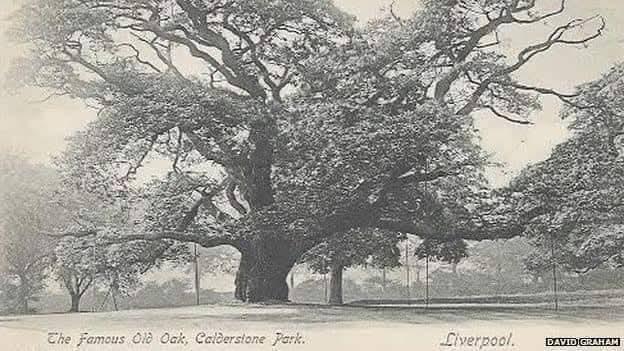
The Allerton Oak, Calderstones Park, Liverpool. UK
The Allerton Oak, Calderstones Park, Liverpool. The Allerton Oak is around 1,000 years old and is thought to pre-date the 1066 Norman Invasion. The tree has a girth of 5.5 metres (18 ft) and is thought to be in good health, producing some 100,000 acorns each year. The Allerton Oak is said to have been the site of a medieval hundred court that sat beneath its branches, though some believe that the nearby neolithic burial monument at Calderstones (demolished in the Victorian era) is the more likely site for the court. The tree is also reputed to have been damaged in 1864 when the merchant ship Lottie Sleigh, carrying 11 tonnes of gunpowder, exploded on the River Mersey, some 3 miles (4.8 km) away. The detonation blew out the windows of the nearby Calderstones Manor and is said to have caused a large crack in the trunk of the tree which has weakened it structurally. The tree and the land it stands on was owned by Henry and Charles MacIver from 1875 until 1902 when they gifted it to the Liverpool Corporation to form Calderstones Park. The tree became a landmark and during the Second World War local soldiers were sent acorns and leaves from the tree as good luck tokens from friends and family; as a result seedlings of the tree are thought to have been grown across the world. A report on the tree in 1970 suggested that it would be dead by 2020 due to rot in its trunk; despite this the tree as of 2014 was said to be thriving. In 2007, an acorn from the tree was planted as its successor and the new tree has become known as "Allerton Oak the Younger". The pair are the only two Irish oaks in the park.The branches of the Allerton Oak have been supported with metal props since 1907 and it is fenced off to protect it. As of 2019, Liverpool City Council and Mersey Forest are undertaking an £80,000 project to replace the props with a modern support system that will be adjustable to accommodate the tree's growth. The Woodland Trust described the Allerton Oak as "a spectacular example of a city tree" and valued it at £500,000 in 2019.

0 likes • 5d
I like the way the branches umbrella the area. Nice shade tree! I would love to train my peach trees in the back to do this.
21d •
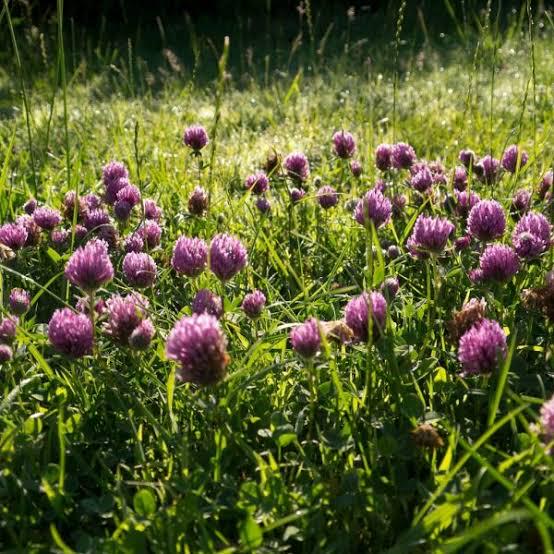
Red Clover- Trifolium pratense
Red clover is a plant many people see growing in fields, yards, and roadsides without realising the medicine sitting right there in front of them. Red Clover (Trifolium pratense) is a member of the pea family, and its pink-purple flower heads have been used for generations as food, tea, animal forage, soil repair, pollination source for bees, and medicine. Traditionally, red clover has been known as a blood-cleansing and lymph-moving herb. Old herbalists turned to it when the body needed help moving waste, clearing the skin, and supporting the natural drainage systems. It was often used for skin eruptions, eczema-type skin complaints, psoriasis-type dryness, boils, sluggish lymph, and other chronic skin complaints. This is why red clover became one of the classic herbs in old “spring tonic” formulas. It was not because the plant magically cleans the blood overnight, but because it supports the natural routes of elimination and detoxification— primarily the lymph, liver, kidneys, skin, and bowels. Red clover has also been traditionally used for the lungs and as a cough remedy. The blossoms were made into teas and syrups for dry coughs, irritating coughs, bronchial discomfort, and lingering chest congestion. It has a gentle soothing quality and was often paired with herbs like mullein, marshmallow, violet, plantain, elecampane, and licorice depending on the need. It is not a harsh herb. It works more like a gentle helper. One of the biggest reasons red clover became famous in modern herbalism is because of its connection to women’s health. Red clover contains natural plant compounds called isoflavones, including compounds such as genistein, daidzein, biochanin A, and formononetin. These are often called phytoestrogens because they can lightly interact with estrogen pathways in the body. Because of this, red clover has been studied for menopause support, especially hot flashes, night sweats, mood changes, and bone health. Some studies show benefit, some show mixed results, but there is enough research behind red clover that it cannot be dismissed as just an old wives’ herb.
1 like • 9d
Very good information. I can always find them growing wild. Will have to pick and dehydrate for tea.

Apr 26 •
Herb advice
Hi All Looking forward some advice about herb growing please. This is something new to me, so apologise if these questions seem basic. What 4/5 herbs are good for a beginner? I was thinking basil, mint, camomile - for both cooking and making teas. Any other suggestions for what immunity boosting and middle age? Any advice on best conditions?
0 likes • Jun 2
I grow perennials like oregano, lavender, sage, thyme, yarrow, coneflowers (Echinacea), mint, lemon balm, bee balm and winter savory. Dill and cilantro are not perennials in my area but if you let their seeds drop they can come back. Also, if you have cold winters, it's good to protect the roots of these plants by surrounding them with rocks.
May 27 •
Gardening with ADHD
I can really relate to this guy. https://youtube.com/shorts/tX1qsGbQfDc?si=konzgO5Gj1ocwNev
1
0
May 24 •
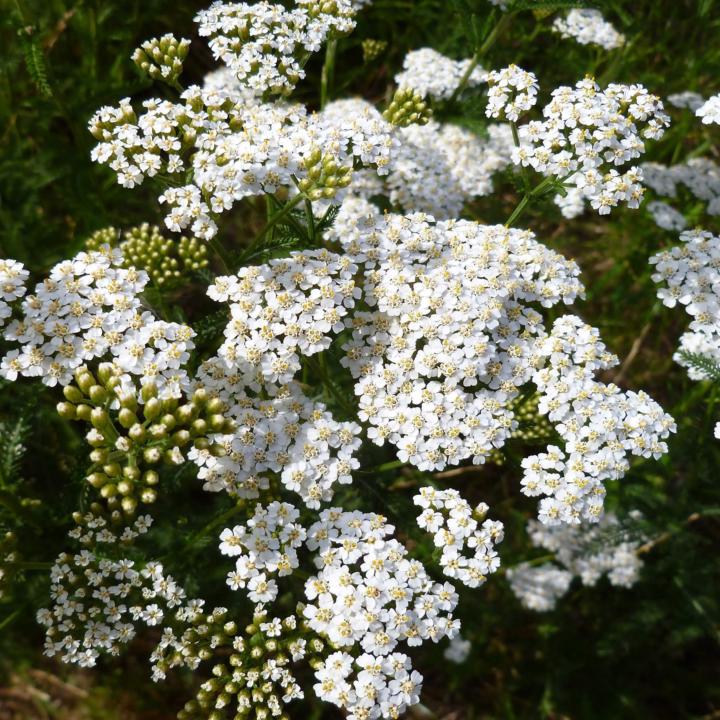
Yarrow- Achillea millefolium
The Warrior’s Herb • The Witch’s Shield • The Seer’s Companion. Yarrow is one of those plants that feels like it has always belonged to witches, healers, warriors, and diviners. Botanical name: Achillea millefolium Common names: Yarrow, Woundwort, Soldier’s Herb, Bloodwort, Nosebleed Plant, Thousand‑Leaf Family: Asteraceae Habitat: Meadows, roadsides, pastures, wild fields across Europe, Asia, and North America Appearance: Feather‑fine leaves (“mille‑folium” = thousand leaves), flat-topped umbels of white (sometimes pink) flowers, strong aromatic scent Yarrow is a plant of thresholds — between life and death, war and peace, body and spirit, sight and prophecy. Myth & Folklore Greek Myth Yarrow is sacred to Achilles, who was said to have used it to staunch the wounds of his soldiers during the Trojan War. Hence its name: Achillea. Celtic & British Isles Carried as a love charm; young women placed it under their pillow to dream of their future spouse. Burned to banish fear and protect against wandering spirits. Hung over cradles to protect infants from the Fae. Used in weather magic — especially to call or calm winds. Norse Tradition Associated with Odin, especially in matters of: battle, divination and runic sight Chinese Tradition Yarrow stalks were used for I Ching divination — considered the most spiritually potent plant for contacting the unseen. In Traditional Chinese Medicine (TCM), yarrow is known as “ai yao” and has been used for its medicinal properties. It is believed to have cooling and anti-inflammatory properties and has been used to treat conditions like fevers, wounds and skin issues, among other health concerns. Indigenous Americans: Yarrow has a long history of use in Native American traditional medicine. Various Native American tribes used yarrow for its medicinal properties. It was employed to treat a range of ailments, including wounds, fevers, digestive issues, and respiratory conditions. The plant’s leaves and flowers were often prepared as infusions or poultices for medicinal use.
2 likes • May 24
Wow, Great Information! I have some yarrow in my herb garden because I read about it's medicinal uses. Didn't know it helped with intuition and regulated hormones. I wonder if it is good for menopause. I will have to look it up. Ok, just did. Relieves Hot Flashes: Thanks to its circulatory properties, it is often used to help cool the body and minimize the severity of hot flashes and night sweats.
1-5 of 5

Online now
Joined May 13, 2026
Indiana