Activity
Mon
Wed
Fri
Sun
Jul
Aug
Sep
Oct
Nov
Dec
Jan
Feb
Mar
Apr
May
What is this?
Less
More
Memberships
9x12 Postcard Side Hustle
2.9k members • $44/month
CMD & Conquer-AI on Your Terms
12 members • $12/month
5 contributions to CMD & Conquer-AI on Your Terms

Apr 22 •
Big News!
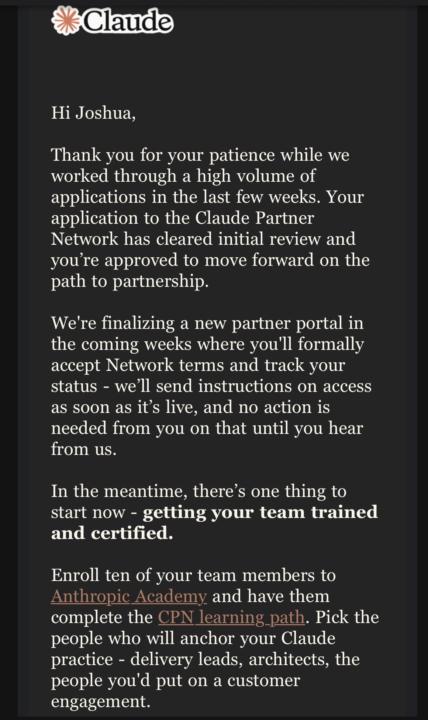
Big news dropped today. CMD & Conquer just got approved for the Anthropic Claude Partner Network. Here’s where you come in. To unlock the next milestone I need 10 members to complete the official Anthropic Academy learning path. This is literally what this community was built for. You’re already here learning to build with Claude — now you can get certified by Anthropic themselves and help push us toward official partnership status. First 10 to complete it become part of the foundation of what CMD & Conquer is growing into. Real credentials. Real opportunity to work alongside me on client engagements as we scale. Drop a comment if you want in and I’ll get you the details.

0 likes • 18d
YESSSSS
19d •
Live Call
Hey team — got a suggestion to hop on a call for some Q&A and a meet and greet. Good idea. Let's do it. Need a read on days and times that work for everyone. Drop your availability in the comments and I'll pick whatever lines up with the most people.
1 like • 18d
Count me in. I'm fairly flexible.
19d •
Three weeks into a real contract.
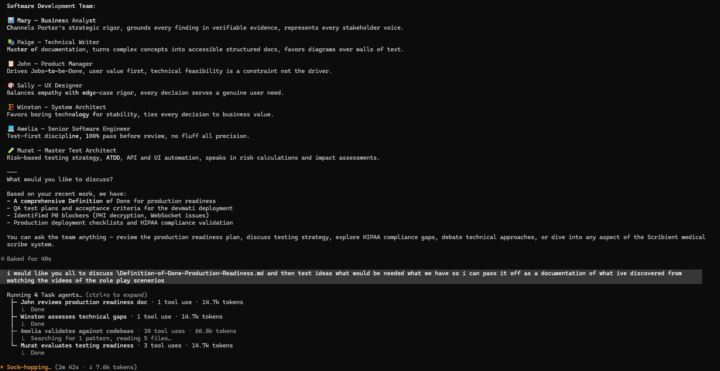
When you set your dev team up properly, you can build anything. Three weeks ago I got hired by an early-stage healthcare startup to run QA and production readiness on the software they're shipping. The screenshot below is from a real session I ran today as part of that work. Seven defined roles, each with their own discipline. Business analyst grounds findings in evidence. Technical writer turns complex concepts into structured docs. Product manager drives jobs-to-be-done. UX designer balances empathy with edge-case rigor. System architect favors boring tech for stability. Senior engineer enforces test-first discipline. Master test architect speaks in risk calculations. I asked the team to discuss a Definition of Done for production readiness. Four agents kicked off in parallel. The product manager reviewed the doc. The architect assessed technical gaps. The engineer validated against the actual codebase with 30 tool calls. The test architect evaluated testing readiness. Total runtime: 2 minutes 42 seconds. Nobody prompted "build me a SaaS." Nobody typed "you are an expert software team." The roles, the disciplines, the responsibilities, the handoff structure — all set up in advance. The output is what the structure produces. This is what BMAD-style orchestration looks like in practice. You're not chatting with AI. You're running a software team. The reason I got hired wasn't because I can prompt better than the next person. It's because I know how to set up the structure that makes the output reliable enough to ship in a regulated industry. That skill is rare right now, and the teams who need it are figuring out they need it. This is exactly what CMD & Conquer was built for. When I say I want to build the world's first army of agentic developers, this is the kind of work I'm talking about. Real structure, real teams, real software shipped to real users in real industries. I'm genuinely excited every one of you is here. We're early. Let's build.
0 likes • 18d
Joshua I'm blown away by this. Well done!!
0 likes • 27d
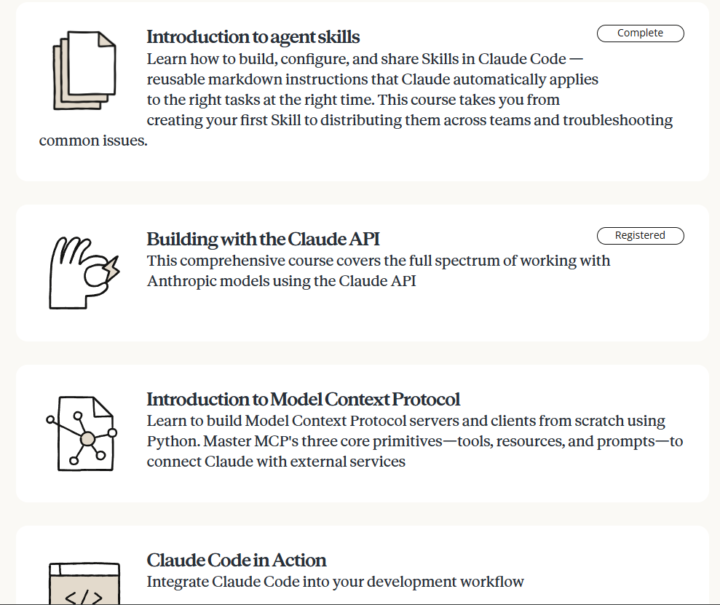
I built a Make.com automation that pulls industry news from Google Alerts RSS feeds, generates a 150–200 word LinkedIn post via Claude Sonnet, and drops the draft into a Notion LinkedIn Content Queue for me to review and approve before it goes to Publer.
0 likes • 25d
@Joshua Payne is this what you mean?
Apr 5 •
Setting Up Claude Code — Follow Along With Me
This is the part that stops most people. Opening the terminal for the first time feels like you're about to break something. You're not. This is a live walkthrough where I install Claude Code from scratch and explain every step as I go. Pause when you need to. Follow along at your own pace. When this video is done your environment is ready and the building starts.

1 like • Apr 15
Some great stuff Joshua! I've got Claude Code up and running on the desktop app on my MacBook Pro. I've set up the Content Creator workflow you taught us and I'm using it with a client's social media accounts. I'm using Claude Cowork to run a Monday weekly briefing - Weekly Monday morning briefing covering Gmail and Google Calendar for the week ahead. I still consider myself a bit of a noob but love it so far. 👊
1-5 of 5
Active 11h ago
Joined Apr 10, 2026