Activity
Mon
Wed
Fri
Sun
Oct
Nov
Dec
Jan
Feb
Mar
Apr
May
Jun
Jul
Aug
Sep
What is this?
Less
More
Mastering.com Members Club
37.6k members • Free
7 contributions to Mastering.com Members Club
🚀
17h •
Free plugin for Premium Members 🎁
I have a free plugin to give away for all Premium Members today! The plugin is BASSROOM by Mastering the Mix (usually $79). This is a really unique and fun plugin for EQing your low end - it sounds great too. "When your low-end is muddy or weak, your entire mix suffers. BASSROOM shows you exactly how to shape it, for low-end that hits hard, sounds clear, and translates across every system." Moving forward, we're going to try and get a free plugin every month for you guys as a perk for being a Premium Member. (If you're not a Premium Member yet, you can upgrade here to instantly unlock the free coupon code. The cost for a month of membership is a lot less than what the plugin would cost you to buy.) ➡️ Claim your plugin code by entering your registered email address on this page: https://support.mastering.com/codes This will be the email address you signed up with on our website or here in Skool, depending on how you became a paid member. You will only be able to claim the plugin code if you're an actively paying member. If you have any trouble, please contact support@mastering.com or leave a comment below. 🚨 BUT that's not all... We also have a new 30% discount for all Premium members at Naturl Audio, the makers of the popular new AL-1 limiter. This discount can be access at the same page as above. Simply enter your email, and you'll also be able to request your unique discount code. Enjoy! Rob


0 likes • 10h
Thank you Rob!
3d •
Replay Audio Quality
I have noticed that replay audio is currently available at around 96 kbps. It seems that much of the high-frequency content above approximately 13 kHz is removed, which can make replay viewing less enjoyable, especially for music-focused streams. Is there currently any way to access replays in a higher bitrate or higher-quality audio format?
🚀
Jul 7 •
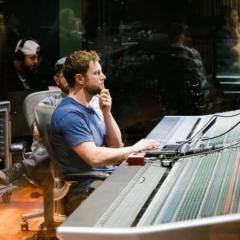
Share your latest studio shots 🎛️
Been making some tweaks to the studio. Share your latest shots below!

0 likes • Jul 12
@Chris Leech I'm really glad my photo could inspire you. I hope your space layout and video setup work out really well!
0 likes • Aug 17
@Terry Wellman I actually started with an even cheaper setup than the one I have now. I treated the room gradually by ear, using absorption and diffusion, then later added measurement and correction tools to verify what I was hearing. That process taught me that I was slightly insensitive to low-end boost. After correcting the room and training my ears for a few months, I realized my previous monitors had a boosted low end that was masking bass detail. That led me to upgrade my speakers. Later, I felt the midrange and high-end clarity still wasn’t quite where I wanted it. After studying different setups, I added a 12-inch subwoofer. It was a big change: instead of exaggerated bass, I learned what natural, effortless low end feels like—and the mids and highs from the main speakers became noticeably cleaner too. These days, I regularly attend listening events for flagship studio monitors in Korea. I listen carefully to understand and memorize the reference standards that professional engineers work from. It helps me keep a clear target in mind. For my current budget, I feel my home studio is now performing at its best, so I’m focusing on ear training, learning, and making music every day. The next level of setup would cost roughly ten times what I’ve invested so far, so my long-term goal is to build more music-related income, save steadily, and eventually create a higher-end studio. Since completing this setup and spending the past few months on focused listening practice, my ears have improved a lot. I’m part of several songwriting and production communities with hundreds or thousands of members, where people often share their music and ask for feedback. I listen from my home studio, offer small pieces of feedback where I can, and slowly build meaningful connections with other songwriters and producers.
🚀
Apr 20 •
Angine de Poitrine reaction
Another new style of video, please comment on YouTube and let me know your thoughts/if you want more like this! https://www.youtube.com/watch?v=TZyPPeyOVew
2 likes • Apr 20
It is often said that studying in a larger world makes a meaningful difference. The idea, as I understand it, is that by engaging with a broader perspective and a richer flow of information, one may develop an advantage and move ahead with greater insight. From my point of view, you represent that “larger world.” You are someone with an exceptional level of expertise and experience. Observing how a person like you listens to music, analyses it, forms thoughts, and offers suggestions for improvement is immensely valuable to me. In a sense, it allows me to experience that wider world indirectly, and it greatly enriches my own learning. For that reason, whenever you upload videos such as this, I will be sure to follow and watch them with great interest.
🚀
Jan 14 •
This Friday: The Successful Home Studio
Hey everyone, Excited to announce that we're hosting a free event this Friday called "The Successful Home Studio". On this exclusive Zoom webinar you'll learn directly from Mastering.com alumni about how they have reached a professional level in their production, mixing and mastering skills. They'll be sharing their stories and best tips for how you can make fast progress with your music in 2026, and finally make the leap to industry-standard quality. This event will also act as an open day for anyone interested in our flagship program, The Reverse Engineer. It's your chance to learn more about how it works, what the day to day is like, the admissions process etc. Plus, we'll be sharing the details of a special New Year package for anyone who joins The Reverse Engineer before the end of January. It's a higher level of hands-on help than anything we've ever done before, so if you're thinking about joining anyway, be sure to come along to find out more. The Successful Home Studio takes place on Friday, January 16th, at 9am Pacific / 12pm Eastern Time / 5pm UK / 6pm Central European time. You can find the event in the Calendar section here in Skool, or by going to this link: https://www.skool.com/mastering/calendar?eid=2f259778fb3049189699265424fbf50a See you there, Rob
2 likes • Jan 14
This webinar is perfect for me. I'm currently gradually improving my room's acoustics through low-budget DIY. Can I learn about controlling room modes and RT60 (Schroeder metrics) in this webinar as well?
1-7 of 7

@changeon-park-2125
One whose spirit yearns to perceive music's most exquisite and sublime narratives.
Active 10h ago
Joined Nov 23, 2025
Powered by