Activity
Mon
Wed
Fri
Sun
Aug
Sep
Oct
Nov
Dec
Jan
Feb
Mar
Apr
May
Jun
What is this?
Less
More
Owned by Calvin
Heal trauma by 50% in 90 days while healing anxiety & depression by 50% in 2 weeks. Only for people who have external success yet feel unhappy.
Memberships
Wellness Warriors
407 members • Free
69 contributions to the skool CLASSIFIEDS

4h •
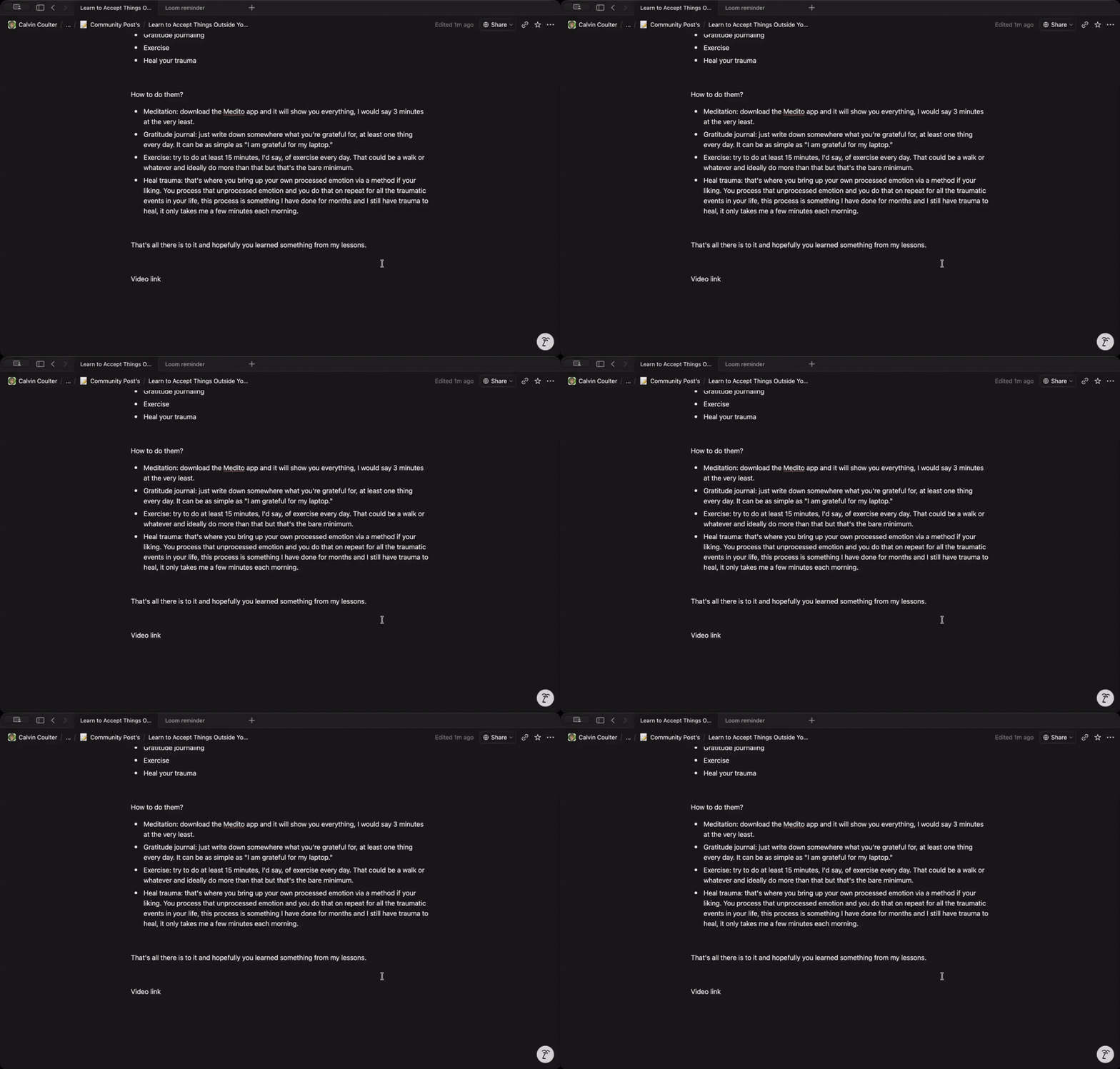
Learn to Accept Things Outside Your Control Full Guide
I used to struggle with things outside of my control: - Having to go to school or work whenever I didn't really want to - Having to do family chores or obligations whenever I really just wanted to do something else and that something else was productive made it even worse I struggled to accept things outside of my control but fortunately I learned a certain way to think about this and some more things to accept this and I just want to share that with you today. 1. View from above. This is a mindset sort of thing where you look at whatever problem or whatever things outside of your control and you look at it as if you're looking down at yourself as if it's a 2D satellite image. You be like, "Will this problem matter in the next five seconds from now? Five minutes from now? Or five months from now? Or even five years from now?" Usually the answer will be no and that's it really. 2. You can take responsibility for the things that are in your control. Give it this example: imagine you have to do a family chore you really don't want to. You can't be bothered because you're doing something else that day. There are always some things that are in your control. Maybe the deeper reason why you don't want to go on the family trip or whatever is because you want to work on your business. What is in your control in that situation? You can choose to work on your phone while on the trip… In that case though you can still control whether you choose to work or not on your phone. Are you just going to scroll and cope and say, "Oh I couldn't do it now since I'm on this," but the truth is there are always things inside of your control and if you think of it this way you can accept whenever you get forced to do something that was outside of your control. 3. Mental health: simply the 80/20 to mental health is: - Meditation - Gratitude journaling - Exercise - Heal your trauma How to do them? - Meditation: download the Medito app and it will show you everything, I would say 3 minutes at the very least. - Gratitude journal: just write down somewhere what you're grateful for, at least one thing every day. It can be as simple as "I am grateful for my laptop." - Exercise: try to do at least 15 minutes, I'd say, of exercise every day. That could be a walk or whatever and ideally do more than that but that's the bare minimum. - Heal trauma: that's where you bring up your own processed emotion via a method if your liking. You process that unprocessed emotion and you do that on repeat for all the traumatic events in your life, this process is something I have done for months and I still have trauma to heal, it only takes me a few minutes each morning.
0
0
2d •
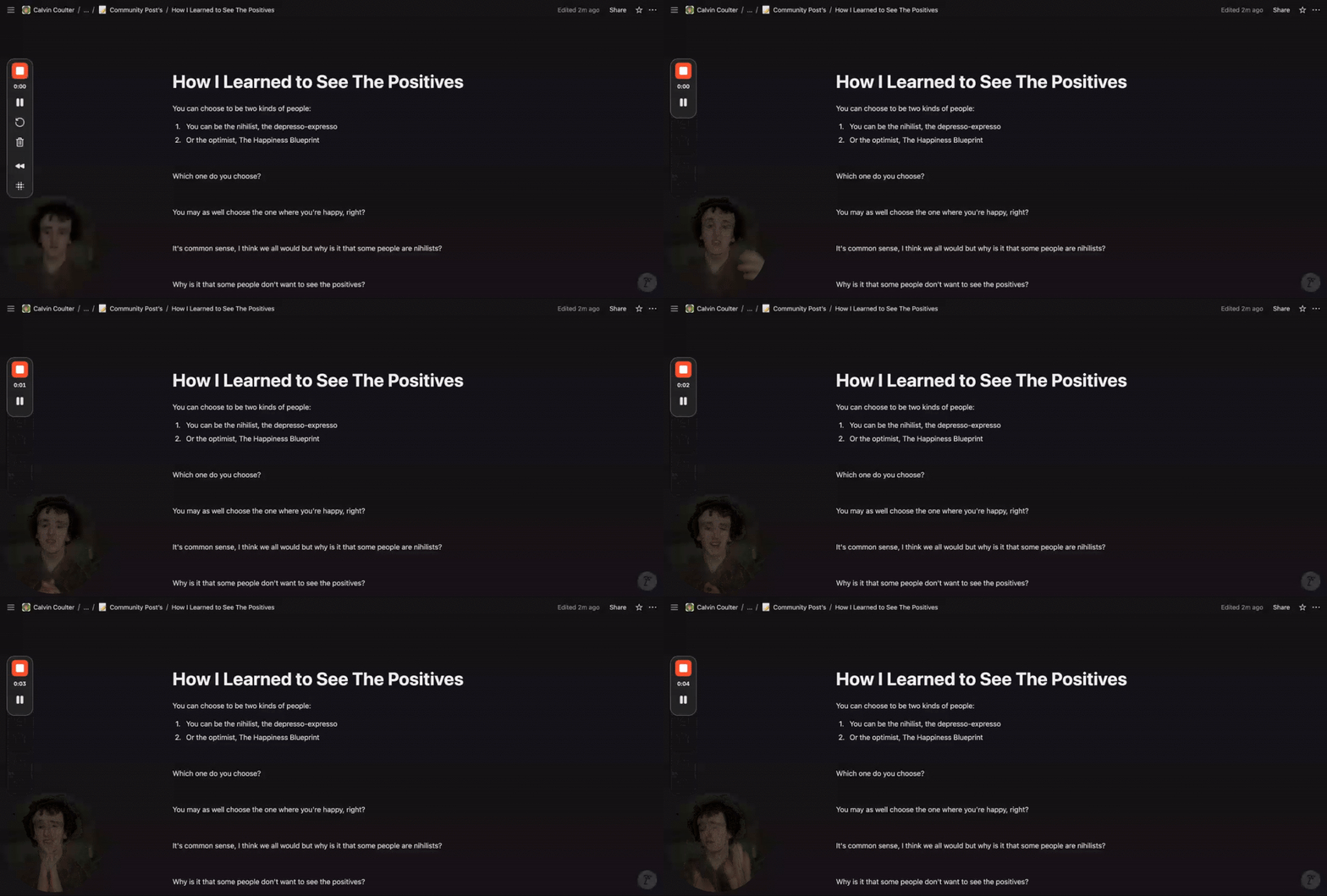
How I Learned to See The Positives
You can choose to be two kinds of people: 1. You can be the nihilist, the depresso-expresso 2. Or the optimist, The Happiness Blueprint Which one do you choose? You may as well choose the one where you're happy, right? It's common sense, I think we all would but why is it that some people are nihilists? Why is it that some people don't want to see the positives? Why is it that people blame things on others instead of themselves for their problems? Why is it that most people default to seeing the negatives instead of the positives? Let's explain that. Why do people become nihilists instead of optimists? I think this is because of social conditioning to a big extent. It's because of what they adopt from an early age from friends, family, movies, TV shows, media. They see the people around them complaining and not seeing the positives and things, and blaming things outside of their control for their failures and all that. That will be part of it. The biggest reason why I think people become less positive and more negative is that it's because of the comfort of blaming others for your problems instead of yourself, It removes accountability and it is much easier and more comfortable to blame others instead of yourself. But what do we do to overcome this? This is what I did: 1. "Everything is in my control." Now I would recommend you don't be like, "Everything is your fault," because that makes it seem like everything around you that's bad was your fault and that will begin a low frequency. What you should be like instead is, "Everything is in my control." If you messed up last month here on a row or whatever, be like, "Well it wasn't my fault, It was in my control." That is what you should be like towards situations you're not the happiest about. 2. See no evil here, no evil. What that means is don't consume negative content. That would be looking at comments on a negative YouTube video or hate YouTube videos or sad movies, or a triggering kind of music.
2 likes • 2d
@Avinash Khatri Thanks man! For sure it has made me make better decisions in business
2 likes • 22h
@Avinash Khatri 🙌
1d •
The Root Cause of Your Problems…
What is the real reason for your problems? What's the real reason for your procrastination? Perfectionism? Social anxiety? All those things. If you really probe deep into it you will find it's usually something deeper at root. For instance: - Trauma - Dysregulated nervous system - Poor mental health That's what it is for a lot of these things and if you relate to that then explain to me how I was able to figure this out and how to use this practically for my life. I was on a call with someone I was helping and we were on this Canva document. I shared my screen on the call and I told them, "Let's start his problems and we'll make a whole solutions list." We wrote down: - Procrastination - Perfectionism - Social anxiety And then I said, "Why do you feel your social anxiety?" and then they said, "Because of the experience I had in school," and then I said, "Well why does that make you anxious?" "Because it was traumatic." And we just kept probing from there. That's really how I learned to probe deep into problems like these and this is how you can find the root cause of your problems. More often than not it actually is unhealed trauma and unprocessed emotions because nervous system dysregulation causes a wide wide array of problems that I don't think most people are aware of actually. That's I leanred to probe deep and find the root cause of my problems simply and also on the Canva document we would then write a bullet point list of solutions to the root cause problem. Video link
1
0
2 likes • 3d
@Sandra Pilarczyk Your welcome! It is northern irish!
2 likes • 2d
@Sandra Pilarczyk 💚
4d •
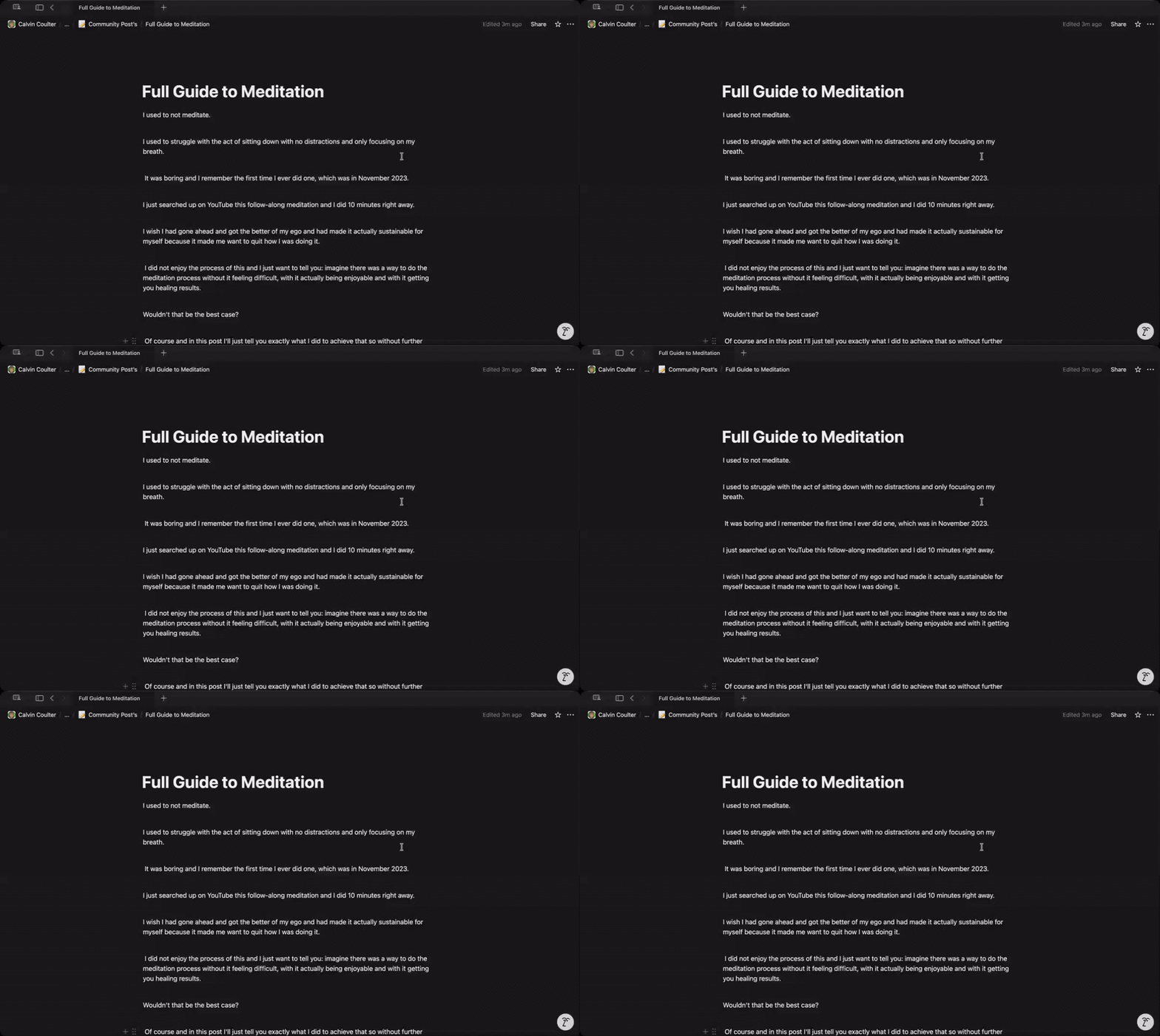
Full Guide to Meditation
I used to not meditate. I used to struggle with the act of sitting down with no distractions and only focusing on my breath. It was boring and I remember the first time I ever did one, which was in November 2023. I just searched up on YouTube this follow-along meditation and I did 10 minutes right away. I wish I had gone ahead and got the better of my ego and had made it actually sustainable for myself because it made me want to quit how I was doing it. I did not enjoy the process of this and I just want to tell you: imagine there was a way to do the meditation process without it feeling difficult, with it actually being enjoyable and with it getting you healing results. Wouldn't that be the best case? Of course and in this post I'll just tell you exactly what I did to achieve that so without further ado let's do it. The benefits 1. Presence. They say that a present name is happy. That's actually true but a lot of people say that but you probably don't know why. It's because whenever your mind isn't wandering and whenever you're spending time with a friend or whatever or you're immersed in a task that gets you in the flow state, then what does your mind fixate on? Usually negative thoughts and that's why having a present mind is much better for your happiness, your healing journey, and all this nervous system regulation. 2. Positive feedback loop. Whenever we have more friends and connections in our life, our nervous system will get more regulated and at peace because it's been like, "Oh well I've got a group of people," because your nervous system is still, it still thinks it's thousands of years ago, right, and it only sees survival instincts like "Oh food, water, social connections, all that," and this will help with that, meditation will improve your social life due to increased happiness. 3. Improved focus. Whenever you start meditating, even for a little as I would say, even three minutes, you will be able to focus better on what you care about, like maybe starting to be a doctor or something like that, or being an online culture something.
2 likes • 3d
@Julie Nelson Thats great its really life changing 🙌
2 likes • 2d
@Julie Nelson 💚
1-10 of 69
@calvincoulter
I help people who look successful on the outside, yet feel unhappy on the inside feel genuinely happy in 90 days.
Active 11m ago
Joined Feb 16, 2026
INTJ
Northern Ireland
Powered by