Activity
Mon
Wed
Fri
Sun
Sep
Oct
Nov
Dec
Jan
Feb
Mar
Apr
May
Jun
Jul
Aug
What is this?
Less
More
Owned by Caleb
A community for Next Gen leaders building healthy teams, clear systems, and ministries that disciple the next generation.
Memberships
Skoolers
161.6k members • Free
Community Launch
15.5k members • Free
6 contributions to NextGen Systems Lab

Jun 4 •
5 Things You Can Do to Hinder the Growth of Your Church
I was in a session today with Pastor Benny Tate, and he shared a powerful thought on: 5 Things You Can Do to Hinder the Growth of Your Church One statement that stood out to me was this: Churches do not grow around their leader. They grow under their leader. Leadership matters. Vision matters. Growth matters. Not just numerical growth, but spiritual health, leadership development, and the ability to steward what God wants to build through His church. Here are the five things that can hinder growth: 1. A foggy vision Proverbs 29:18 reminds us that where there is no vision, people wander. If it is misty in the pulpit, it will be foggy in the pews. Vision has to be clear. Habakkuk 2:2 says to write the vision and make it plain. The vision for a church is often birthed from the burden God places in the heart of the pastor. State the vision clearly. Cast the vision creatively. Repeat the vision constantly. Celebrate the vision regularly. Embrace the vision personally. People repeat what they see. Monkey see, monkey do. If we want people to carry the vision, we have to model the vision. 2. Refusing to change Methods are many, principles are few. Yesterday’s home run will not win today’s game. There is no growth without change, no change without loss, and no loss without pain. If you change something in your church and no one gets upset, you probably have not changed much. Healthy churches do not change their message, but they must be willing to adjust methods to reach people effectively. 3. Trying to do it all alone One of the greatest growth barriers in ministry is when the leader tries to carry everything by themselves. A major part of leadership is learning to delegate. If someone can do it 70% as well as you, let them grow into it. Ministry was never designed to be carried by one person. The goal is not to do everything. The goal is to equip the saints for the work of ministry. 4. The leader stops growing personally Churches grow best under growing leaders.

Jun 3 •
Most leaders know how to do an autopsy after something dies.
A ministry declines. A volunteer team burns out. A system breaks down. A family stops coming. A leader quits. A Sunday falls apart. Then we finally sit down and ask, “What happened?” But healthy leaders do not just perform autopsies after something is dead. They learn how to do a live autopsy while something still has life in it. A live autopsy means you stop long enough to evaluate what is happening before it becomes a crisis. You ask questions like: Where are we leaking momentum? Where are volunteers getting tired? Where are parents confused? Where is Sunday becoming chaotic? Where is follow-up inconsistent? Where are we depending too much on one person?Where is the system showing stress before it breaks? This is why systems matter. The goal is not to wait until a ministry area is dead and then diagnose what went wrong. The goal is to evaluate while there is still time to adjust, strengthen, and rebuild. Every healthy Next Gen ministry needs regular moments of honest evaluation. Not because we are negative. Not because we are looking for failure. Because we are stewarding what God has trusted us with. So here’s the question: What is one area of your ministry that may need a “live autopsy” right now before it turns into a bigger problem?
2
0

May 30 •
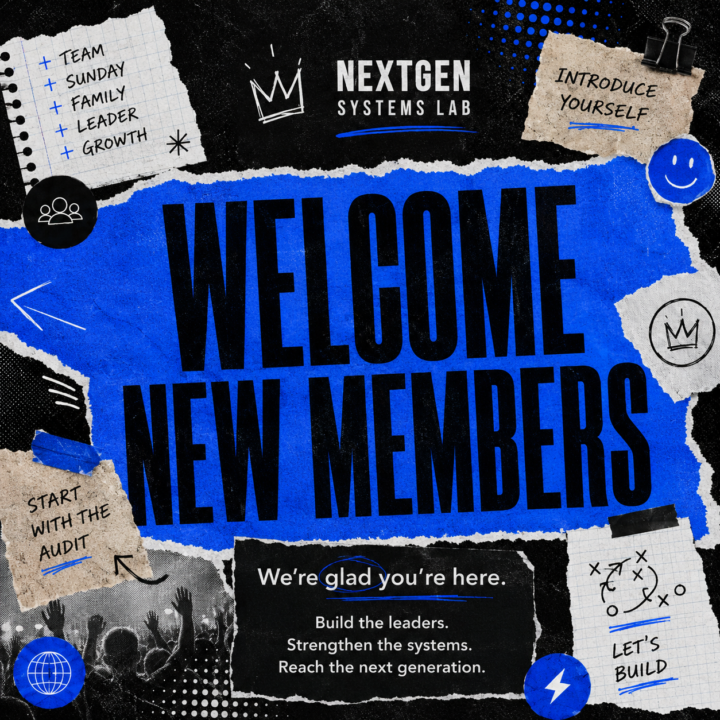
Welcome to all of our new members inside NextGen Systems Lab! 🚀
I’m so glad you’re here. This community exists to help Kids Pastors, Youth Pastors, Family Ministry leaders, Next Gen leaders, and church volunteers build stronger teams, better systems, and healthier ministries that disciple the next generation. If you’re new, here’s your first step: 1. Introduce yourself in the comments 2. Tell us your church/ministry role 3. Share where you’re from Also, make sure you complete the Next Gen Ministry Systems Audit. Once you finish it, post your lowest score in the group. I’ll help you think through which system I would fix first and what first step I would take. This group is not just for ideas. This is a place to build. Build the leaders. Strengthen the systems. Reach the next generation.
0 likes • May 31
@Will Stoker love it!
May 29 •
START HERE: Welcome to NextGen Systems Lab.
This group exists to help Kids Pastors, Youth Pastors, Family Ministry leaders, Next Gen leaders, and church volunteers build ministries that are healthy, organized, Spirit-filled, and built to last. Here is how to get the most out of this group: 1. Introduce yourself in the comments. 2. Share your role, church context, and biggest ministry system challenge. 3. Download or complete the Next Gen Ministry Systems Audit when it is posted. 4. Join the weekly live training. 5. Take one system each week and implement it. This is not just another idea group. This is a place to build. Build the leaders. Strengthen the systems. Reach the next generation.
0 likes • May 29
@Megan Williams thank you for introducing yourself. You are carrying a lot of hats, and that can be challenging but the correct systems to help manage time, recruitment, and everything else in between will help give you the confidence to lead! 1. I am praying for you! 2. We will be launching our first course this week. This course will help you put the 5 most important systems in place.
0 likes • May 30
@Dwayne Riner sometimes I feel like the needle for this is constantly shifting as technology evolves and new methods are emerging every year. Sometimes you feel like you’re in a groove and then next you find yourself evaluating again. Which can be a good thing because it forces us to stay fresh in our methods so we ourselves don’t become stagnant.
May 29 •
Next Gen Ministry Systems Audit
Complete the Next Gen Ministry Systems Audit and post your lowest score inside the group. I will tell you which system I would fix first and what first step I would take.
0 likes • May 29
@Megan Williams Jim Wideman taught a philosophy called “managing by walking around,” or what he often referred to as earning your MWA degree. The idea is simple but powerful: some of your best ministry opportunities happen when you are present, visible, and intentional. When you walk around, you get the chance to interact with parents, guests, members, and regular attenders. Those relationships often become your greatest pool of potential volunteers. As you get to know people, you begin to learn what they do for a living, what they are passionate about, what gifts they carry, and how those gifts could be used to help build the Kingdom. One of the biggest shifts in leadership is realizing that as the ministry grows, your role changes. You may spend less time inside the classroom and more time pastoring, equipping, and developing the volunteers who are in the classroom. You still provide big-picture oversight for the ministry, but your primary focus becomes building people, not just filling positions.
0 likes • May 29
@Megan Williams Another idea that helped us was doing something we called Volunteer Madness. We basically gamified volunteer recruitment and made it feel like a church-wide push instead of one ministry begging for help. The idea was simple: we created a bracket-style competition between ministry areas, like Nursery, Kids Jr, Elementary, Youth, etc., and each team competed to see who could get the most new volunteer interest forms completed. We promoted it from stage, on social media, through leaders, and through personal invites. The key was making the ask clear and specific. We weren’t just saying, “We need help.” We were saying, “Would you consider serving one Sunday a month in one of these areas?” That made it feel less overwhelming. A few things that made it work: 1. We gave each area a clear goal. 2. We made it visual with a bracket/scoreboard. 3. We gave people an easy next step with a QR code or interest form. 4. We encouraged current leaders to personally invite people they already knew. 5. We followed up quickly with everyone who showed interest. 6. We celebrated wins publicly and made it fun. The biggest thing is that it created energy around serving. People saw that Next Gen ministry was growing, exciting, and worth being part of. It also helped us identify people who may not have responded to a general announcement but would respond to a personal invite. For your multisite situation, I would even consider doing it by campus and ministry area. Each campus could have a Next Gen volunteer goal, and then you could celebrate which campus recruited the most new team members. That way, you are rebuilding the volunteer pipeline at each location instead of trying to pull from the same core group over and over.
1-6 of 6
@caleb-jones-5010
Helping kids ministry leaders build strong teams, powerful services, and systems that make ministry sustainable.
Active 27d ago
Joined May 29, 2026
Mobile AL