Activity
Mon
Wed
Fri
Sun
Dec
Jan
Feb
Mar
Apr
May
Jun
Jul
Aug
Sep
Oct
Nov
What is this?
Less
More
Owned by Brian
Built for master athletes 35+ trying to stay sharp, healthy, and competing long term.
Skoolers
148.2k
Free
153 contributions to Master Athlete Lab
2d •
Does discomfort always mean you should stop?
During training this morning, my right QL and rib started guarding. The old choices would have been either to ignore it and push through, or shut everything down completely. Instead, I changed how I trained. I slowed the pace, stayed technical, and avoided the movements that made the guarding worse. That’s another reason guardrails matter. They don’t always tell us to stop. Sometimes they help us find the version of training we can safely absorb that day. When something starts talking during a session, are you able to adjust, or do you usually choose between pushing through and stopping completely?
1 like • 13h
@Josh Wang Exactly 😂 Not push through, not shut it down. Just that annoying 50/50 “it depends” zone where you actually have to pay attention.
3d •
What’s your most recent achievement in jiu-jitsu?
It could be a promotion, a competition result, finally becoming comfortable in a difficult position, or simply reaching a point where your game felt like it had taken a real step forward. Now think back to that period: How often were you training? What were you drilling? Were you studying instructionals, lifting, recovering better, or getting more focused rounds? And the bigger question: What’s different between what you were doing then and what you’re doing now? Sometimes looking back at what produced our best progress can show us what may be missing today.
0 likes • 2d
@Vincent Chan That’s a perfect example. The result wasn’t just two wins. It was getting another shot at someone who had exposed a hole in your game, then seeing that the work you put into fixing it actually held up. Winning 8–2 and 10–0 against a younger brown belt who had submitted you twice before is a pretty clear return on the investment. Orsan deserves his commission. 😂
4d •
What’s your nutrition plan after a really hard session?
I trained at 6:00 AM this morning, and physically, it was probably the hardest part of my day. It got me thinking about what happens after we push ourselves that hard. Do you already have a nutrition plan for the rest of the day, or do you just eat based on hunger and convenience? How many meals do you normally have? Is your priority replacing carbohydrates, getting enough protein, rehydrating, or simply making sure you eat enough? And when you’re completely drained, do you have a reliable go-to meal that’s easy, comforting, and still supports your recovery? What does the rest of your day look like after one of your hardest sessions?
0 likes • 4d
@Josh Wang Outdated stats based on what, a three-class hot streak? 😂
0 likes • 4d
@Vincent Chan 😂🤪
6d •
For those who attended the workshop
The feedback afterward was really positive, and some of the conversations have continued here in the group. When I’m back from Japan, would there be interest in doing an occasional live Q&A here on Skool? It could give us a chance to revisit the workshop topics, answer questions, and go deeper into anything you’ve started applying. I’m also curious: What’s one thing you took from the workshop that you didn’t expect or hadn’t considered before? Let me know below. Your answers will help shape what we focus on if we do the Q&A.
0 likes • 4d
@Saied Khorrami That’s great, Saied. You took two ideas from the workshop and immediately started applying them. Guardrails are definitely hardest to maintain when someone suddenly increases the intensity. Learning to defend yourself without automatically matching their pace is the real challenge. 👊
7d •
What information would make you change today’s lane?
At the workshop, I talked about choosing the day’s training lane based on the information we’ve collected. Sleep was one example. I said you’ll never see me in a morning class after getting less than seven hours. That might sound extreme, but once I look at the risk versus reward, the decision becomes easier. The harder part is remembering to do that assessment before habit, ego, or FOMO takes over. So I’ve been thinking about one simple question: What do I gain by pushing today, and what could it cost me tomorrow? The answer doesn’t always mean staying home. It might mean drilling instead of rolling, choosing safer partners, taking fewer rounds, or keeping the intensity lower. The important part is choosing the lane before the room chooses it for you. What information would make you change your original training plan: poor sleep, pain, low energy, stress, or something else? And what would you change it to?
1 like • 6d
@Saied Khorrami Perfect example. You felt the FOMO, but still made the decision based on the information you had. You changed the lane, protected your sleep, and trained later instead. That’s exactly what the post was about. 👊
1-10 of 153

@brian-rafat-4105
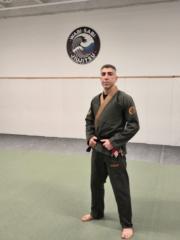
BJJ Black Belt Helping master athletes train, recover, and perform at a high level
Active 5h ago
Joined Jun 14, 2026
Powered by