Activity
Mon
Wed
Fri
Sun
Aug
Sep
Oct
Nov
Dec
Jan
Feb
Mar
Apr
May
Jun
What is this?
Less
More
Memberships
The AI Advantage
126.2k members • Free
THE GRIM CIRCLE
1.2k members • $39/m
25 contributions to The AI Advantage

1h •
AI replacing people
AI will not replace the man who owns consequence. It will replace the man whose work was only motion.
0
0

2h •
AI Needs Humans…
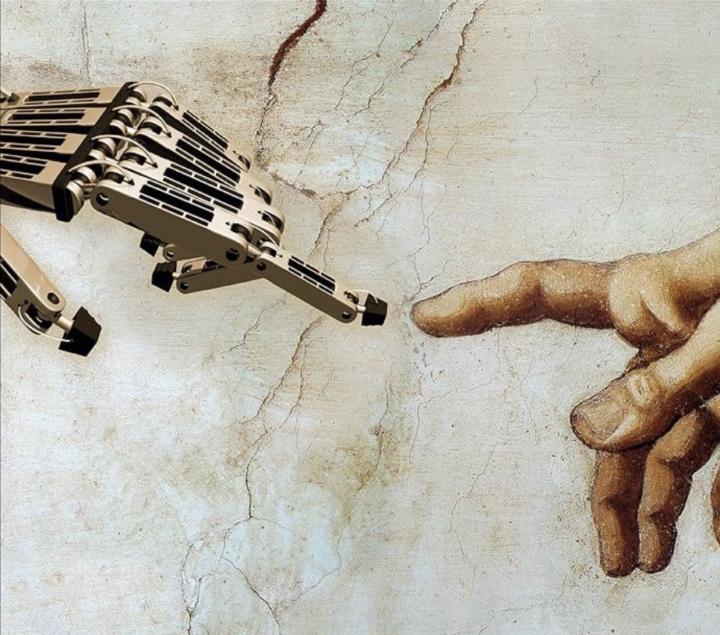
I was listening to a podcast from Gary V recently and they were talking about how AI can replace all these jobs and the automated processes that we can all do now. But then they discussed how AI is only as good as what’s being fed to it. So without the human interaction, and us coaxing it along, and pushing it to do more, it will only ever be so good. So instead of fearing AI, we need to start embracing it as a partner in achieving more…
1 like • 1h
AI will not replace the man who owns consequence. It will replace the man whose work was only motion.
2h •
Phrasing your AI Prompts - Wording matters
I use AI for almost all of my thinking now. Not to replace my thinking, but to mirror it back, test it, organize it, capture conversations, create summaries, and keep track of commitments. Almost all of my work passes through AI in some form. The more I use it, the more I realize prompting is not really about finding a magic phrase. It is more nuanced than that. For example, I used to ask AI to “summarize this.” Now, depending on the task, I might ask it to “sanitize this.” That sounds like a small difference, but the output changes. “Summarize” tends to compress what was said. “Sanitize” tends to remove the conversational clutter and preserve the actual intent, focus, and useful signal. That distinction matters. Human beings may treat many words as interchangeable. AI does not. The words we choose often change the direction of the machine’s “thinking.” So I am paying more attention to prompt language now, not as a fixed prompt-response formula, but as a way of steering the kind of work I want done. I do not have a cheat sheet. The right phrasing depends on the purpose. This is experimental. Try different words. Compare the results. Ask whether the output got sharper, flatter, broader, more useful, or less useful. There are no magic words. There is only a learned interaction between the person, the tool, and the work.
0
0
4d •
Are you using One account for everything? Or two (or more)?
I use two AI accounts - one for business and one personal. I have found this to be very profound and powerful. Most AI users are still treating AI as one general-purpose assistant. I think that is too simple. For serious work, I am beginning to think we need separated AI “brains” — not because the subjects never overlap, but because the governing authority is different. One AI brain can be trained around business architecture: execution, capital, risk, structure, diligence, commercial logic, and practical consequence. Another can be trained around interior architecture: conscience, meaning, founding intent, philosophy, legacy, spiritual seriousness, and the protection of motive. The distinction is not a hard wall. There will be cross-over. Business has moral implications. Moral intent has business consequences. But cross-over is not the same as merger. The business brain needs to know the soul of the work, but it must not be ruled by sentiment. The interior brain needs to understand the business realities, but it must not let commercial logic colonize the soul. That distinction matters. Because emotion can distort business judgment. And business motives can distort the soul. The answer is not to amputate one from the other. The answer is disciplined separation with governed integration. Let each brain know the other. Let each brain learn from the other. But do not let either one seize the throne assigned to the other. In business work, commercial discipline must be absolute. In soul work, conscience must have final appeal. For me, this is becoming one of the most important practical lessons in AI use: Use AI not only to think faster, but to preserve jurisdiction. The question is not merely, “What can this AI help me produce?” The deeper question is: What kind of judgment is this AI being trained to serve?
1 like • 3d
Yes, separating them I found the business account got sharper and more accurate without drift compared to the all-in-one account.
0 likes • 1d
@Evelyn P Yes, using Projects helps (remember to set the Project memory settings when you create a new project - whether to search the whole account or focused only on content within the Project). I use Projects in my business accounts to organize all the projects I have, and in my Personal I use Projects for separating my book writing from my personal financial management, car hunting, introspection thoughts, etc. However, there still is leakage - such as "saved memory". This travels between projects - it functions at the account level. So you may pull in a saved memory created in one project into another. Yes, you can manage that but that creates a need for awareness of what is in your saved memory. It easier for me to have my AI accounts work across projects and pull ideas, thoughts across them (Personal) and be able to grab a contract or discussion I had in one business project to be referenced in the new one (Business). It is mental work load reduction for me.

⭐
Apr 15 •
🧠 The AI Thought Partner, What It Is and Why You Need One
Most people are still using AI like a tool. Ask a question. Get an answer. Move on. That is useful, but it is also limited. Because one of the biggest advantages of AI is not just that it can produce content fast. It is that it can help people think better, decide faster, and work through ideas without getting stuck in their own head. That is what an AI thought partner really is. Not just a machine that gives outputs. A partner that helps sharpen thinking. This matters because a lot of modern work slows down long before execution. People get stuck trying to clarify ideas, organize messy thoughts, challenge assumptions, pressure-test decisions, or figure out the next best move. The bottleneck is often not effort. It is thinking friction. And that friction costs time. That is where an AI thought partner becomes powerful. It can help turn vague ideas into clear direction. It can help break down a problem when everything feels too big. It can help generate options, compare angles, surface blind spots, and speed up decision-making. Not by replacing human judgment, but by accelerating the process of getting to better judgment. That is the difference. Most people think of AI as a writing assistant, research helper, or productivity tool. And yes, it can do all of that. But the deeper value is in using it as a thinking companion, something that helps refine ideas before they become plans, content, offers, strategies, or decisions. That is why this is urgent. Because the people getting the most from AI are not just asking it to do tasks. They are using it to improve the quality and speed of their thinking. They are bringing it rough ideas, half-formed plans, messy notes, questions they cannot quite articulate yet, and problems they need help untangling. They are using AI to create clarity faster. And clarity changes everything. It reduces time-to-decision. It shortens time-to-first-draft. It lowers rework. It helps people move before overthinking turns into delay.
4 likes • Apr 15
@Ann A Great story. I have a friend in his late-80's that is flowing his life's work and using AI to write a book about it. Absolutely wonderful! And emotional. AI's ability to connect and pattern recognize revealed something about him and how honor-bound his life was - he never saw himself as such a man, but every time there was a question of honor in his life, he never waivered, no matter the cost. But because of the scattered events of our lives, he never realized that this was actually his core value until AI exposed it to him. It was very emotional for him - a reward to himself for all the struggles he had, that he remained honorable.
0 likes • Apr 15
@Amber Mirza Indeed! We sometimes forget "to do our homework", and just plow forward without really understanding the field in front of us - is it full of rocks, weeds, or black soil. That understanding changes the blade of our plow. The power of AI is that it allows us to plan our field in advance of plowing.
1-10 of 25

Online now
Joined Nov 10, 2025
Powered by