Activity
Mon
Wed
Fri
Sun
Oct
Nov
Dec
Jan
Feb
Mar
Apr
May
Jun
Jul
Aug
Sep
What is this?
Less
More
Owned by Auli
Go from unknown online to visible, connected & turning opportunities into clients. Opportunities → Visibility → working funnel and paying clients
Knitting community 🧶 Share your projects, be maker with purpose and get inspired by other knitters. 🫶 Become the cozy knitter version of yourself 🧶
Inner Healer School
280 members • Free
The Live Event Studio
671 members • Free
WeMeet for Women Entrepreneurs
5.8k members • Free
📸 Photography by Cristal
206 members • Free
Money & Growth for Women
444 members • $5/year
Aligned Entrepreneur Network🌐
639 members • Free
Her New Chapter
18 members • Free
Midlife Grace Shift
40 members • Free
Online Community Launch
166 members • Free
22 contributions to Summiters
🔥
3d •
✨ THE ROADSHOW IS ROLLING!
🚐✨The first two stops are BOOKED — and we’re ready for the next two. 🎤 STOP #1 — CRISTAL VANCARSON 📸 Remote Headshot Sessions 📅 Sunday, September 13 ⏰ 5:00 PM GMT 🔗 https://meet.google.com/qxt-msct-xfj Cristal Vancarson is a Hollywood photographer and former international model who helps entrepreneurs, authors, speakers, coaches, creators and professionals create confident, credible images — using just a phone, natural light and Zoom. 🎤 *STOP #2 — CICILIA HARTLEY 🧠 Program Your Brain for the Future You Want 📅 Thursday, September 17 ⏰ 1:00 PM GMT 🔗 https://us06web.zoom.us/j/88215081900?pwd=hGqavZcfRx2zSqr7KXTiuPBr6aHJq8.1 Meeting ID: 882 1508 1900 Passcode: 585846 Cicilia brings a powerful session designed to help you understand how your brain shapes the future you're creating. ✨ NOW IT’S YOUR TURN. The Roadshow is looking for 2 more speakers for September. 🎙️ Have expertise to share? Take your session on the Roadshow and discover new communities, audiences and speaking opportunities. 🔗https://roadshow.base44.app 🏠 Have a community? Add your community as a Roadshow destination and bring fresh speakers, learning and activity to your members. 🚐 SPEAK. VISIT. CONNECT. GROW. The Roadshow is moving — where should it stop next? 👉 Join Roadshow Backstage is booking next 2 September stops💫
1
0

🔥
12d •
RESILIENCE LEDGER SUMMIT 🎙️✨
🎙️https://meet.google.com/kyt-ybhm-ozs✨ THURSDAY, SEPT 3 🎙️ Auli Takala — 2 PM GMT Beyond Vibe Coding: Security, Cost & Scalability of AI-Generated Code 🎙️ Mary Morton — 7 PM GMT Funnel Workflow from Sale Through Onboarding FRIDAY, SEPT 4 🎙️ Aaron Murauskas — 2 PM GMT Moose Strong: High-Impact Training for High Performers 🎙️ Christopher Ward — 3 PM GMT CEO Era: Built & Launched — Cowork, No-Code Delegation & Automation 🎙️ Michael Teferi — 5 PM GMT Poetry, Positive Psychology, Leadership, Intuition & Spirituality SATURDAY, SEPT 5 🎙️ Auli Takala — 2 PM GMT From AI to App Store 🎙️ Gopika Ashok M — 4 PM GMT Protecting Wealth in a World of Digital Risks 💖 Discover amazing people. Support their work. 🎙️ Join us LIVE or get the replay 🛍️ FREE SWAP BAG included! ✨ Show up. Discover. Support.
3
0

🔥
Jul 29 •
Unlock 🔓More Bundle
Application https://forms.gle/TyXWE6J5cmo3LwRa7 🚀 More Than a Bundle—It's a Growth Opportunity 👉https://unlock-more.netlify.app/ 💫No community Membership required💫 The Unlock More Bundle isn't finished yet—it's still expanding with new contributors and valuable resources. Join now to: ✨ Discover new communities 🤝 Build collaborations 🎤 Find speaker opportunities 📈 Grow your visibility 💰 Create new revenue opportunities 🆓on August 1. you can import bundle into own classroom as valuable Asset 🔥 The more the bundle grows, the more opportunities everyone unlocks. 💫 💫New Members from Bundle already joined my Community💫

🔥
0 likes • Aug 1
@William Robert I don't communicate outside skool. There is no reason for.
🔥
0 likes • Aug 1
@Laura Brown I have many ways to grow my communities. Unlock🔓 more bundle is easy long-term Tool to help all participants to grow their business👉 everyone use it, we multiple visibility for all👉 one Tool also have multiple invite links to support growth for everyone. It is small Tool, but huge impact (already two members joined from bundle). Work is already done and now it's working many weeks to help get visibility
Jun 30 •
🤝 Collabs Happening This Week - Week of June 28th
Got a “we thing” happening this week? Drop it here! 👇 Whether you’re co-hosting, speaking, showing up in a bundle, guesting on a podcast, running a multi/joint community call, or doing any kind of joint venture — this is your spot to share it. Name the event, what it is, and how people can find it. Let’s cheer each other on and maybe even discover our next collab while we’re at it. 🎉 Not sure if you can post it - If it’s a we thing, it’s a yes.

🔥
0 likes • Aug 1
@Sarah Kitte there are two ways to make call and I decided to Google meet instead of Community call to have possibility to cooperate with no membership requirements🫶
🔥
0 likes • Aug 1
I must take a look, that I have clarity and correct links everywhere 🫶
Jul 29 •
🎤 I'm Speaking at the Step Into Your Next Level Virtual Summit! 🚀
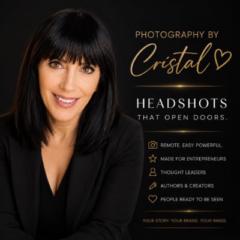
I'm incredibly excited to share that I'll be a featured speaker at the Step Into Your Next Level Virtual Summit, happening August 4–6—and it's FREE to attend! 🎉 My session is all about helping you show up with confidence through Hollywood-level LIVE remote headshots. You'll learn: 📸 How to create professional headshots using just your phone ✨ Simple posing and expression techniques that make a huge difference 💡 Why your headshot is one of the most powerful tools for your personal brand 🌎 How I've photographed clients around the world without ever stepping into a studio As someone who has spent over three decades in Hollywood as a photographer, model, and storyteller, I'm excited to share what I've learned and help you put it into action. Whether you're an entrepreneur, author, coach, speaker, or content creator, this summit is packed with incredible experts who are ready to help you take your business to the next level. I'd love to see you there! 💜 👇 Are you planning to attend? Let me know in the comments! Photography by Cristal

🔥
2 likes • Jul 29
🔥I am excited about your session 🌹
1-10 of 22
🔥
@auli-takala-7980
I am Auli, living in Finland, above Arctic Circle. Web3/Blockchain Development👉security/privacy solutions. Passion for🧶knitting island wool pullover
Online now
Joined May 20, 2026
Finland, Sodankylä
Powered by