Activity
Mon
Wed
Fri
Sun
Oct
Nov
Dec
Jan
Feb
Mar
Apr
May
Jun
Jul
Aug
Sep
What is this?
Less
More
The AI Advantage
129.3k members • Free
KLOUT
111 members • Free
4 contributions to The AI Advantage

Nov '25 •
What Ai Tools are you currently using?
Would love to find out what everyone out there is using as far as AI tools. Drop what ai tools you are using and what you are using them for, below. Thanks!

0 likes • Nov '25
@Christina Hampsey
1 like • Nov '25
@Lara Jackson what you're using AI for is what I am looking to utilize AI for. Getting some clarity and relieving some of my overwhelm... Would love to learn more about your workflow in order to get there.
Nov '25 •
Paid for Upgrade... Email not received... yet.
Wondering if anyone else is waiting for their upgrade email. I made the purchase to the Elite package and have not received anything about it. However, I have received emails asking me to upgrade... lol. Help, please...
0 likes • Nov '25
@Atallah Shalash You're welcome.
0 likes • Nov '25
@Rafik Tahraoui please make sure to check all of your email accounts. Multiple people reporting that either an email address attached to their payment, a personal email address, or their business email addresses are receiving the information.
Nov '25 •
Would love to hear...
What your thoughts are on AI (hate/Love/overwhelming)? If you could use AI for one thing to help you run your business more efficiently, what would that be?
Poll
11 members have voted
2 likes • Nov '25
@Corinne Nakashima This is where being here makes sense. Finding ways to position yourself as someone that cannot only navigate AI, but apply it to help launch and execute ideas, will be a big advantage for you.
0 likes • Nov '25
@Corinne Nakashima liking it sounds great. It's something that takes time to learn and I think once we find that consistency in usefulness it'll become a lot easier to love. :)

Nov '25 •
By Request - 20 AI & Large Language Model Terms Made Simple
I put together a quick glossary of the 20 most common AI and Large Language Model terms, no tech degree required. Whether you’re just starting out or already building with AI, this list will help you understand the language everyone’s using. 👉 Save this for reference and share it with anyone starting their AI journey. AI can sound like another language, so here’s a quick glossary you can bookmark and come back to when you need a refresher. Whether you’re just exploring or already experimenting, these terms will help you speak “AI” with confidence. AI (Artificial Intelligence): Technology that mimics human thinking and learning to perform tasks like writing, analyzing data, or predicting outcomes. Machine Learning (ML): A type of AI that improves automatically through experience, like teaching a computer to recognize patterns. Deep Learning: A branch of machine learning that uses layered neural networks (similar to how the human brain works) to handle complex tasks such as image or speech recognition. Neural Network: A system of algorithms designed to recognize relationships in data, inspired by how our brains process information. Large Language Model (LLM): A type of AI trained on huge amounts of text so it can understand and generate natural language (like ChatGPT). Training Data: The text, images, or other information used to teach an AI how to recognize patterns or make predictions. Parameters: The internal settings an AI adjusts during training to learn how to produce better results. Prompt: The instruction or question you give an AI to get a response. Prompt Engineering: The skill of crafting better prompts to get more accurate or creative outputs. Token: A small piece of text, like a word or part of a word, that AI models use to process language. Context Window: The limit to how much text an AI model can “remember” or consider at once in a conversation. Fine-Tuning: Customizing an existing AI model by training it further on specific data so it performs better for a particular task.
1 like • Nov '25
This is great. Thanks!
1-4 of 4
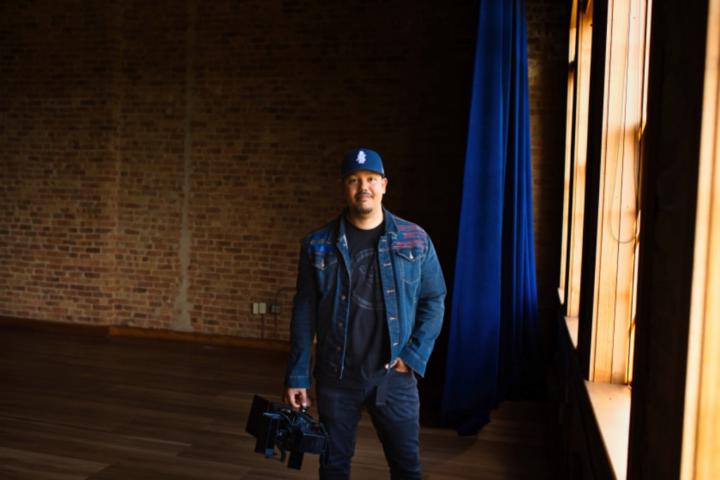
@ashley-ephraim-2489
Ashley Ephraim is a filmmaker and founder based in the Chicagoland area, whose innovative storytelling has made a lasting impact in the film industry
Active 76d ago
Joined Nov 6, 2025
ENFP
Chicago
Powered by