Activity
Mon
Wed
Fri
Sun
Nov
Dec
Jan
Feb
Mar
Apr
May
Jun
Jul
Aug
Sep
Oct
What is this?
Less
More
DFY Profit Vault™
174
Free
BeyondTheBots
16
Free
The Quiet CEO Club
163
Free
The Digital Plug
395
Free
Activity Book Creator Lab
440
Free
workwithsydney
3.6k
4.4
Free
Earn Your First $1 on Skool
165
5.0
Free
The Quote Collective
213
Free
AI-Driven Business Community
9.3k
Free
5 contributions to AI CINEMA SOCIETY

15d •
Hybrid animation workflow | My project for Higgsfield's Festival 2026
Hi friends! This is the AI animated short film I've made for the Higgsfield Global Film Festival. I've made my characters combining hand-drawn art with AI tools. It's a sci-fi-themed story following the main character, Karma, a woman who's stuck in a time loop, where she wakes up everyday in a new reality but dies at the end of the day in all of them. Now she needs to understand what's behind this time loop to break out of it. PS: You might need to switch manually to 1080p to watch it in better quality ;) https://www.youtube.com/watch?v=LQDod97A-ms
0 likes • 13d
amazing
Jul 8 •
New Video
Hey guys! I've been learning to think outside the box in this community, and this is what I came up with. Please check out my video. I'd appreciate any constructive feedback on what works and what I can improve. Thanks in advance!

1 like • 22d
love it
May 10 •
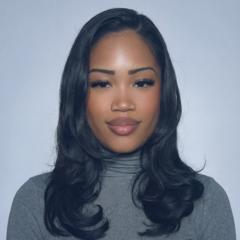
THE EDITORIAL AI METHOD
How to make AI visuals feel expensive, editorial, and emotionally unforgettable. — STEP 1 — STOP THINKING LIKE AN AI ARTIST Most people generate subjects. Luxury brands generate perception. The difference between “AI art” and “campaign visuals” is creative direction. A cinematic visual should feel:• emotionally captured• culturally elevated• visually intentional• imperfect in the right places The goal is not perfection. The goal is obsession. — STEP 2 — BUILD A VISUAL IDENTITY SYSTEM Strong visuals feel recognizable before people even see the logo. Every cinematic brand needs: • a controlled color palette• repeated emotional atmosphere• consistent framing language• recurring textures• recognizable lighting• signature styling This creates subconscious familiarity. People trust consistency. Luxury brands weaponize it. — STEP 3 — USE VOGUE-STYLE CANDID DIRECTION Most AI visuals look fake because they feel posed. Real editorials feel:• accidental• invasive• emotionally observed• slightly imperfect Use:• off-center framing• motion blur• flash photography• grain• soft focus• awkward crops• movement between poses• eye movement away from camera The strongest frames usually happen:before or after the “perfect pose.” — STEP 4 — DIRECT EMOTION, NOT JUST VISUALS Every image should trigger a feeling instantly. Before generating anything, ask: “What emotion does this world create?” Examples:• tension• desire• mystery• elegance• loneliness• power• obsession• surreal beauty Emotion creates memorability. Pretty visuals alone do not. — STEP 5 — CREATE CINEMATIC TEXTURE Cheap visuals feel digitally empty. Luxury visuals feel physical. Add:• dust on lens• film grain• texture overlays• motion blur• flash spill• atmospheric fog• harsh shadows• imperfect lighting• reflective surfaces• depth layers Texture creates realism. Realism creates emotional immersion. — STEP 6 — THINK IN CAMPAIGNS, NOT POSTS Weak brands post random visuals. Strong brands build visual universes. Every post should feel connected through:• mood• styling• lighting• emotional tone• storytelling language
0 likes • 29d
I love this. And it shows your expertise
Aug 4 •
Ai isn’t perfect
Hey everyone, ai isn’t perfect just a reminder it may may take a few generations to get it right. Here are some of my ai slops 😂.

0 likes • 29d
Omg!! we will learn these cool effects high impact animations😱 . Dude! I love this
Aug 17 •
Hi guys ...
hi im ronny from indonesia im a graphic designer around 6 month ago i learn ai for vidio and yep i want to learn more from all of you ... here one of my ads for my clients ... please give me some comments or suggestions - https://youtu.be/mz58k5iVLcA?si=0UKEkgopsQpWlCVG
0 likes • 29d
really good commercial. i love this.
1-5 of 5
@angeline-mortime-3771
Hello. I'm a multihyphenate creative. I do visual ads for DTC brands. Always looking to become better at my craft
Active 11h ago
Joined Sep 7, 2026