Activity
Mon
Wed
Fri
Sun
Jun
Jul
Aug
Sep
Oct
Nov
Dec
Jan
Feb
Mar
Apr
What is this?
Less
More
Owned by Andrew
tutorsmart.com.au connects you with the best teacher-tutors-gurus so you can learn what they know and become a proven expert..
Memberships
Synthesizer: Free Skool Growth
41.2k members • Free
AI Automation Society
348.1k members • Free
the skool CLASSIFIEDS
1.7k members • Free
Skoolaroos
207 members • Free
Emotionally Wealthy Family
58 members • Free
Parenting With Purpose
147 members • Free
Parenting Teens
72 members • Free
9 contributions to Tutor Smart at Tutors Mart

Mar 22 •
I love transforming peoples ideas
I can help you and your community because my gift is in education. I love transforming peoples ideas and knowledge into fully structured and resourced Online Courses that help them help others.
0 likes • Mar 22
One way I do this is by using a piece of software I developed that I call the "Document to Online Course Transformer" - it transforms simple PDFs, Word Docs and Youtube URLs or Video with dialogue into fully structured and resourced Online Courses that can be hosted for you or sent straight to you to add to your Skool Classroom or Website.
Mar 22 •
Why would a child need a tutor? What are they not getting in the mainstream system that tutoring provides?
Many children need tutoring not because they or their teachers are “failing”, but because mainstream schooling is not designed to give sustained, individualised support at the pace and depth one child may need. Tutoring fills very specific gaps: personal attention, targeted skill-building, and a low-pressure space to rebuild confidence and motivation. Limits of mainstream classrooms Mainstream schools are built around one teacher, many students, fixed curriculum and tight time. This creates structural limits, even in excellent schools. - Large classes make true individualised instruction hard; research links bigger class sizes with reduced capacity for one‑to‑one support and inclusive adjustments. - Teachers must “teach to the middle”, so students who are behind accumulate gaps, while advanced students are often under‑challenged. - There is limited time to revisit misunderstood concepts multiple times, step‑by‑step, before the class moves on to the next topic. - Many students are reluctant to ask “silly questions” in front of peers, so misunderstandings stay hidden and grow. - Schools are increasingly complex environments (behaviour needs, diverse learning needs, admin load), which can crowd out the calm, consistent coaching some children require. What tutoring adds that school can’t A good tutoring program is designed to sit alongside school and do what the classroom cannot reliably do for one child. - Individualised pace and sequence - Personalised explanations and methods - Safe, low‑pressure environment - Study skills and executive function - Consistent feedback loop Why families commonly seek tutoring Families usually come when they notice persistent patterns that school alone has not resolved. - Academic signs - Confidence and wellbeing - Extension and enrichment What a service like yours can clearly say it provides Given your existing offer (1:1 Maths, English and Science tutoring for Years 3–12, both online and face‑to‑face), you can legitimately frame your point of difference to parents like this.
0
0

Mar 21 •
At #TutorSmart, we believe education is more than just getting the right answer
At #TutorSmart, we believe education is more than just getting the right answer. In an era where information is instant, our tutors focus on 'the why.' 🧠✨ We prioritise critical thinking and deep understanding. Our ClassCover-verified tutors help students navigate complex topics, build confidence, and develop logic that lasts a lifetime. Based at our Chatswood Head Office, we serve local suburbs like Willoughby, Lane Cove, and Roseville first, then Sydney, Australia-wide, and worldwide through online tutoring. 🌍 Your peace of mind is our priority: ✅ Verified human tutors via ClassCover. ✅ Secure payments via Stripe/PayPal. ✅ We never store your bank details. Ready to upskill or support your child's learning journey? Become a tutor by registering at https://tutorsmart.com.au or book a session today. 💻 Visit: https://tutorsmart.com.au 📧 Email: hello@tutorcafes.com 📞 Call/Text: +61430003953 📍 Shop 1, Ground Floor, 799 Pacific Hwy, Chatswood NSW 2067 Promo: #tutorcafes Loving our service? Help us grow by leaving a 5-star review here:
0
0

Mar 21 •
Ready to level up your learning journey? 🚀
Ready to level up your learning journey? 🚀 TutorSmart bridges the gap between local connection and global expertise for Year 1-12 parents and adults upskilling. Find a verified human tutor in your neighbourhood via postcode search for face-to-face sessions in Chatswood and surrounding suburbs, Sydney-wide, or online worldwide. 🌍☕ Why choose us? ✅ 90+ TutorSmart LMS courses available. ✅ Safety: Tutors are ClassCover verified for your peace of mind. ✅ Secure: Payments via Stripe or PayPal (no bank details stored). ✅ Real human connection with expert mentors. Join us today! Register to become a tutor or book a session at https://tutorsmart.com.au. Visit us: Shop 1, Ground Floor, 799 Pacific Hwy, Chatswood NSW 2067. Promo: @tutorcafes.com Need help? 📞 +61430003953 (AU) | +15855081426 (US) 📧 hello@tutorsmart.com.au P.S. Love our service? Leave a 5-star review: https://g.page/r/CRaqVXBFDit7EBM/review #Tutoring #Education #AdultLearning #TutorSmart #TutorCafes #Upskilling #LocalLearning #Chatswood #SydneyLearning #HumanCentred #Community
0
0
Mar 21 •
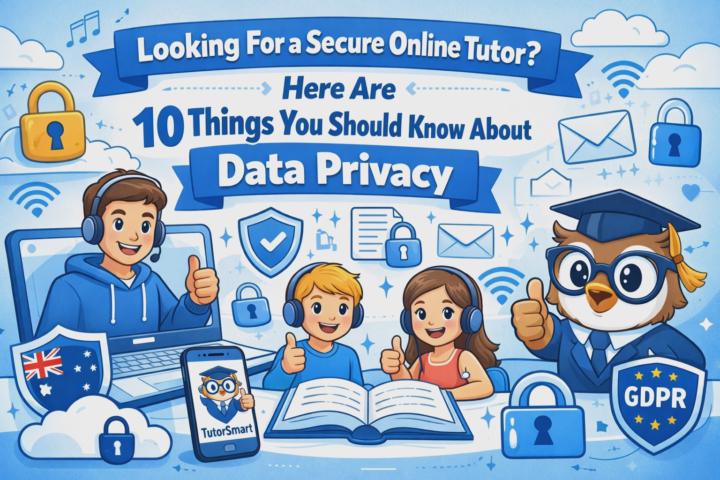
Looking For a Secure Online Tutor?
# Looking For a Secure Online Tutor? Here Are 10 Things You Should Know About Data Privacy ![[HERO] Looking For a Secure Online Tutor? Here Are 10 Things You Should Know About Data Privacy](https://cdn.marblism.com/hCc7wanZ_yA.webp) G’day parents! If you’ve been looking into online tutoring lately, you’ve probably noticed how much the landscape has changed. It’s not just about finding someone who can explain algebra or help with creative writing anymore; it’s about ensuring your child is stepping into a safe, secure, and private digital environment. With the 2026 privacy code updates now in full swing across Australia, data protection has moved from a "nice-to-have" to an absolute "must-have." At **TutorSmart at Tutors Mart**, we believe that a student can only truly excel when they feel safe. That’s why we’ve built our platform, [tutorsmart.com.au](https://tutorsmart.com.au), with a "safety-first" DNA. But how do you know if a tutoring service is actually protecting your family? Whether you’re joining our community of over 2,000+ happy students or just starting your search, here are 10 non-negotiable things you should know about data privacy in online tutoring. ## 1. The Gold Standard: Background Checks and Vetting In the digital world, a Working with Children Check (WWCC) is just the beginning. A secure platform should have a rigorous, multi-layered vetting process. At **TutorSmart at Tutors Mart**, we don’t just "onboard" tutors; we hand-pick them. Every single one of our qualified, AI-trained tutors undergoes enhanced background checks that are updated regularly. **Ask the question:** *"Can you provide proof of your tutor vetting procedures and how often they are reviewed?"* ## 2. End-to-End Encryption: The Digital Vault You wouldn't want a stranger eavesdropping on a private classroom conversation, and the same applies online. Secure platforms must use end-to-end encryption for all sessions. This means that the data: whether it's video, audio, or shared files: is scrambled so that only the tutor and the student can "unlock" it.
0
0
1-9 of 9

@andrew-small-2598
Tutor Smart at Tutors Mart connects people for FREE across Australia and the world with pro teachers, tutors, gurus. Learn @ home, online or in-person
Active 4d ago
Joined Mar 20, 2026