Activity
Mon
Wed
Fri
Sun
Jul
Aug
Sep
Oct
Nov
Dec
Jan
Feb
Mar
Apr
May
Jun
What is this?
Less
More
Memberships
The Buffalo Herbalist
63 members • Free
Dreams Overdue
57 members • Free
7 contributions to The Buffalo Herbalist

16d •
What’s an immune-modulating herb anyway?
“What’s an immune-modulating herb anyway?” This question comes up a lot! So what is it? It’s an herbal action we lean on constantly in our materia medica, so let me tell you how I actually think about it. Your immune system is making decisions all day long, figuring out how hard to respond, how long to stay on the case, and when to stand down and start cleaning up. A modulating herb gets a say in those decisions instead of just cranking everything up, because it’s talking to the part of you that makes the call. That’s why the same plant can settle a response that’s running too hot in one person while supporting one that’s dragging in another. It works by speaking your immune system’s own language right there at the receptor! So next time you hear “immune-modulating,” think “this works with your immune system’s own judgment.” What’s your go-to immunomodulating herb?

0 likes • 16d
Reishi is my go to.
18d •
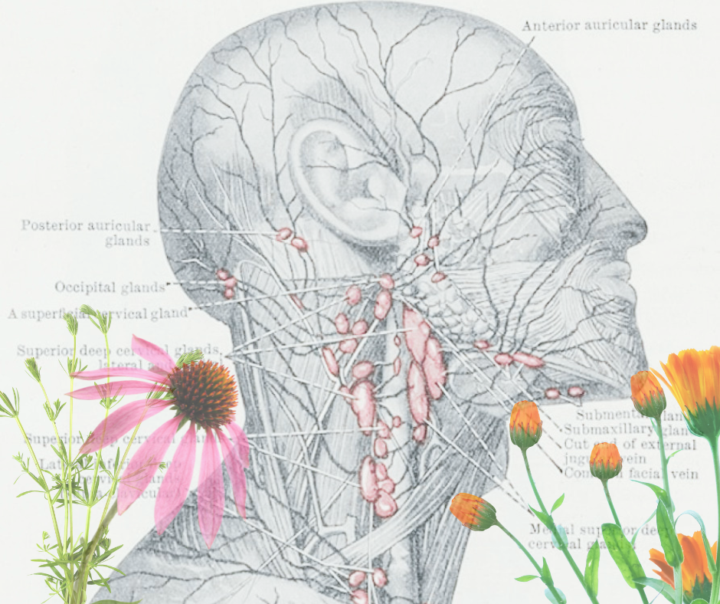
Why does cleavers show up in BOTH the lymphatic AND immune categories?
Quick one for you all, and I want to hear your thinking before I drop the full picture. If you’ve spent any time with lymphatic herbs, you’ve noticed cleavers, calendula, and echinacea keep appearing. Then you find them again in the immune category. Most explanations just say “it gets things moving,” which is a description with zero context. So, here’s my question: do you think these are two separate mechanisms that happen to live in the same plants, or do you think lymphatic actions and immune actions aren’t actually that separate to begin with?
0 likes • 17d
100%- cardiovascular also super important. The immune system is going to be considerably less effective with congestion and poor circulation. All the systems are connected. This is why I love herbal medicine, as it looks at the body as a whole. The plants understand the interconnection between all things better than we do!
May 12 •
Herbal Alphabet Game🌿
I've seen this done in other communities and thought it would be fun to try here! Let's go through the alphabet listing herbs, but with a twist: Latin binomials only. I'll start: A — Althaea officinalis Who's next?

1 like • May 12
B- Bacopa monnieri
May 12 •
Mechanism Monday: GABA and Passionflower
Last week we walked through the wiring, and this week I want to follow the signal that actually moves through it, because the second you see how neurons talk to each other, every nervine herb you've ever heard of starts to click into place. Your central nervous system runs on a balance between two main neurotransmitters: glutamate is excitatory, so it tells neurons to fire, and GABA (gamma-aminobutyric acid) is inhibitory, so it tells them to quiet down. Here's how that quieting actually happens: a GABA molecule docks onto a GABA-A receptor sitting on the surface of a neuron, and the receptor opens a tiny channel that lets chloride ions flow into the cell. Chloride carries a negative charge, so as it rushes in, the inside of the neuron becomes more negative, and a more negative neuron is a much harder one to fire. So inhibition, at the molecular level, is really just a story about chloride. The GABA-A receptor also has a few side doors, which are separate spots on the receptor where other molecules can attach and turn the volume up or down on GABA's signal. The most well-known side door is the benzodiazepine site, which is exactly where pharmaceuticals like Xanax and Valium dock to amplify GABA's effect. Passionflower at the GABA-A Receptor Passionflower (Passiflora incarnata) was one of the first plants studied for activity at this receptor. When researchers started trying to figure out what in passionflower was producing its calming effects, one of the first compounds they isolated was chrysin, a flavonoid (a class of plant compounds you've seen come up across a lot of nervines and adaptogens). Chrysin is actually more concentrated in propolis and honey than in passionflower itself, but it was the passionflower research that put it on the map: Medina et al. (1990) showed it acted as a benzodiazepine-site ligand with anticonvulsant activity in animal models, and Brown et al. (2007) followed up by showing anxiolytic behavior in rats given chrysin specifically. Then Appel et al. (2011) added another layer when a standardized passionflower extract was shown to also slow GABA reuptake at the synapse, which is a completely separate mechanism from binding the receptor.
1 like • May 12
I noticed the last study is 2025. I’m curious, how much current research is being done on plants in general and what are the institutions behind the current research? I’d like to follow them more closely. What’s the best way to do this?
May 11 •
Lesson 1 is live!
Don’t forget to check out Lesson 1 of The Nervous System Course in the Classroom! 📚🧠 If you’ve done through it - what something this lesson has taught you?
2 likes • May 11
I love your teaching style. This is given me so much clarity!
1-7 of 7