Activity
Mon
Wed
Fri
Sun
Jun
Jul
Aug
Sep
Oct
Nov
Dec
Jan
Feb
Mar
Apr
What is this?
Less
More
Memberships
Wealth Blueprint Society
28 members • Free
3 contributions to Wealth Blueprint Society

Oct '25 •
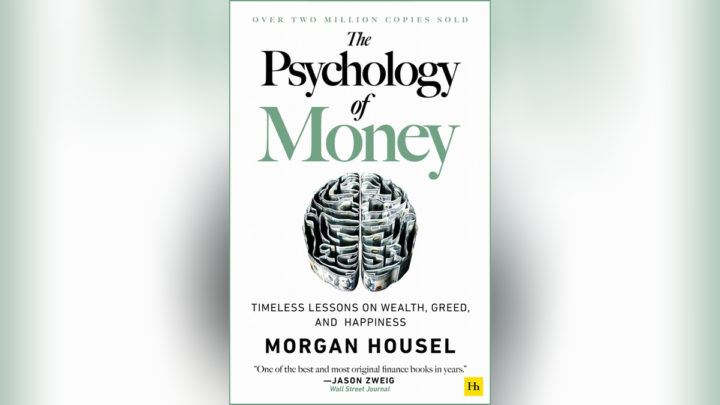
The Psychology of Money: Thought Exchange
Share your worksheet answers here so I can review them before our 1-on-1. This gives us both a chance to see your progress and pinpoint the lessons that stood out most to you. During our session, we’ll dig deeper into those ideas and translate them into practical steps you can apply right away.

1 like • Feb 16
Chapter 7 The highest form of wealth is the ability to control your time. True financial success means having freedom and flexibility. - What does 'freedom' mean to you in financial terms? Freedom to me means to be able to live a comfortable lifestyle as well as being able to free up or increase time I have on my hands in that process. - Have you ever made a financial decision that gave you more control over your time? Investing can inevitably shorten how long you must work which equates to slowly but surely lowering the time you would use in the near future if you didn’t - Which do you value more—earning more money or having more free time? Why? More free time can give you the ability to find more ways to earn more money. Being able to control and own your time is freedom Write down three ways you could use money to buy more time or flexibility in your daily life. Build an emergency fund for months worth of cushion Money for convenience so you don’t have to use more of your time to get what you need Have someone work for you whether that’s your money or someone else Money is a tool. Its greatest return is the freedom to live life on your own terms ______________________________________ Chapter 8 People often buy expensive things to impress others, but in reality, others usually admire the car—not the driver. Status symbols rarely bring the respect we expect. - Have you ever bought something mainly to impress others? How did it make you feel afterward? I have bought a pair of shoes to impress not only myself but others. It was useless, it had no true value because like any shoe it’ll fade with time; It was only temporary - When you see someone with a luxury item, do you admire the person or the object more? Ive had a tendency to look at the object rather than the person. Nowadays everyone has the ability to inevitably acquire the object so it definitely doesn’t change the way I look at the person in most cases. I simply imagine or wonder how I would be able to acquire such myself
1 like • Feb 16
Chapter 11: Reasonable> Rationale You don’t have to make perfectly rational financial decisions—you just need to make ones that are reasonable and sustainable for your life. Behavior that you can stick with matters most. - Have you ever tried to follow financial advice that was 'rational' but didn’t fit your lifestyle? Yes I’ve tried to aggressively save. I couldn’t repeatedly save that same amount I put in at a constant rate - Why might a 'reasonable' decision be better than a 'rational' one? The reasonable decision is why makes sense. Reasonable plans account for your emotions. If something fails unexpectedly that reasonable decision has removed such feelings. It’s not about having a plan, it’s about having a plan you can stick with. - What’s one money habit that works for you even if it’s not 'perfect' on paper? Keeping some money in savings rather than throwing all of my extra money into something else. Being able to allocate my funds in many different avenues allows me to further build in multiple instances. If one drops I haven’t put all my eggs into a singular basket then looking dumbfounded because I have no idea what to do once that baskets falls apart. Write down two financial decisions you’ve made. Label one as 'rational' and one as 'reasonable.' Which one felt better in the long run? Rational: Take all of my extra money from my check and putting it into my savings Reasonable: Take half of my extra money from my check and put half of that into saving and another half into an additional fund The reasonable decision allowed me to be able to build in multiple instances rather than one even though it wasn’t the highest amount. It was also something I could repeat regardless of if something unexpected was to happen. The best financial plan is the one you can stick with—not the one that looks the smartest on paper. ——————————————————————— Chapter 12: Surprise! The biggest financial events are often the least expected. History is full of surprises, and the future will be too.
Aug '25 •
Richest Man of Babylon Feedback
Share Your Reflections on This Book 📚 - What are your overall thoughts, experiences, and takeaways? - How did the book connect with you personally? - What emotions did it bring out? - Did it provide you with any new clarity or perspective? - Who would you recommend this book to, and why? - What were your expectations going in—and were they met? - What was your favorite part of the book?
0 likes • Oct '25
I really enjoyed the read. The sub-stories that appeared throughout the book allowed the reader to connect with each lesson in different ways. A takeaway I repeatedly noticed was the importance of seeking knowledge from those who are already experienced in what you want to accomplish. That idea connected with me personally because it reminded me to stay open to learning from others in all areas of life. The book also made me reflect on the vulnerability that comes with asking for help. For many people, that can be difficult, and they often let that fear stop them from taking valuable opportunities. That message really stood out to me. One part of Chapter 5 that I especially enjoyed gave a vivid understanding of taking advantage of opportunities, because they’re everywhere. But it’s taking action on them that truly leads to success, and that’s when that “luck” appears. I didn’t expect to gain so many lessons told in so many different ways and through so many different characters. I would recommend this book to anyone, but especially to someone who enjoys stories that teach and connect with you on a deeper type of level.
Sep '25 •
Rich Dad Poor Dad Feedback
Share Your Reflections on This Classic 📚 - What was your favorite story, lesson, or principle that stood out the most? - Did the contrast between the “Rich Dad” and “Poor Dad” mindsets connect with your own experiences? - How did the book challenge your beliefs about money, jobs, or traditional education? - Did you gain new clarity about assets vs. liabilities or building wealth through entrepreneurship? - Who would you recommend this book to, and why?
1 like • Sep '25
1. The lesson I enjoyed the most when indulging in this book of knowledge and strategies on obtaining wealth was the reasoning behind how even people who are finically literate still fall prey to fear and doubt. I enjoyed this mostly because it was what I felt like I could relate to this the most. Nobody ever wants to lose money, but taking that risk to go get it, then learning from it if you end up failing is what creates winners. 2.The conflicting ideals of the two dads both had connected with my own ways. The poor dad’s ideology of always telling his son to “stay in school and get good grades for your dream job” was constantly echoing in my household, which created the mindset that that was it. Education or nothing. But the rich dad challenged these ideals and backed them up with visible facts. For a while I have also been introduced to the idea of making your money work for you is the key to success, just never really given the guidelines as to how to create that for myself. 3. This book has opened my mind to new ideas on how to make money for myself, keep my brain moving on ways to attain more and how to also sustain it for long periods of time. As far as education goes, my belief hasn’t changed very much, but I will say the book has further enhanced my belief that school isn’t the end all be all. 4.I now have a broader understanding of assets and liabilities and how people often perceive things as valuable so it encourages people to buy it, mistakably believing that it’s an asset and vise versa. (Not buying an asset because they believe it to be a liability) 5.I would recommend this book to anyone who hasn’t read it honestly. I wouldn’t lock this to any particular age or anything like that. This is knowledge that I feel everyone should learn about, take notes from, to then put to practice in which they see fit.
1-3 of 3