Activity
Mon
Wed
Fri
Sun
Aug
Sep
Oct
Nov
Dec
Jan
Feb
Mar
Apr
May
Jun
Jul
What is this?
Less
More
Owned by Alyssa
Inside the group, groomers learn canine body language, stress reduction, trust-building, safe handling, plus business skills and ongoing education.
Memberships
29 contributions to The DBT Groomers Academy

2d •
Observe first…. Groom Second!!
Well... I've been a bit MIA! 😅 The last few weeks have been crazy. Between the salon, mentoring, training and trying to juggle all the other hats I seem to wear, I've definitely had too many hands in too many pots. Unfortunately, this group has taken a bit of a back seat. But I'm back, and I thought we'd restart with something simple that can make a huge difference. One thing I say all the time is... Behaviour isn't random. Behaviour has a reason. Dogs don't suddenly decide to growl, freeze, pull away, lip lick or avoid us for no reason. Every behaviour is communication. The real question is... are we listening? So here's your challenge for this week. Before you start your next groom, don't rush in. Pause. Observe. Take a minute to really look at the dog in front of you. What are they telling you before you've even picked up a brush or clipper? Where are they looking? How are they holding themselves? Are they relaxed, uncertain or already feeling the pressure? Then make one adjustment based on what you've observed. Slow your pace. Change your position. Start in a different area. Give the dog a moment to process before asking for the next step. Now watch again. Did their body language change? Did they soften? Did they become more engaged? Did the groom feel easier? I'd love to hear what you noticed, so share your observations in the comments. There are no right or wrong answers. The goal isn't to find the perfect technique it's to become better observers. Because when we learn to observe first and adjust second, we're no longer just grooming dogs... we're communicating with them. Let's get these conversations going again. I can't wait to see what you all discover. 🐾
1
0
Jun 9 •
📣 TERMS & CONDITIONS ARE NOW LIVE IN THE CLASSROOM! 📣
After many requests, the Grooming Terms & Conditions Template is FINALLY available inside the classroom. (Sorry about the delay folks wanted to make sure it was perfect!) This document has been developed and refined using over 18 years of hands-on grooming experience and is designed to help protect both you and your business. It covers many of the common situations and challenges groomers face every day, including behavioural concerns, matting, health issues, late arrivals, cancellations, veterinary emergencies, owner responsibilities, and much more. As groomers, we often encounter situations that weren't discussed with clients beforehand, leaving room for misunderstandings and difficult conversations. Clear, well-written terms and conditions help set expectations from the very beginning, creating transparency, professionalism, and protection for everyone involved. This template is designed to save you countless hours while giving you a solid foundation that you can customise to suit your own business, services, and policies. Whether you're a new groomer creating your first client paperwork or an established business wanting to strengthen your existing systems, this resource will help ensure you're covered for many of the situations that can arise in a grooming environment. Head over to the Classroom and download your copy today. 🐾 As always, remember that every business is different, so please review and customise the document to suit your individual needs before implementing it.
0 likes • Jun 10
@Jodi Atfield definitely should be aud I’ll finish this dog and sort it asap for you
0 likes • Jun 10
@Jodi Atfield ok it’s good to go Jodi. Turns out Skool prices are in usd so I’ve adjusted accordingly. I’ll also be putting it on our website if you would like to purchase through that instead. Hoping to get that part sorted tonight.
Jun 9 •
Client Communication: The Most Underrated Skill in Grooming
One thing that genuinely surprises me is the number of clients who tell me they have never received feedback from their groomer. Not once. No discussion about how their dog behaved. No mention of matting. No conversation about skin concerns. No explanation as to why their dog was clipped shorter than expected. They simply collect their dog, pay their bill, and leave. To me, this is a missed opportunity. As groomers, we are in a unique position. We spend hours working hands-on with a pet. We see them in ways that owners often don't. We feel every knot in the coat, every lump under the skin, every reaction to handling, every moment of stress, anxiety, confidence, discomfort, or relaxation. We observe their mobility, their tolerance for different parts of the grooming process, their skin condition, ear health, coat quality, and overall wellbeing. The groom itself is only part of our job. Communicating what we observed is equally important. When we fail to provide feedback, we leave clients guessing. They don't understand why their dog's groom looks different than expected. They don't understand why future appointments may need to be booked more frequently. They don't understand why their dog struggles with nail trimming or drying. More importantly, they lose the opportunity to better understand and support their dog. Professional feedback helps bridge the gap between what happened in the salon and what happens at home. It allows owners to make informed decisions. It gives them a clearer picture of their dog's grooming needs. It helps them understand the reasoning behind our recommendations and creates transparency in the grooming process. I also believe that communication is one of the biggest factors in building trust. When clients feel informed, they feel involved. When they understand the "why" behind our decisions, they are far more likely to trust our professional judgement. They see that we are not simply providing a service we are advocating for the welfare of their dog.
May 25 •
Daycare grooming options
Daycare environments can become overwhelming very quickly when handlers don’t fully understand canine communication, arousal, stress signals, and group dynamics. That’s why The DBT now offers specialised daycare education and handling consultancy designed to help daycare teams create safer, calmer, and more structured environments for both dogs and staff. Our training focuses on: • canine body language • arousal and stress recognition • group management • handling pressure and timing • risk reduction strategies • behavioural observation • the POA Method (Pause. Observe. Adjust.) • practical real-world handling skills This isn’t about overpowering dogs or “just getting through the day.” It’s about learning how to read the dog in front of you, make better decisions earlier, and create better outcomes before behaviour escalates. We offer: • seminars and workshops • onsite team training • live floor coaching • behavioural handling consultancy • tailored daycare support packages The pet industry is evolving and handler education matters more than ever. Stronger handlers. Happier dogs. Better environments. If your daycare team would like more information, feel free to reach out.
0
0
May 25 •
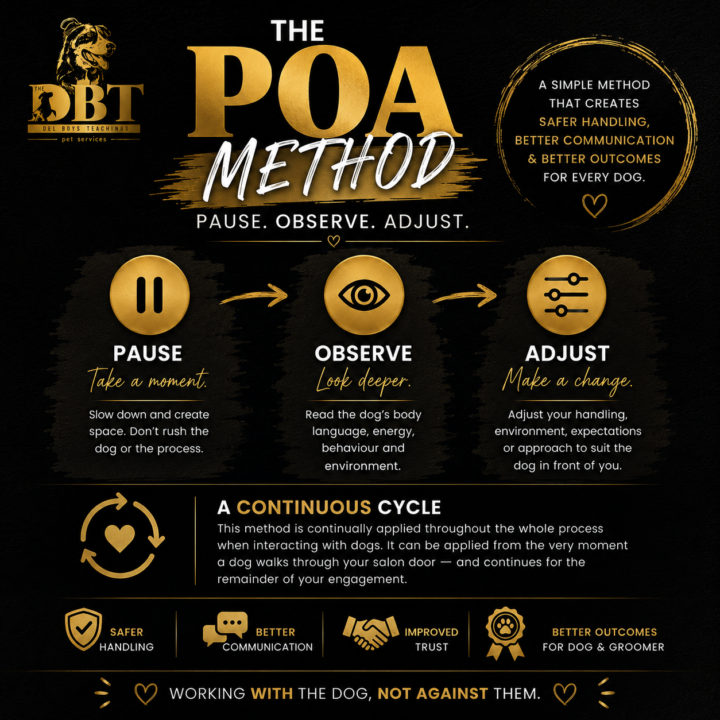
The POA method and what we are actually talking about!
You’ve probably heard us talking a lot lately about the POA Method and thought… “What on earth are these bloody women going on about?” 😂 But the POA Method is actually something incredibly simple that can completely change the way we approach dogs in the grooming environment. POA stands for Pause. Observe. Adjust. The method isn’t about “just getting through” a groom. It’s about understanding the dog in front of you and learning how to work with them instead of against them. So often in grooming, subtle body language signs are missed or ignored. Stress starts building, pressure increases, and eventually behaviour escalates. The POA Method teaches groomers how to slow down and recognise those signs beforethings reach that point. Sometimes the smallest adjustment changes everything:• changing your handling• reducing pressure• slowing down• adjusting positioning• changing expectations• giving the dog a moment to process The POA Method is continuously applied throughout the entire grooming process. In reality, it starts the second the dog walks through your salon door. You pause and observe.How is the dog entering the salon?Where is their tail positioned?Are they hesitant, overwhelmed, overexcited, shut down, avoidant, or confidently engaging?Is the owner dragging the dog inside… or is the dog dragging the owner? These little moments give us huge insight into how that dog is feeling emotionally in that exact moment. From there, we adjust our interaction to suit the dog in front of us. For example, if you have a nervous small dog, approaching in an overbearing or intrusive way may immediately increase pressure and discomfort. Instead, we adjust our energy, handling, body positioning, and expectations to help create a safer and more positive interaction. Then the cycle repeats.Pause. Observe. Adjust. Over and over again throughout the entire engagement with that dog. The POA Method helps groomers become more aware, more adaptable, and more intentional in the way they work. It creates safer handling, better communication, improved trust, and ultimately better outcomes for both the dog and the groomer. 🖤
1
0
1-10 of 29

@alyssa-bird-9236
The DBT Groomers Academy - Calm dogs, Supported Groomers. Woking along side Healing Hounds to empower groomers to achieve their business goals
Active 9h ago
Joined Feb 4, 2026
Mackay