Activity
Mon
Wed
Fri
Sun
May
Jun
Jul
Aug
Sep
Oct
Nov
Dec
Jan
Feb
Mar
Apr
What is this?
Less
More
Owned by Kristina
Advance your peptide research with precise, science-driven guidance, expert community talk, and access to vetted suppliers, promotions, and giveaways.
Enter a new era of skincare—where purity meets precision, and science is distilled into its most elegant form. Dedicated to topical peptides.
Memberships
Expert by Monday (FREE)
512 members • Free
Golden Ratio
124 members • Free
221 contributions to KRISTINA’S PEPTIDE JUNKIES 24

2d •
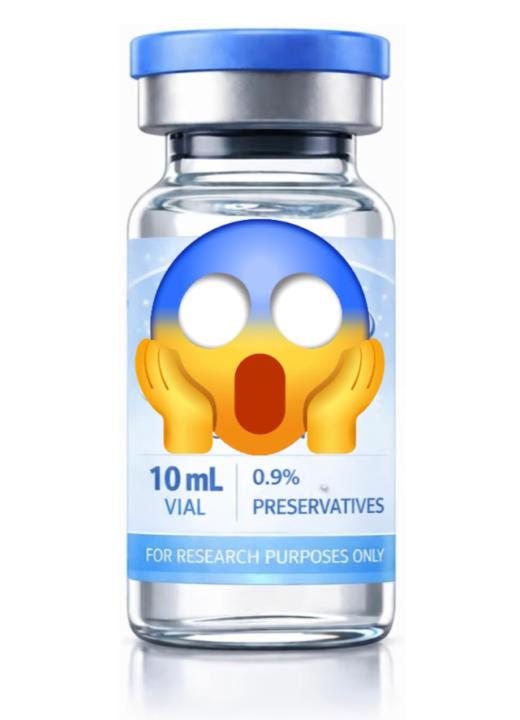
TRUE BACTERIOSTATIC WATER IS NO LONGER AVAILABLE ON AMAZON
Why You Should No Longer Buy “Bacteriostatic Water” (AKA Reconstitution Solution) from Amazon: Many people assume all “water” products are the same. They are not. And when you’re reconstituting peptides, medications, or anything intended for sterile use, using the wrong solution can mean contamination, instability, infection risk, or complete product failure. Let’s break it down clearly: 1. Bacteriostatic Water = NOT Just Water True Bacteriostatic Water for Injection, USP is a sterile, nonpyrogenic preparation of water containing 0.9% benzyl alcohol as a preservative. That preservative helps inhibit bacterial growth after the vial is punctured, which is why it’s commonly used for multi-dose reconstitution. Why it matters: -Sterile -Preservative added -Designed for repeated withdrawals (when handled properly) -Intended for pharmaceutical use 2. Sterile Water = Different Product Sterile Water for Injection is sterile water with no preservative added. It may be appropriate for some single-use reconstitution situations, but once opened it has no built-in antimicrobial protection. That means contamination risk rises after first use. Why it matters: -Sterile -No preservatives -Often single-use *****Should not be treated like bacteriostatic water***** 3. Deionized / Distilled / Purified Water = NOT the Same Deionized water removes mineral ions. Distilled water removes many impurities through boiling/condensation. Purified water may be filtered or processed. But none of those labels automatically mean: -Sterile -Pyrogen-free -Safe for injection use -Suitable for reconstitution of sterile products These waters are often intended for labs, appliances, cosmetics, or general use—not sterile pharmaceutical preparation. Why Amazon Has Become Risky: The issue is not “Amazon” alone—it’s third-party marketplace quality control. Problems can include: - Misleading titles using words like “bac water” or “reconstitution solution” - Products that are sterile-filtered but not manufactured to pharmaceutical standards - Unclear ingredient sourcing - No USP compliance - No lot traceability - Poor storage conditions - Counterfeit or relabeled products - No verified Certificate of Analysis (COA)
0 likes • 1d
@Sharon Lyman I just keep mine in a dark cabinet.
0 likes • 54m
@Aidina Ousley Deionized water is not sterile. I wouldn't chance it. If you purchased that recently and it's unused, I'm sure you can return it.

1 like • 2d
VIP INFO: https://www.skool.com/peptidejunkies24/classroom/ac1bb1f6?md=6acc1094561447119d36815de77e228b
2d •
🚨FELIX FRIDAY SALE!!!🚨
https://felixchem.is/refer/3328/ 10% OFF WITH REFERRAL LINK CODE: KRISTINAMARIE - 20% Off Storewide - +10% Off With Coupon Code - +10% Off With Quantity Discount - +5% Off When Paying via ACH Promotion Details: Starts: Friday at 12:00 AM (Eastern Time) Ends: April 30th at 12:00 PM Noon (Eastern Time)
1
0


0 likes • 2d
It is available in an oral capsule: https://www.skool.com/peptidejunkies24/classroom/8677c416?md=3607c2a505404aedb8f56a005991c0c9
19d •
PEPTIDE JUNKIES 24 STORE
I've added a cool quiz to the site. Answer a few questions and your personal recommendations are generated in seconds just for you skin type and goals. 30% off sale is still going through Saturday at noon with code: EASTERBUNNY https://peptidejunkies24.shop

0 likes • 2d
@Dawn Nelsen Try the quiz again and see if it works. I just tried it and it worked!!!! I reset the quiz so hopefully that's what it needed. 🤞
1-10 of 221