Activity
Mon
Wed
Fri
Sun
Jun
Jul
Aug
Sep
Oct
Nov
Dec
Jan
Feb
Mar
Apr
May
What is this?
Less
More
Owned by Metabolic
Cancer support group for patients & caregivers exploring chemotherapy, immunotherapy, metabolic therapy, nutrition and integrative oncology
Metabolic cancer therapy hub sharing research, protocols, and community insights. Join to support our mission
Memberships
22 contributions to Cancer Warriors

Mar '25 •
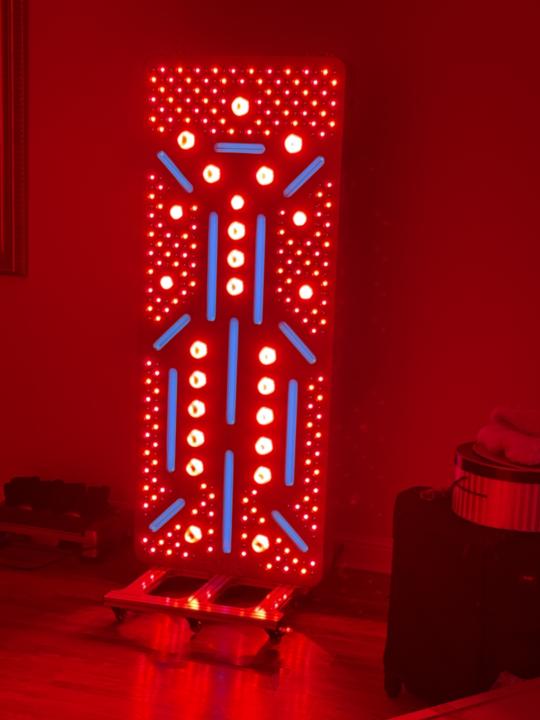
EMR-TEK Ultron Red Light, UVA, UVB, COB
My oldest son, the engineer, set up my Red Light therapy light, so I was able to get some sessions in this week. 3 of the buttons on the side are known by most, UVA, UVB, Red Light, but the COB button stands for Chip on Board, which must be a technical term, but it helps manage the light output. COB chip The lamp's concentrated light emission is powered by a 288W COB chip. It provides specific wavelengths in a balanced ratio and incorporates low flicker and low EMF technology for a soothing experience.
1 like • 6d
Before using Red Light Therapy (RLT), please consult your healthcare provider and review the latest insights from Dr. Paul Marik, who has raised concerns that RLT may, in certain contexts, promote tumour growth or support cancer cell survival — particularly when applied directly over active tumour sites or used alongside therapies targeting cancer metabolism. The evidence remains mixed and inconclusive, but caution may be warranted until more long-term human data are available. https://www.skool.com/cancerwarriors/sunlight-medicine-or-carcinogen?p=c5668806
Nov '25 •
Methylene Blue
Does anyone here have any experience with this? I just purchased it and a 660nm red light.
2 likes • 6d
Before using Red Light Therapy (RLT), please consult your healthcare provider and review the latest insights from Dr. Paul Marik, who has raised concerns that RLT may, in certain contexts, promote tumour growth or support cancer cell survival — particularly when applied directly over active tumour sites or used alongside therapies targeting cancer metabolism. The evidence remains mixed and inconclusive, but caution may be warranted until more long-term human data are available. https://www.skool.com/cancerwarriors/sunlight-medicine-or-carcinogen?p=c5668806
Jul '25 •
Red Light Therapy Also known as Low Level Light Therapy (LLLT) and Photobiomodulation.
How Red Light Therapy Works The goal of Red Light Therapy is to expose a fair amount or a specific quantity of skin to a given wavelength of red light for a set amount of time typically from 10-60 minutes. The light enters the skin as a result of this exposure and provides therapeutic advantages by interacting with the cells internal mechanisms.
0 likes • 6d
Before using Red Light Therapy (RLT), please consult your healthcare provider and review the latest insights from Dr. Paul Marik, who has raised concerns that RLT may, in certain contexts, promote tumour growth or support cancer cell survival — particularly when applied directly over active tumour sites or used alongside therapies targeting cancer metabolism. The evidence remains mixed and inconclusive, but caution may be warranted until more long-term human data are available. https://www.skool.com/cancerwarriors/sunlight-medicine-or-carcinogen?p=c5668806
1 like • 6d
Before using Red Light Therapy (RLT), please consult your healthcare provider and review the latest insights from Dr. Paul Marik, who has raised concerns that RLT may, in certain contexts, promote tumour growth or support cancer cell survival — particularly when applied directly over active tumour sites or used alongside therapies targeting cancer metabolism. The evidence remains mixed and inconclusive, but caution may be warranted until more long-term human data are available. https://www.skool.com/cancerwarriors/sunlight-medicine-or-carcinogen?p=c5668806

Dec '24 •
Red light therapy
Did anyone try red light therapy as an addition to other methods? Any success with it?
2 likes • 6d
Before using Red Light Therapy (RLT), please consult your healthcare provider and review the latest insights from Dr. Paul Marik, who has raised concerns that RLT may, in certain contexts, promote tumour growth or support cancer cell survival — particularly when applied directly over active tumour sites or used alongside therapies targeting cancer metabolism. The evidence remains mixed and inconclusive, but caution may be warranted until more long-term human data are available. https://www.skool.com/cancerwarriors/sunlight-medicine-or-carcinogen?p=c5668806
1-10 of 22
Active 22h ago
Joined May 28, 2025
Powered by