Activity
Mon
Wed
Fri
Sun
Jun
Jul
Aug
Sep
Oct
Nov
Dec
Jan
Feb
Mar
Apr
May
What is this?
Less
More
Memberships
The Long Game Health
14 members • Free
Abstract Photography Sandbox
57 members • Free
INFLAMELESS LIVING
95 members • Free
Photography Foundations
867 members • Free
Photography Community
3.5k members • Free
133 contributions to INFLAMELESS LIVING

9h •
Checking out the Classroom
Hey, for anyone who is new here, I just checked out the Challenges in the classroom. There is a lot of information on what is good for you and what is not so good using @Elena Maren 's Green, Yellow, Red ratings. I love these challenges!

🔥
16h •
🦉🧠🦉🧠🦉Bite-sized Wisdom🦉🧠🦉🧠🦉
Not all calories are born equal. 👓👀👓👀👓👀👓👀👓👀👓👀👓👀👓👀👓👀👓👀👓👀👓👀👓👀👓👀👓👀 The body uses ~50% less energy processing ultra-processed foods versus real whole foods. 👓👀👓👀👓👀👓👀👓👀👓👀👓👀👓👀👓👀👓👀👓👀👓👀👓👀👓👀👓👀 That “easy” calorie often costs you more in the long run. Prioritize whole foods for better energy, less inflammation and easier fat loss. Drop your favorite whole-food meal below! 🔥

2 likes • 10h
@Elena Maren My husband even had some..lol, he is a lover of white rice. And when he has a Crones flare up white rice is a go to....
1 like • 10h
@Elena Maren that batch of rice is a gift that keeps giving...
🔥
18h •
🤩🎉💝🎉🎁Tuesdays are for gifts!🤩🎉💝🎉🎁
Just in case you haven´t seen all my posts about May´s Challenge and Insulin, guess what today´s gift is about 😅😅😅 Yeap, insulin! 😍 So, we need to understand first what insulin is and what´s its role in our bodies. 🧬🧬🧬🧬🧬🧬🧬🧬🧬🧬🧬🧬🧬🧬🧬🧬🧬🧬🧬🧬🧬 Insulin is awesome. You just need to keep it at the right levels. 🧬🧬🧬🧬🧬🧬🧬🧬🧬🧬🧬🧬🧬🧬🧬🧬🧬🧬🧬🧬🧬 This is the executive summary for you. Take a look and let me know what was the most suprising fact you´ve just found out about insulin. And for those of you who want a more detailed explanation check the video here Have a glorious Tuesday! 🤩🫶💝

4 likes • 11h
I didn't know that insulin had many functions. I really like the analogy of it being a key to unlock and arrange where the glucose will be used. What I still am unclear about is why high insulin levels are not good. I tried to explain the functions of insulin to my husband last night and did pretty good but couldn't answer that question and what we do about increase insulin. I just said eat more veggies, lean protein, and less carbs...🤪
3 likes • 11h
@Elena Maren lol, good, that's what I said as well... I guess I just converted him into another accountability partner....
🔥
3d •
💮🥀🌻💮🥀🌻Happy Mother´s Day! 💮🥀🌻💮🥀🌻
Today we celebrate Mother´s Day here in Spain (we celebrate it the first Sunday in the month of May). So I´ve got my presents - these lovely flowers that I will plant today - so today I will be working in my garden a lot (tomatoes to be raised, we have to prune some trees and plant some more herbs). I hope you all have a beautiful Sunday and share some photos to see what you are up to :))
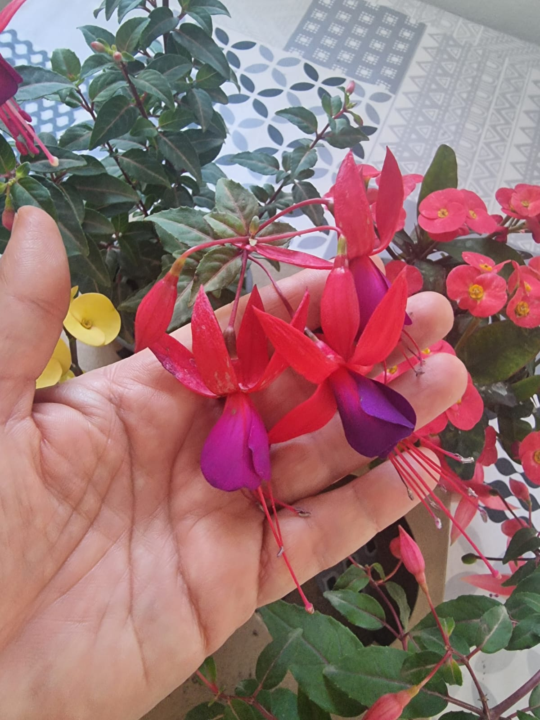
1 like • 1d
A little late! Hope you had a wonderful day!
1 like • 1d
@Elena Maren May 10th...
🔥
3d •
SUNDAY STORY: The Desert That Refuses to Drink
In the Mojave desert, the rains arrive in late summer like a long-overdue promise. After months of cracked earth and merciless heat, the clouds finally break open and the rain pours down and the ground does something that defies every instinct. It refuses to drink. Geologists call this hydrophobicity. The extreme heat, combined with resins released by desert plants, creates an invisible waxy crust on the surface of the soil. The rain lands, beads up and rolls away. The harder it pours, the faster the water escapes. The earth has simply forgotten how to receive the rain. Something almost identical happens inside the human body when it develops insulin resistance, and understanding the parallel may be one of the most useful things we can do for our long-term health. Every time we eat, the pancreas releases insulin, a hormone that functions as a biological key. It travels through the bloodstream to our cells, fits into a specific receptor, and turns it, allowing glucose to enter and be burned as energy. In a healthy body, this is an elegant, almost effortless choreography. A meal arrives, insulin rises gently, cells open, energy flows in, and the signal quiets. Like rain falling on soft soil, everything is absorbed in its own time. But our modern food environment has fundamentally changed our metabolism. When we consistently eat highly processed carbohydrates and added sugars - things that break down almost instantly into glucose - the insulin signal never gets to quiet. And just as the desert soil develops its waxy crust as a response to relentless heat, our cells begin to protect themselves from the relentless flood of insulin by pulling their receptors inward. They grow numb to the signal. This is insulin resistance - and it is important to understand that it is not a failure of the body. It is the body doing exactly what a body does: adapting to its environment, protecting itself from what it perceives as excess. The cell, overwhelmed by a constant influx of energy it cannot process, locks its own door. The problem is that a protective adaptation, sustained long enough, becomes its own disease.

2 likes • 1d
@Elena Maren The stories are very helpful! I appreciate the time you put into them.
1-10 of 133

@bonnie-hoskin-9645
I feel awkward making BIOs so, introverted I guess, with a pinch of spontaneity. Portrait photographer turned student of all things photography.
Active 9h ago
Joined Feb 5, 2026
Bentley, AB Canada