
Write something
Pinned

Mar 18 •
Welcome to UOU: The Standard — Read This First
This isn’t just another fitness group. This is UOU — You Owe You. This community is built on one thing: 👉 Accountability to yourself. We don’t chase motivation here. We build discipline, identity, and standards. Before you scroll, I need you to do one thing: 👇 Drop your answer below: 1. What is your goal right now? (Be specific — fat loss, strength, confidence, performance, etc.) 2. What has been holding you back? (Be honest — time, consistency, excuses, lack of structure, etc.) 3. Finish this sentence: 👉 “If I actually locked in for the next 6 months, my life would…” ⚠️ Understand this: - No one is coming to save you - No shortcuts exist - Results come from standards, not feelings This group will give you: ✅ Structure ✅ Accountability ✅ Real coaching ✅ Real results But you still have to do the work. 💯 Community Rule #1: Follow the plan, not your mood. 🎯 Let’s get to work. — Coach UOU
5h •
The Metabolic Syndrome of Menopause (Full Breakdown)
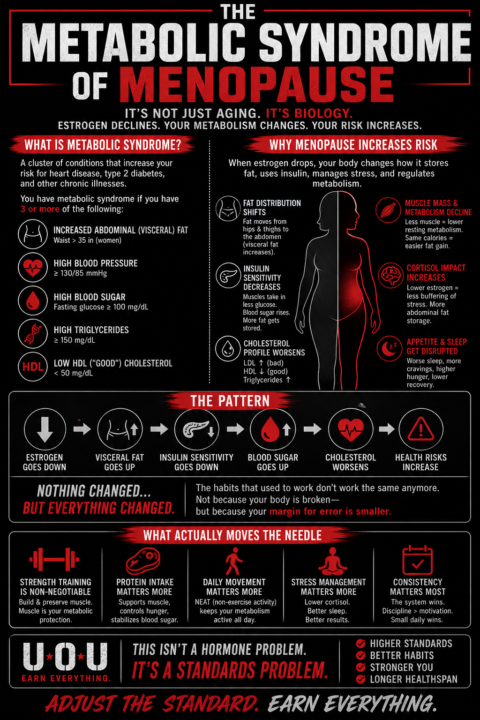
This isn’t one single disease. It’s a cluster of changes that happen in the body as estrogen declines—especially during perimenopause and menopause. And those changes increase the risk of what’s known as metabolic syndrome. Metabolic syndrome is defined by having multiple of the following: • Increased abdominal (visceral) fat • Higher blood pressure • Elevated blood sugar • Higher triglycerides • Lower HDL (“good”) cholesterol When these show up together, your risk for heart disease and Type 2 Diabetes goes up significantly. Now here’s where menopause comes in. As estrogen levels drop, your body starts to change how it functions—not just hormonally, but metabolically. First, fat distribution shifts. Before menopause, estrogen helps store fat in the hips and thighs (subcutaneous fat). After menopause, that same fat is more likely to be stored in the abdominal region—around your organs. This is called visceral fat, and it’s more metabolically active and more dangerous. Second, insulin sensitivity decreases. Your muscles become less efficient at pulling glucose out of the bloodstream. That means more circulating blood sugar, which over time gets stored as fat—especially in the abdomen. Third, your cholesterol profile changes. LDL (bad cholesterol) tends to increase. HDL (good cholesterol) often decreases. Triglycerides can rise. This combination increases cardiovascular risk. Fourth, muscle mass tends to decline. Less muscle means a lower resting metabolism. So even if your eating habits stay the same, your body burns fewer calories. That leads to easier fat gain over time. Fifth, cortisol (your stress hormone) has a stronger impact. Estrogen used to help regulate stress response. Now, cortisol is more likely to drive fat storage—especially in the abdominal area. Sixth, appetite and sleep can become less stable. Sleep disruptions (like night sweats or waking up frequently) affect recovery, hunger hormones, and energy levels.
0
0
5h •
Estrogen Education
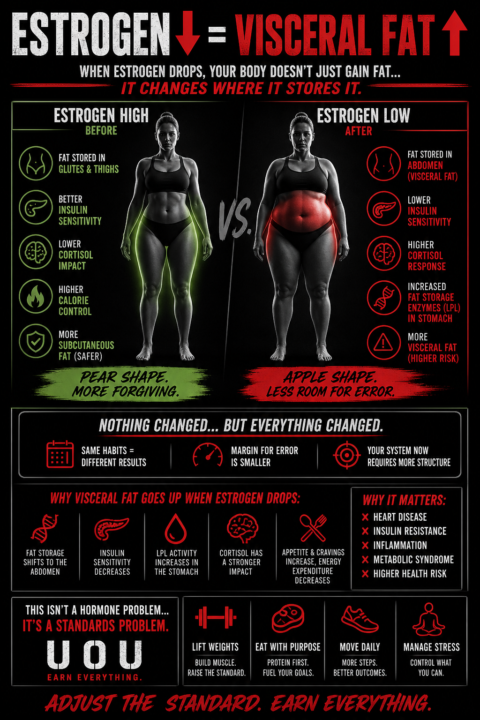
Estrogen ↓ = Visceral Fat ↑ (Here’s the Truth) When estrogen levels drop (especially during perimenopause and menopause), your body doesn’t just gain fat… It changes where it stores it. Before: • Fat is stored in the hips and thighs • Better insulin sensitivity • Lower stress impact • More “forgiving” metabolism After: • Fat shifts to the abdomen (visceral fat) • Insulin sensitivity decreases • Cortisol (stress hormone) has a bigger impact • More fat is stored around your organs This isn’t random — it’s physiological. Your body increases fat storage in the stomach because: • Fat storage enzymes (LPL) become more active there • Estrogen no longer helps regulate distribution • Blood sugar control isn’t as efficient • Stress responses hit harder So what does that mean? 👉 The same habits that used to work… stop working. That’s why so many people say: “I didn’t change anything, but I’m gaining weight.” You didn’t… But your body did. Now here’s the part most people avoid: This doesn’t mean you’re stuck. It means your margin for error is smaller. Which means: • Strength training is non-negotiable • Protein intake matters more • Daily movement matters more • Stress management matters more Most people don’t have a hormone problem… They have a lifestyle that no longer matches their biology. Adjust the standard. Earn Everything.
0
0
11h •
Genetics vs Lifestyle
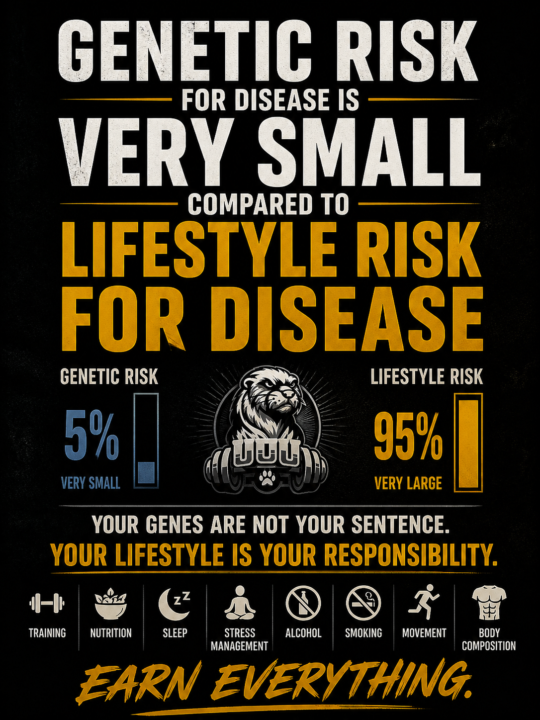
Most people blame genetics… “It runs in my family.” “I’m just built this way.” “I can’t change it.” But here’s the truth: Genetic risk for disease is small compared to lifestyle risk. Your daily habits are louder than your DNA. What you do every day matters more than what you were born with: • How you train • How you eat • How you sleep • How you manage stress • How much you move • What you avoid You don’t get to control your genes. But you control your effort. And effort, repeated daily, becomes your outcome. Your genes are not your sentence. Your lifestyle is your responsibility. Stop waiting for perfect conditions. Start building better habits. Earn Everything.
1
0
1d •
Your Kid Doesn’t need to play sports to lift weights
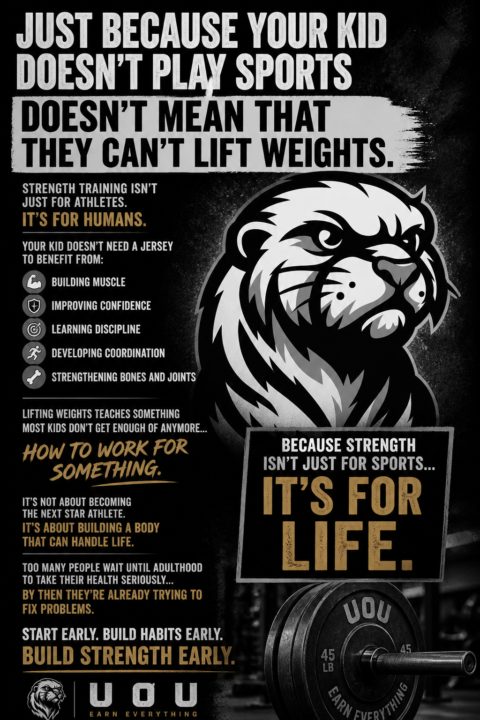
Just because your kid doesn’t play sports doesn’t mean they shouldn’t lift weights. Strength training isn’t just for athletes. It’s for humans. Your kid doesn’t need a jersey to benefit from: • Building muscle • Improving confidence • Learning discipline • Developing coordination • Strengthening bones and joints Lifting weights teaches something most kids don’t get enough of anymore… How to work for something. It’s not about becoming the next star athlete. It’s about building a body that can handle life. Too many people wait until adulthood to take their health seriously… by then they’re already trying to fix problems. Start early. Build habits early. Build strength early. Because strength isn’t just for sports… It’s for life. Earn Everything.
0
0
1-30 of 79

skool.com/uou-the-standard-5428
Follow the plan. Earn everything. Strength, discipline, and accountability—no shortcuts.
Leaderboard (30-day)
1

+8
2

+3
3

+2
4

+1
Powered by