
17d • General discussion
BPC-157
Cellular Repair, Signal Restoration & Structural Regeneration
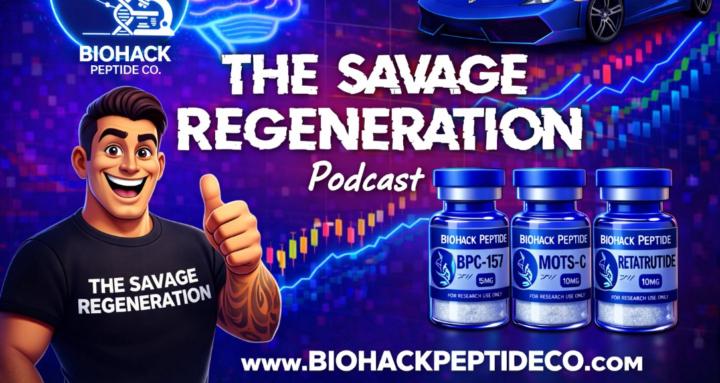
Savage Regeneration Course Series
⚠️ Disclaimer This content is for educational and research discussion purposes only.BPC-157 is not approved for human therapeutic use. Nothing herein is medical advice.
MODULE 1 — WHAT BPC-157 ACTUALLY IS (CUT THE MYTHS)
BPC-157 = Body Protection Compound 157
It is a 15–amino acid peptide fragment derived from a protective protein found in human gastric juice.
Let that sink in.
What makes BPC-157 special:
- Stable in harsh environments (acid, stress, inflammation)
- Systemically active (gut → brain → connective tissue)
- Acts as a signal amplifier, not a brute-force stimulant
MODULE 2 — THE REAL PROBLEM BPC-157 SOLVES
Most chronic injuries don’t persist because tissue can’t heal.
They persist because:
- Blood flow signaling is impaired
- Growth factor cascades are disrupted
- Nitric oxide signaling is broken
- Inflammation never resolves
- The nervous system stays in threat mode
BPC-157 addresses coordination failure, not just damage.
That’s why it shows up in research involving:
- Tendons
- Ligaments
- Muscle
- Nerves
- Gut lining
- Vascular injury
- Brain–gut axis dysfunction
MODULE 3 — MECHANISM OF ACTION (NO BRO SCIENCE)
BPC-157 doesn’t act like HGH or steroids.
It works through signal orchestration.
Key mechanisms discussed in literature:
- Modulates NO (nitric oxide) signaling
- Influences VEGF (angiogenesis / blood vessel repair)
- Supports fibroblast migration
- Stabilizes endothelial integrity
- Reduces inflammatory cytokine chaos
- Protects neurons under stress
Translation:
MODULE 4 — INJURY HEALING VS PAIN MASKING
This is critical.
Pain relief ≠ healing.
BPC-157:
- Reduces pain as a consequence of repair
- Does not block pain pathways like NSAIDs
- Does not shut down inflammation recklessly
- Allows inflammation to resolve properly
This is why people report:
- Pain disappearing without numbness
- Movement returning before strength
- Stability before hypertrophy
That’s correct healing order.
MODULE 5 — GUT → BRAIN → BODY CONNECTION
BPC-157 is unique because of its origin.
It was identified due to its role in gastric protection.
Research discussions include:
- Gut lining repair
- Reduction of intestinal permeability
- Protection against ulcers and GI stress
- Indirect effects on mood and anxiety via gut–brain axis
Why this matters:
A leaky gut keeps the nervous system inflamed. An inflamed nervous system prevents recovery everywhere else.
BPC-157 often improves far more than the injury you aimed it at.
MODULE 6 — NERVOUS SYSTEM & NEUROPROTECTION
This is where BPC-157 gets underestimated.
Research suggests effects on:
- Peripheral nerve injury recovery
- Central nervous system stress protection
- Dopaminergic system stabilization (context-dependent)
- Reduced neuroinflammation after trauma
This is why people describe:
- Reduced anxiety after injury
- Improved confidence returning with movement
- Less fear-avoidance behavior
That’s not psychological. That’s signal integrity.
MODULE 7 — DOSING PHILOSOPHY (EDUCATIONAL CONTEXT)
⚠️ Educational discussion only.
Savage rule:
BPC-157 works better low and consistent than high and reckless.
Key principles discussed publicly:
- Local vs systemic considerations
- Consistency > aggression
- Respect connective tissue remodeling timelines
- Do not chase sensation — chase function
BPC-157 is not a stimulant. If you “feel” it immediately, you’re misunderstanding it.
MODULE 8 — STACKING LOGIC (ADVANCED THINKING)
BPC-157 is often discussed alongside:
- TB-500 (actin mobilization vs signal coordination)
- Collagen & glycine support
- Adequate protein intake
- Proper loading mechanics (rehab > ego lifting)
- Sleep & parasympathetic recovery
Key rule:
Peptides don’t override stupidity. They amplify your habits — good or bad.
MODULE 9 — WHO THIS IS FOR (AND WHO IT ISN’T)
Good fit (research context):
- Chronic tendon or ligament injuries
- Post-surgical tissue recovery models
- GI stress or damage research
- Nervous system overload from injury
- Athletes rebuilding capacity
Bad fit:
- People looking to ignore rehab
- Ego lifters chasing faster PRs
- Anyone expecting overnight miracles
- Those unwilling to reduce inflammation inputs (stress, alcohol, garbage sleep)
MODULE 10 — THE SAVAGE REGENERATION TAKE
BPC-157 isn’t exciting.
And that’s why it works.
It restores structural trust between:
- Tissue
- Blood flow
- Nerves
- Brain
When that trust returns, pain disappears on its own.
FINAL WARNING (LOCK THIS IN)
BPC-157 will not save you from bad movement, bad recovery, or bad discipline.
But if the body still remembers how to heal
—BPC-157 reminds it where to start.
0
0 comments
BPC-157
powered by
skool.com/thw-savage-regeneration-3597
This is an education hub for all things relating to human biological optimization using peptides for achieving maximum human potential!
Suggested communities
Powered by