
Write something
Pinned

1d •
How You Finish This Year Will Define the Next
Most people start to coast this time of year. They tell themselves they’ll get serious again in January, that they’ve earned the break. But the truth is, how you finish this year determines how you start the next. Momentum doesn’t magically appear on January 1st. It’s built right now, in the moments when no one’s watching and everyone else is slowing down. The way you show up in these final weeks says everything about the kind of year you’re creating ahead. Because anyone can start strong, but few have the grit to finish stronger. So while others are taking their foot off the gas, you double down. You sharpen your focus. You look for leverage, the tools, systems, and strategies that multiply your results without multiplying your effort. Because winning isn’t about working harder anymore. It’s about finding your unfair advantage. So let me ask you this: What’s the one thing you can commit to finishing in these final weeks that will set you up for a powerful new year?

4d •
New to The AI Advantage? Read This First (It Will Save You Weeks)
Hey everyone! We get a LOT of new members every day, and many of you jump in with enthusiasm… and then immediately get swarmed by: • bots with stock profile photos • “DM me for mentorship” sales funnels • vague success promises • people who don’t even use AI but want to pitch things This post is for the real humans who genuinely want to learn, build, and grow with AI. Here’s your starter roadmap 👇 1️⃣ First rule: Learn to spot bots & funnels This community is incredible — when you know how to filter it. Red flags to watch for: • “Drop YES and I’ll help you make income fast” • “DM me” within 2 messages • Lifestyle promises (“I made 20k in 2 days!”) • Zero real builds, zero screenshots, zero proof • Over-friendly messages from accounts created 1 week ago Legit members don’t chase you. They build in public. ⸻ 2️⃣ Second rule: Follow people who show their work If someone doesn’t post: • what they built • how they built it • what went wrong • what improved their workflow …they’re not someone you need to learn from. I personally follow only those who provide actual value: builders, testers, thinkers, problem-solvers. Start small. Follow intentionally, not emotionally. ⸻ 3️⃣ Third rule: Start with ONE person’s breadcrumbs This community hides its best knowledge in the comments, not just the posts. Pick one skilled member and go through: • their posts • their comments under other posts • their replies to questions You’ll find frameworks, prompts, thinking patterns, debugging strategies, and logic you can actually use. If you want a beginner → advanced path, my posts follow that structure: starting simple and getting progressively more technical. ⸻ 4️⃣ Fourth rule: Don’t hoard — apply Don’t be a collector. Don’t fill your Google Drive with 200 prompts you’ll never touch. Instead: • learn one thing • apply it instantly • build something small • break it • fix it • repeat This is the fastest way to grow your actual skillset. ⸻ 5️⃣ Fifth rule: Show your journey


6m •
Ethical Awareness, Emotional Intelligence
Real expertise in AI extends beyond technical fluency. It requires ethical awareness, emotional intelligence, and an understanding of how systems affect people. The hardest problems in AI are not mathematical. They are human. They involve trust, accountability, and judgment, areas where automation cannot replace responsibility.
0
0

2d •
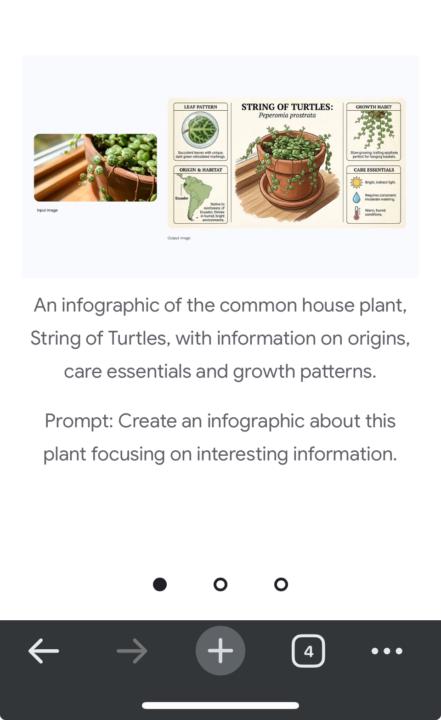
I just turned a messy sketch and raw notes into a clean, professional infographic in seconds using AI.
And that changes how we learn. I tested Nano Banana Pro a lot more, and I discovered something really powerful. It can generate beautiful, context-rich infographics that actually help you understand things, not just look nice. They can include explainers, structured information, and diagrams based on real-world facts or on content you provide. So I tested it. I made a simple hand sketch on paper about: What AI is. What AI agents are. And what the real practical uses of AI agents are. I gave that sketch to Nano Banana Pro and asked it to turn it into an infographic. The first result already surprised me. It actually tried to read and understand what I drew and completed it with diagrams and structure. After that, I asked it to create a fresh, clean infographic inspired by the design I shared. It generated a version that already looked close to my idea, but in digital form. Then I pushed it one step further and asked it to make it more professional. And this is where it got really interesting. To improve the final result, I even asked the AI itself to help me write a better prompt for creating better infographics. I used that improved prompt, generated a new version, refined it again, and again. And as you can see, each iteration became clearer, more structured, and more professional. So now imagine this at scale. You can take information from documents, books, courses, notes, and research and turn all of that into visual learning material that your brain understands much faster than long text. Would you use AI infographics to learn faster? And what subjects would you want to turn into visuals?
11m •
Expertise?
A short training does not create expertise. Prompting is not understanding. Familiarity does not equal wisdom. AI expertise is not about memorizing commands. It is about understanding systems, context, risk, and human impact. The current landscape feels less like a mature field and more like a frontier, filled with excitement, confusion, and competing claims.
2
0
1-30 of 9,843

skool.com/the-ai-advantage
Founded by Tony Robbins & Dean Graziosi - AI Advantage is your go-to hub to simplify AI, gain "AI Confidence" and unlock real & repeatable results.
Leaderboard (30-day)
1

+2781
2

🔥
+1392
3

+1239
4

+860
5

+660
Powered by