
Write something
Pinned

3h •
The real battle isn’t out there. It’s in your mind.
I’m reading a book called The War of Art and I’m reminded that the real enemy to our progress isn’t lack of talent… it’s resistance. Resistance shows up as hesitation. As overthinking. As “I’ll start tomorrow.” As telling yourself you need one more tutorial, one more plan, one more perfect moment. But the truth is, resistance doesn’t show up when something doesn’t matter. Resistance shows up when you’re getting close to the thing that could change your life. So if you feel the pull to procrastinate today…If your mind is trying to talk you out of learning something new…If you're convincing yourself you’re not ready yet… Good. That’s the signal. That means you’re right on the edge of growth. Instead of trying to defeat resistance in one big heroic moment, do what actually works: Show up for one small action. Learn one thing. Try one messy draft. Take one uncomfortable step. You don’t need to win the war today. You just need to win this moment. Because motion breaks resistance. Momentum quiets the fear. And once you start, everything gets easier. So ask yourself: What is the one simple thing you can do today...right now...that Resistance doesn’t want you to do? Do that. Post it below. Let’s make today the day we move forward anyway.

2h •
What You Can Try Today with AI: Transcribing
I had a little bit of technical difficulty (the platform I was using had some adjustments, and I didn't consistently navigate from screen to screen 🫣), but I still thought it would be a great training to share since so many people don't know that transcription is possible with AI. Feel free to use the "gear" at the bottom to speed up the video and if this was something new for you, I would love to hear in the comments.

34m •
🤝 The Human Edge: What AI Still Can’t Replace
Every few months, a new wave of headlines declares that AI is coming for everyone’s jobs. It is efficient, tireless, and getting smarter every day. But when you strip away the hype and the fear, one truth always stands out: AI might change how we work, but it can’t replace what makes us human. We’ve spent years inside this world, testing tools, building systems, and watching how people actually use AI. What we’ve learned is simple: the people who thrive in the age of AI aren’t the most technical. They’re the most human. They lead with empathy, intuition, and creative problem-solving. They understand people, not just processes. And that’s something no algorithm can replicate. The Myth of Replacement Let’s start by debunking the biggest myth: that AI is here to take over. This belief grows out of one misunderstanding. People assume AI thinks the way we do. It doesn’t. It processes data, not emotion. It mimics creativity, but it doesn’t feel it. It predicts what comes next, but it doesn’t understand why. When we confuse imitation with comprehension, we overestimate AI’s capabilities and underestimate our own. AI can write, design, and analyze at lightning speed. But it doesn’t know what matters, why it matters, or how it makes people feel. That’s where our human edge lives. The Power of Empathy in an Automated World Empathy has become one of the most underrated skills in the AI era. As automation takes over repetitive tasks, what remains valuable is the ability to connect, to understand someone’s needs, frustrations, or aspirations. Think about a business owner responding to a customer complaint. AI can draft a polite response, but it can’t care. It doesn’t feel the urgency or the responsibility that comes from being accountable to another human being. Empathy is what turns communication into connection. And connection is the foundation of trust, something no machine can automate. 1. Listen first, respond second - AI is fast, but listening takes time. Pausing before responding helps you see what’s really needed. 2. Personalize with context - Use AI to speed up structure, but make sure your message reflects genuine understanding. 3. Protect your tone - AI can’t feel tone shifts. You can. Always read your AI-assisted work as if you were the recipient.



9d •
😭Learn from my terrible mistake that just happened while upgrading to a ChatGPT business account
Please see an update for me this morning in the comments. This disaster is going to make me a much better founder. I got up at 3:45 AM today to begin rebuilding my company. Original post follows: I’m standing here writing this in tears, and I want to give a very sobering warning to anyone who is considering upgrading from ChatGPT plus to a business Team’s account on ChatGPT. There is a a glitch that was unknown to me before I started this process, but is apparently well known in the open AI developer community that all of your data is deleted when you migrate it and you can’t get it back. Everything I’ve been building for months is just …. Gone. Other than what I had saved and backed up in my personal files, my entire ChatGPT history has been zeroed out, and it really hurts because this was like my external brain for both home and my business that I’m building. Open AI acknowledged that their company documentation failed to include a warning that all of my personal data would be deleted and everything that I have been working on since day one in my accounts has been deleted, and there’s nothing I can do to get it back even though I followed their exact instructions on merging my personal and business accounts, to the letter. I just paid $618 to upgrade my account to two seats on a business plan and merged the data from my personal account to my business plan. Within a minute or two of that transaction going through as I was following the step-by-step worksheet that ChatGPT itself printed out for me. My accounts froze, and I had to log out. I logged back in everything was blank. When I used my previous emails that I had my accounts tied to to log back in ChatGPT opened free tier accounts using my business email that I just paid $618 to open my business account on. I’ve escalated this to ChatGPT Support and they were extremely unhelpful. Basically they said sorry it’s a known issue and there’s nothing we can do. I was planning on shipping a product today using the ChatGPT business plan because it offers a secure link so that I’m not sending out raw proprietary JSON code.
1-30 of 9,886
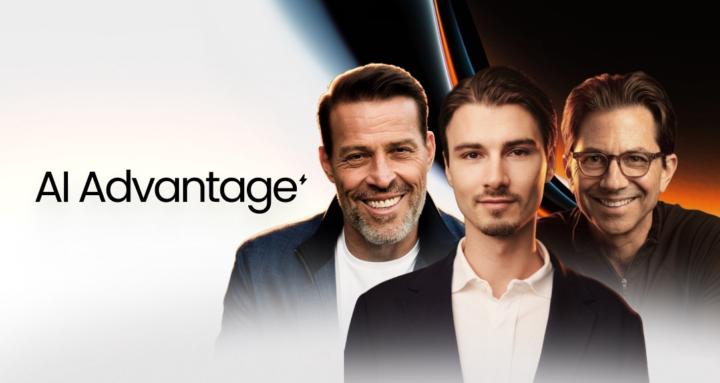
skool.com/the-ai-advantage
Founded by Tony Robbins & Dean Graziosi - AI Advantage is your go-to hub to simplify AI, gain "AI Confidence" and unlock real & repeatable results.
Leaderboard (30-day)
1
+2282
2

🔥
+1366
3

+914
4

+765
5

+617
Powered by