
Feb 18 • General discussion
Two Roads and Signposts
Yesterday I had two conversations.
They did not seem related at first.
But by the end of the day, I realized I had been standing at a fork in the road without moving my feet at all.
The first conversation was with a man I once loved.
We never made anything happen between us. Perhaps we were both waiting for a precise moment — the right alignment, the right timing — and those moments never arrived.
He is stubborn and arrogant, sarcastic and angry, forthright and kind — all at once. A complicated man. A grieving man.
He has a new girlfriend. I asked him how it was going.
His answer told me something quietly clarifying: he has not changed much.
At one point the conversation turned toward God. He still holds God responsible for his wife’s stroke and death. His words were sharp and matter-of-fact:
“I still wouldn’t do God a favor if He needed one.”
A favor.
I did not argue.
I did not defend.
I did not correct.
I simply noticed.
Later that same day, I spoke with another long-time friend. In that conversation, this sentence rose up:
“I want to do so many things with my time, my life, what I have left in this world — but if God doesn’t go with me, I don’t want it. Not with all of my heart.”
And I felt something settle inside me.
Because that statement is now true in me.
There are still many things I want.
Financial stability.
Healing in my body.
Deep friendships.
A companion to walk through life with.
Meaningful work.
Growth.
God is not against growth or any of those things.
But somewhere along this road, something has shifted in me.
I no longer want the gift without the Giver.
That realization did not come all at once. It came slowly. Quietly. Mile by mile.
There was a time when I lived as though I were standing outside in the cold with my face pressed against the glass — longing for warmth, longing for belonging, believing I did not have a seat at the table.
When you believe you are an orphan, striving makes sense.
Anger makes sense.
Resentment makes sense.
Pride makes sense.
You fight for scraps when you think no one is setting a place for you.
But somewhere along this journey, while I stayed seated — even when the road was long and the terrain rough — I began to realize something astonishing:
The striving was not my identity.
The anger was not my identity.
The pride was not my identity.
They were armor.
Life-destroying thoughts that once felt familiar began to feel foreign. Life-giving thoughts began to feel like home. Peace began to rise in proportion to surrender.
I did not notice the change as it was happening.
But yesterday, listening to those two voices — one negotiating with God, one surrendering to Him — I recognized how far I have come.
Not in perfection.
In direction.
I look down sometimes at my own legs.
The right one looks like it always has.
The left does not...this is a recent development.
It will never look the way it once did.
There are days when that difference catches me off guard — a visual reminder that something altered the terrain of my life.
For a long time, I measured loss in what was taken.
Now I see something else.
That altered leg became part of the road.
It slowed me.
It limited me.
It forced proximity — to stillness, to dependence, to questions I might have outrun otherwise.
I would not have chosen it.
But I cannot deny what grew in me because of it.
Not punishment.
Formation.
Not divine injury.
Invitation.
The road changed my stride.
And somewhere in that altered gait, I learned to stay near.
When the road grows tedious, we are tempted to measure speed.
We ask:
Why is this taking so long?
Why is healing so slow?
Why does the terrain still feel uneven?
But perhaps a better measure is direction.
Are we still arguing with the Driver?
Or are we learning to rest beside Him?
Are we demanding explanations?
Or are we saying, “If You do not go with me, I do not want it”?
Two roads diverged long ago — not in a dramatic moment, but in small daily decisions.
One road clings to offense.
One road yields to surrender.
One road keeps God in the defendant’s chair.
One road keeps Him in the driver’s seat.
We do not always notice which road we are walking until we hear our own voice echo back to us.
“If You don’t go with me, I don’t want it.”
That sentence is a signpost.
It does not mean I have arrived.
It means I am headed somewhere different than I once was.
For the weary traveler reading this:
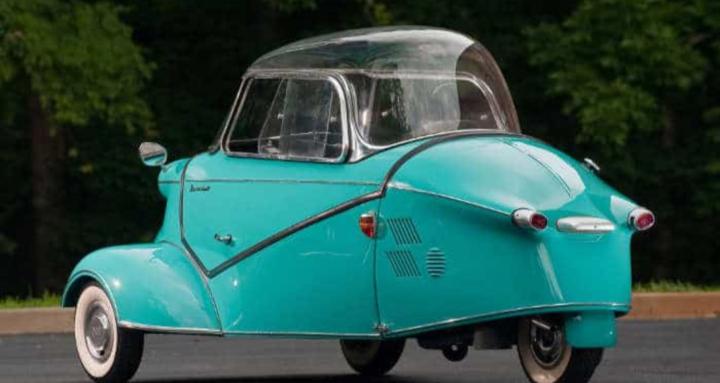
If the vehicle feels small…If the road feels long…If the pace feels slower than you hoped…
Put a pin in this moment.
Lift your eyes.
Look for the signposts.
Is your desire softer than it once was?
Is your anger less consuming?
Is your striving less frantic?
Do you find yourself wanting the Giver more than the gift?
That is distance traveled.
You may not be where you want to be.
But you are not where you were.
And that matters.
Stay in the vehicle.
We are not just going somewhere better.
We are becoming someone different.
And if He does not go with us, we do not want it.
Not anymore.
1
0 comments
Two Roads and Signposts
powered by
skool.com/stay-in-the-vehicle-7203
A trauma-informed space to learn grounding, breath, and nervous-system tools that help you stay present, safe, and embodied in daily life.
Suggested communities
Powered by