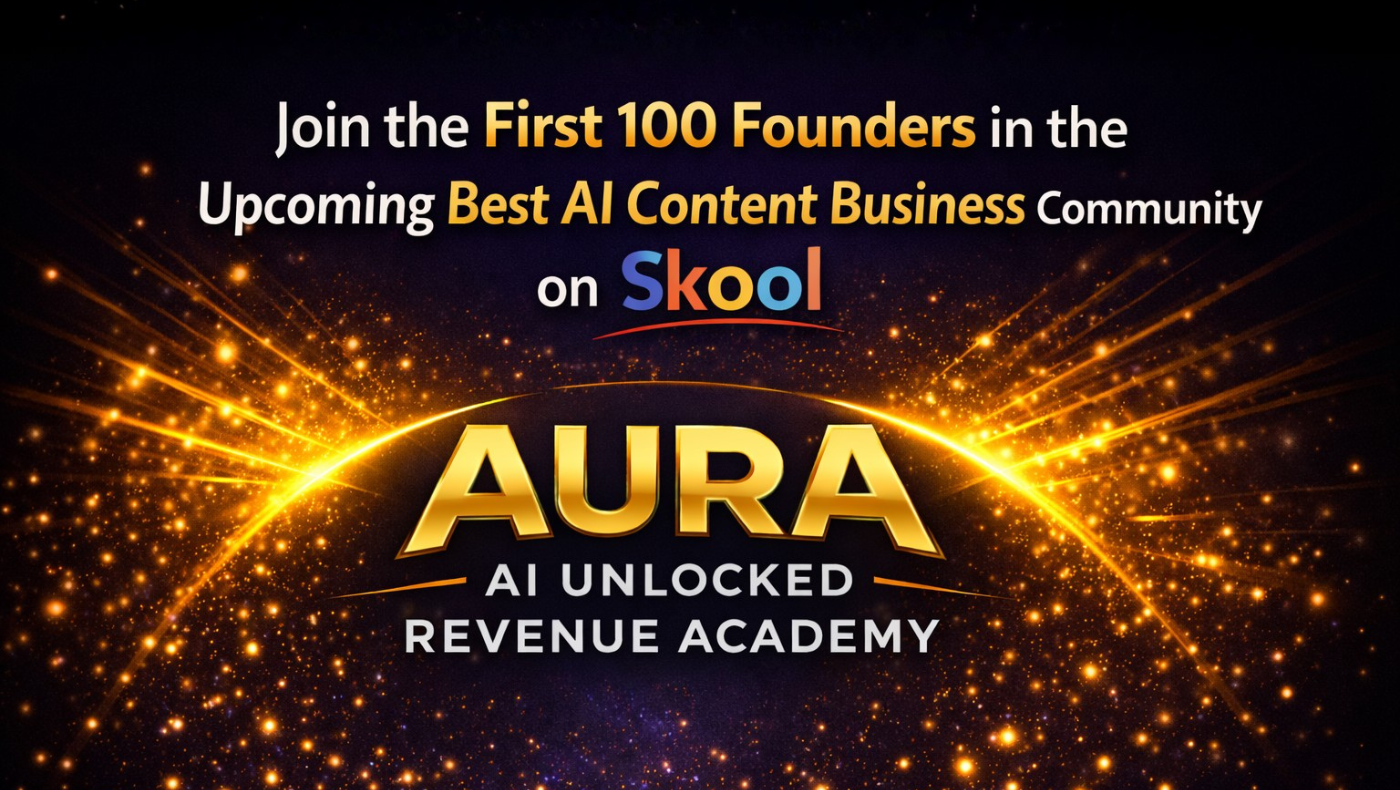
AI Unlocked Revenue Academy
Private
13 members
Free

⭐ Learn from a Harvard trained AI expert with a Master’s in Business
🎁 Founding cohort: help shape the curriculum as we build it
‼️Free until 15 members, then $9 per month for new members
Tired of AI content that looks fake, sits in drafts, or gets views but no sales?
AURA is the calm, repeatable system that turns momentum into income
🚀 What you get access to:
✅ First 20 members help guide the course content
✅ Believable AI avatar that earns trust
✅ Weekly content engine that is simple to run
✅ Revenue engine: content to conversations to customers
✅ Prompts and templates that remove guesswork
✅ 1-on-1 Personalized Feedback
✅ Step-by-Step Guide
🔥 Weekly updates
👥 Who this is for:
🌱 Beginners who want a clear starting point
🎬 Creators who want consistency that converts
🧠 Builders who want results without being on camera all day
🛠️ Anyone who wants step by step guidance, no tech background needed
Unlock your avatar. Ignite your revenue engine.
⚡️Start today. Lock in your membership FREE for life.
powered by
skool.com/smooth-automation-1830
Unlock your avatar, ignite your revenue engine. Build avatars, videos, and business systems that turn leads into customers and raving fans.