
23d • Intel & Training
Understanding Human Trafficking
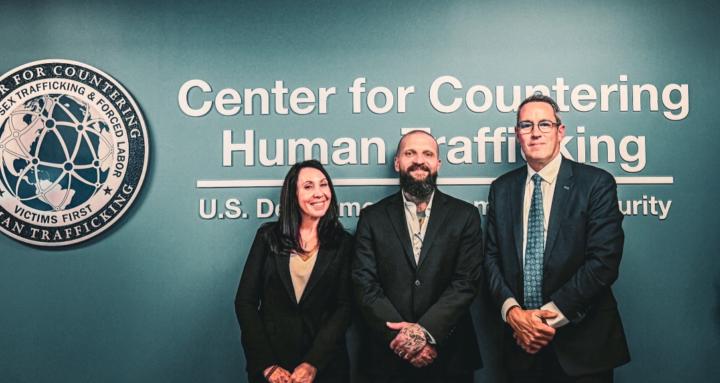
Hi everyone. Before anything else, I want to introduce myself for those who don’t know me.
I was born in the ashes of two civil wars, and I learned early what exploitation looks like when people have no power and no voice. I carried that understanding into combat in Iraq, and later into years spent on America’s front lines — working SWAT, serving with a federal task force, doing undercover interdiction work, and now leading as a patrol sergeant.
Across all of those worlds, one thing remained constant: human trafficking doesn’t look like the movies.
It doesn’t always look violent.
It doesn’t always look obvious.
And it rarely looks like what people expect.
Most victims aren’t kidnapped.
Most traffickers don’t fit a stereotype.
And most of the warning signs are missed because the community simply doesn’t know what to look for.
That’s why I’m here.
I founded Project Sapient to bring together real-world experience, neuroscience, stress physiology, and human behavior — because when you understand how people are controlled, manipulated, or broken down, you start seeing the patterns that others overlook.
My goal today is simple:
Is to have you be aware of the different kinds of human trafficking.
You don’t have to be law enforcement to make a difference. Awareness is a force multiplier. An informed community is one of the strongest defenses there is.
So thank you for being here.
Most people picture human trafficking as kidnappings, vans, and dramatic movie scenes. But in reality, trafficking is far more subtle — and far more common — than people realize.
It doesn’t always look violent.
It doesn’t always look obvious.
And it often hides in plain sight.
Here are the major types of human trafficking civilians should understand:
1. Sex Trafficking
This is the most recognized — and most misunderstood — form.
Victims are often trapped through:
- emotional manipulation
- threats
- fear for their family
- addiction
- false promises
- financial control
Most victims are not kidnapped.
They’re controlled through fear, dependency, and psychological manipulation, not chains.
2. Labor Trafficking
One of the most hidden forms of exploitation.
Victims may be forced to work in:
- restaurants
- agriculture
- factories
- construction
- domestic cleaning
- hospitality
People can appear to “have a job” yet still be trafficked through:
- withheld pay
- threats of deportation
- debt they can never escape
- unsafe living conditions
3. Domestic Servitude
This often happens inside private homes where the victim is isolated and dependent.
Signs can include:
- not being allowed to leave the home
- no control over their schedule
- no access to their own documents
- living where they work
- fear of speaking to others
Isolation is the trafficker’s strongest weapon.
4. Child Trafficking
Traffickers don’t just target children — they target childhood vulnerabilities:
- unstable homes
- running away
- loneliness
- online grooming
- promises of love or opportunity
Children can be forced into labor, sexual exploitation, or online exploitation.
A significant portion of this begins online, long before the child ever meets the trafficker.
5. Forced Criminal Activity
Victims — especially youth — may be coerced into committing crimes such as theft, drug movement, or fraud. Many are manipulated into believing they have no other choice, or that they’ll be harmed if they refuse.
6. Online / Digital Exploitation
Trafficking has evolved with technology.
Victims may be targeted, groomed, or exploited through:
- social media
- gaming platforms
- dating apps
- encrypted messaging
- sextortion
- blackmail
- deceptive job offers
Many victims never meet their trafficker face-to-face.
Why This Matters
Human trafficking doesn’t require force — only control.
It thrives where people are vulnerable and where communities assume it “can’t happen here.”
Awareness is the first line of defense.
The more civilians understand how trafficking really works, the harder it becomes for traffickers to operate in the shadows.
5
5 comments
Understanding Human Trafficking
Leaderboard (30-day)
1

+59
2

+47
3
+40
4

+19
5

+17
Powered by