
Write something
Pinned

2h •
🏄 Beach Britches Sessions — The Consolidated Rolling Buy Structure
Summer Britches Season is structured differently than a traditional static Group Buy. Summer Britches Season operates as a continuously rolling seasonal participation structure running throughout the active summer season, from June 01, 2026 thru September 12, 2026. Thresholds represent the collected dollar amount required to trigger operational consolidation of participant orders. Once achieved, all fully paid participant orders are submitted to the vendor for: A.) Confirmation submitted inventory remains available for fulfillment B.) Confirmation products are being distributed from the same batch/vendor run The structure is designed around: • Rolling seasonal participation • Operational participation thresholds • Session-based activation flow • Full Kit participation • Half Kit participation • Optional Coordinated Testing Participation • Seasonal flexibility and evolving participation momentum Vendor pricing, inventory availability, and operational costs remain subject to change. Dark Horse assumes no responsibility for vendor pricing changes occurring between initial submission and final order consolidation/submission. ———————————— ROLLING SESSION STRUCTURE Summer Britches Sessions operate utilizing rolling participation thresholds. “Rolling” indicates that once Threshold #1 reaches its targeted collected dollar amount, that session closes and locks. Threshold #2 then immediately activates and begins accumulating any new submissions. Said another way — an active Summer Britches Session remains open until its current participation threshold is achieved. Once the active participation threshold is met: • the current Summer Session closes • operational consolidation occurs • the next Summer Session opens This structure exists to: • consolidate participation • improve operational coordination • reduce vendor shipping allocation pressure • allow flexible seasonal participation throughout the active summer cycle Submission of the Intake Form does not guarantee immediate operational activation, invoice issuance, allocation confirmation, or active Summer Session execution.
0
0

Pinned
2h •
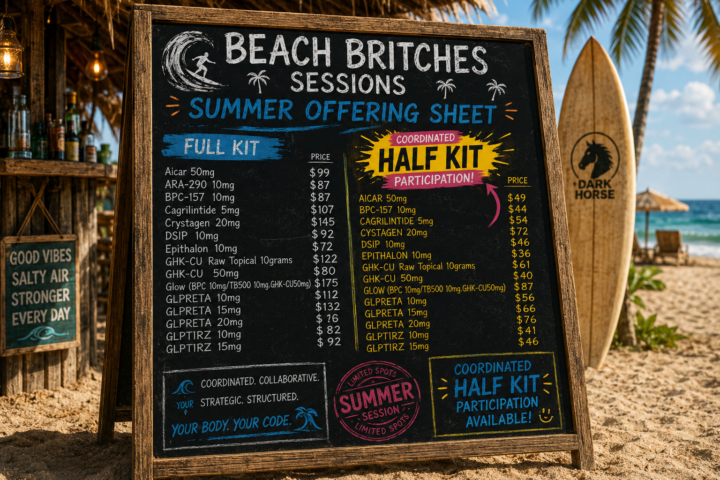
🏄 Beach Britches Sessions — Full Kit & Half Kit Product Offering Sheet
Beach Britches Sessions operate as a continuously rolling seasonal product consolidation structure running from June 01, 2026, thru September 12th, 2026. Current product offerings remain subject to change based upon inventory availability, operational viability, and evolving member participation and preferences throughout the active summer session. Beach Britches Sessions are structured around both Full Kit and coordinated Half Kit participation throughout the active summer season. The Summer Britches Session Kick-Off posting outlines additional details regarding: • ROLLING SESSION STRUCTURE • OPTIONAL COORDINATED TESTING PARTICIPATION • FULL KITS & HALF KITS • BILLING & PAYMENTS • ADDITIONAL OPERATIONAL STRUCTURES Unpaired Half Kit participation remains pending until operational pairing viability is achieved. Additional Half Kit participation details, participant visibility structures, and pairing policies are outlined separately within the classroom materials. ______________________________________________________________________________ CURRENT OFFERINGS Please click on the attached Billboards for detailed Product & Pricing information. If you have any questions regarding products or would like to inquire about products not currently listed, please DM me directly. Your Body. Your Code. Dark Horse — Out of the Shadows. Official Intake Form access will become available June 01, 2026.
0
0
Pinned
26d •
New Here — Welcome
If you just joined this week, WELCOME -- feel free to drop a quick intro — even if it’s just one word. Quick overview so you know how this is set up: How This Community Is Set Up - Start Here → where to begin - Rules → simple guidelines to keep things clean and useful - General Discussion → where ideas, protocols, and real-world experience are meant to be explored - Classroom → organized by category (fat loss, recovery, performance, etc.) - Product Access → for those looking into sourcing options What This Is Built Toward YOUR BODY. YOUR CODE. Peptides are out in the open. Access isn’t the edge anymore — understanding is.But the approaches are all over the place: different protocols, different opinions, and a lot of conflicting information. This group is aimed at cutting through that. A place to share real peptide experiences, compare notes, and see what people are actually researching — and the results of that research. • Fat loss / metabolic peptides• Recovery and healing compounds• Longevity and performance stacks No hype. No noise. Just real-world insight. The focus here is on real-world peptide research, protocol discussion, and shared outcomes. If You’re New What brought you here? • Fat loss• Recovery / healing• Performance / energy• Just learning / observing• Something else No pressure — jump in whenever you’re ready.
1d •
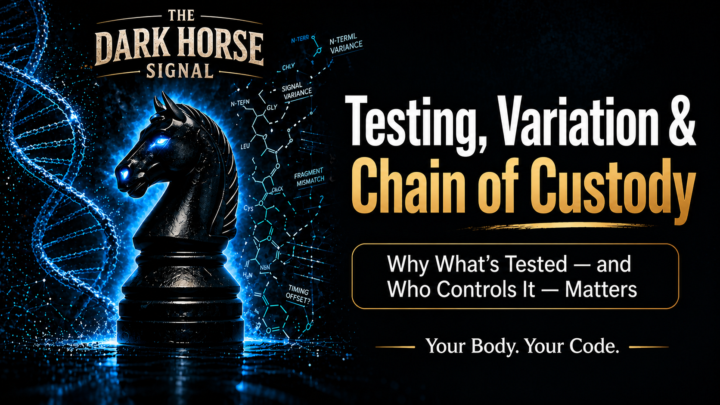
Testing — Market Evolution & Analytical Access
One thing I think is important to discuss as the peptide/research space continues evolving is how dramatically the testing landscape itself has changed over the last several years. Again — this is simply my perspective. In the earlier stages of peptide community growth (largely pre-COVID), the overall market was dramatically smaller than it is today: • fewer vendors • fewer buyers • smaller communities • far less public awareness • far fewer analytical labs willing to work directly with individual community members At that time, centralized verification pathways naturally became extremely important because there simply were not many accessible options available to the average person. That environment helped establish very strong community trust around a small number of recognized testing pathways and labs. However, I think one of the biggest things people sometimes fail to fully recognize is that the peptide market itself fundamentally changed. What originally existed as a relatively small grey-market niche eventually exploded into a much broader commercial ecosystem. Fast forward to today and the landscape is completely different: • grey market vendors • resellers • affiliate-based sellers • tele-med clinics • wellness companies • anti-aging clinics • GLP-focused practices • bodybuilding communities heavily entering the peptide space • doctors publicly discussing peptides and metabolic compounds • biohackers and longevity influencers • YouTubers covering compounds, protocols, recovery, longevity, and optimization • podcasts dedicated to performance, metabolism, mitochondria, longevity, and peptide research • peptide-focused conferences and networking events • books now being written and published around peptides, longevity, and biological optimization • dedicated peptide and research websites emerging • increasing translation and publication of older Russian peptide and bioregulator literature into English • mainstream exposure to peptides and metabolic compounds
1d •
Potential HGH Summer Presale Interest Check
Currently evaluating a possible HGH 191AA (Somatropin) Summer Presale structure with independent testing included. Half kit option may come into play as well At the moment this is simply a temperature check to gauge potential community interest before moving further into coordination, testing or logistics. As always: Discussion first. No pressure. Just evaluating potential interest and overall community direction heading into summer. Poll closes 05-30-2026 Your Body. Your Code. If this moved forward, which option would you most likely have interest in?
Poll
1 member has voted
1
0
1-30 of 92
powered by

skool.com/monument-method-2583
Your Body. Your Code.
The science is out. The code is yours to write.
A place to share real peptide experiences and see what’s actually working.
Suggested communities
Powered by