
27d • General discussion
Why There May Be No Real Difference Between Waking Life and Dreams
Most people divide existence into two clean categories: waking life is real, dreams are unreal.
During the day, we assume we are inside objective reality. At night, we assume we are inside imagination. One is taken seriously; the other is dismissed as mental theater.
But if we look carefully at direct experience, that line becomes far less certain.
When you are dreaming, the dream usually feels real while it is happening. You do not normally say, “This is only a dream.” You react emotionally. You feel fear, desire, confusion, joy, embarrassment, urgency, love. Your body may even respond with sweating, racing heart, tears, arousal, relief. Entire worlds appear convincing enough that you participate in them without question.
Only later, after waking, do you reinterpret the experience and call it unreal.
But consider what gives waking life its feeling of reality.
It is not that you personally verify every fact around you moment by moment. Rather, waking life feels real because consciousness is immersed in it. Sensations appear coherent. Memory continues across time. Social consensus supports it. The mind remains identified with the current scene.
That is exactly what happens in dreams, only with different rules.
In dreams, a world appears. You enter it. You identify with a character. Events unfold. You respond emotionally. You accept the environment as reality until a shift of awareness occurs.
The core mechanism in both states is belief plus immersion.
In waking life, we say: “This is my body, my story, my problems, my ambitions, my identity.” In dreams, we say similar things without noticing: “I must escape this danger. I need to reach that place. I love this person. I am this version of myself.”
In both cases, consciousness inhabits a narrative and temporarily forgets its larger nature.
This does not mean waking life and dreams are identical in every practical sense. Waking reality has greater continuity, stability, shared structure, and consequence. If you ignore gravity while awake, reality corrects you quickly. Dreams are usually more fluid and symbolic.
But psychologically, the resemblance is profound.
Both states are mediated through mind.
You never experience the world “raw.” You experience perception interpreted by memory, language, expectation, emotion, bias, and attention. Two people can live through the same event and inhabit completely different realities because their minds construct meaning differently.
This is why one person experiences opportunity where another experiences threat. One sees insult where another sees nothing. One remembers trauma where another remembers inconvenience.
Even waking life is not simply received, it is continuously assembled.
Dreams make this process obvious because the construction is faster, stranger, and less stable. Waking life hides the same mechanism under consistency.
This is also why lucid dreaming matters philosophically.
When you become lucid in a dream, you realize: I believed this was reality because I was inside it.
That realization can echo into waking life.
How many daytime fears are treated as absolute facts when they are interpretations? How many identities are defended as fixed when they are stories? How many conflicts are driven by imagined meanings rather than direct reality?
We wake from sleep each morning, but many never wake from mental habit.
Perhaps the value of dreams is not entertainment. Perhaps they are nightly demonstrations that consciousness can mistake appearances for reality.
And perhaps the value of waking life is the chance to become lucid here as well.
To notice thoughts as thoughts. Roles as roles. Emotions as passing weather. Narratives as constructions.
Then both dream and waking life become teachers.
One shows how easily worlds are created.
The other gives us the opportunity to see through them while fully alive.
0
0 comments
Why There May Be No Real Difference Between Waking Life and Dreams
powered by
skool.com/lucid-dreaming-4548
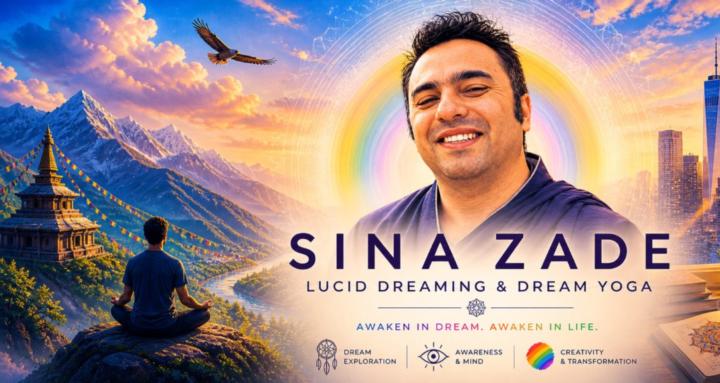
Sina Zade | Lucid dreamer, writer, sculptor. Blending dream yoga and modern methods to unlock creativity and awareness.
Suggested communities
Powered by