
Pinned
9h •
🚀 Our First Live Class is This Friday
Hey everyone! I’m so excited to get started. Just a reminder that our first video class is happening this Friday, January 9th, at 7:00 PM Eastern. In your SKOOL calendar you will find a Google Meet link to join. The link will be highlighted in blue. We’re going back to the basics to build those rock-solid fundamentals so you can eventually level up your skills. Here are some questions to think about for Friday. 1. Your Experience & Level: • How long have you been playing racquetball? • How would you self-rate your skill level? (e.g., Novice, Intermediate/B, Advanced/A, or Tournament/Open) 2. The Competitive Edge: • What is your biggest challenge when playing against equal or better players? (Is it a specific shot, court positioning, or mental toughness?) 3. Coaching Expectations: • What are you looking for most out of working with a coach? (e.g., Technical feedback, strategy, fitness, or breaking bad habits?) 4. What I need help with the most: • The "One Thing": If you could fix just one shot in your game tomorrow (like your backhand or ceiling ball), what would it be? • Your Gear: What racquet are you currently using, and do you feel it fits your playstyle? • The Goal: Are you playing primarily for fitness and recreation, or are you looking to move up the rankings in competitive tournament play? • Availability: How many days a week are you able to dedicate to practice versus actual match play? • Need technical help? If you’re unsure how to use Google Meet or have any questions at all, message me directly here on the Skool app. I’m looking forward to seeing you all there and helping you grow!
0
0
6h •
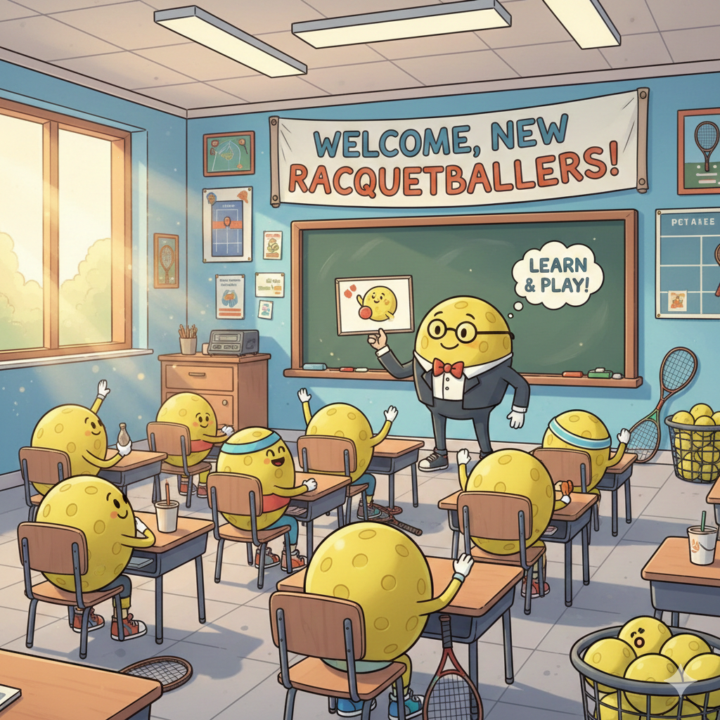
Mastering the Art of Practice: Beyond the Glass Wall
By: Jk To truly elevate your racquetball game, you must change not just how you hit the ball, but where and why you hit it. Many players spend hours on the court without improving because they are performing for an audience rather than training for a match. 1. Choose Your Environment: The "Glass Wall" Trap If you want to master new skills, find a closed-in court. While glass-back courts are great for tournament prep, they are often the worst place for skill development. Why? Because when people are watching, human nature takes over. • The Ego Response: Players tend to revert to their "pretty" shots (like the forehand down-the-line) to look good for bystanders. • The Growth Killer: You cannot master a weak backhand if you are too embarrassed to hit a "bad" shot in public. • The Solution: Get alone with the ball. In a closed court, you have the freedom to fail, to hit the floor, and to look "unpolished" until the muscle memory takes hold. 2. Simulate, Don't Just Repeat Standing in one spot and dropping the ball to hit the same shot 50 times is a warm-up, not a practice session. • Dynamic Positioning: In a game, the ball is already moving. To practice properly, you must hit a moving ball, recover your center-court position, and then move back to the ball to hit the next shot. • Reset on Errors: If you hit a poor ceiling shot, do not chase it down and smash a "hero" forehand just to feel good. Stop. Catch the ball. Reset the drill. If you allow yourself to "play out" bad practice shots with scrambled footwork, you are training your brain to play chaotic, undisciplined racquetball. 3. Start Small to Finish Big Precision is built from the front of the court to the back, not the other way around. • Short-Game Mastery: Start with shots closer to the front wall. Mastering the touch and mechanics of 12-foot and 15-foot shots builds the foundation for the 38-foot power shots you’ll need against elite players. • Target Practice: Don't aim for "the corner." Use small pieces of tape on the side walls or floor. Aim small, miss small. Precision is a result of having a specific, visible target for every individual shot.
0
0
1d •
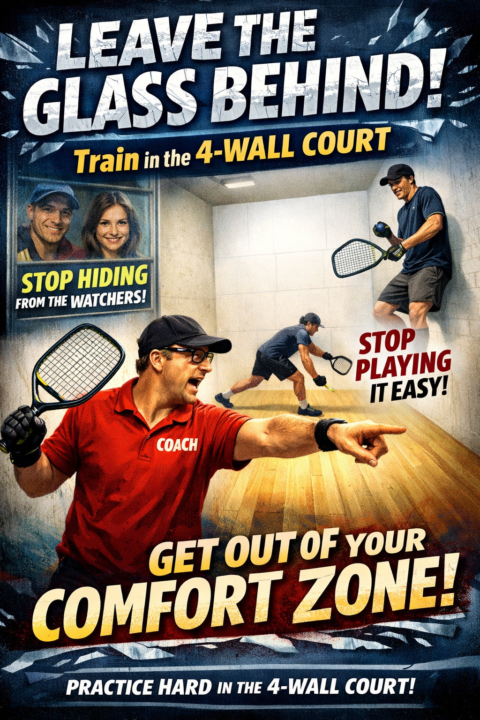
Performance Over Presentation: The Psychology of the "Broken-In" Athlete
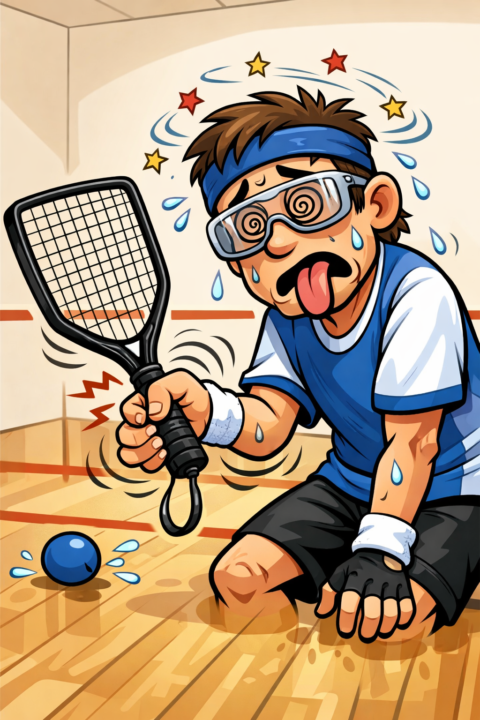
In the world of competitive racquetball, there is a common trap that players fall into: the trap of the "Fresh Fit." We’ve all seen it—the player who steps onto the court looking like they just stepped out of a catalog. They have the latest high-tech moisture-wicking shirt, brand-new color-coordinated shoes, and a glove so white it’s blinding. But as soon as the rally starts, the "presentation" begins to fall apart. The Cost of Distraction I’ll never forget watching a match where a player was draped in brand-new gear from head to toe. On paper, they looked like a pro. In practice, they were their own worst enemy. Between every single point, they were tugging at their sleeves, adjusting their waistband, and messing with their shoes. The hard truth I whispered to myself that day remains a golden rule for the sport: If you spent as much time focusing on the ball as you do on your wardrobe, you’d be winning. When your gear isn't broken in, your brain is "multitasking." Instead of reading the off-the-back-wall setup, a fraction of your focus is on the pinch of a new waistband or the stiff collar of a fresh t-shirt. In a game as fast as racquetball, you cannot afford to lose that 1% of focus. The "New Glove" Lesson Comfort isn't just about feeling good; it’s about mechanical consistency. I learned this the hard way during a tournament. I bought new gloves—similar to my usual brand, but "fresh." During the match, my game fell apart. I couldn't grip the racquet properly; my serves were flying off at weird angles, and my touch shots were non-existent. The leather hadn't molded to my palm yet. It was only when I swapped back to a "beat-up," salt-stained, old glove that my game returned. That old glove was an extension of my hand; the new one was just a barrier between me and the racquet. The "Tournament Ready" Checklist To play your best, you need to achieve a state of "unconscious equipment." You shouldn't feel your gear at all. Before your next big match or tournament, ensure your kit meets the "Three C’s": Comfort, Consistency, and Compliance.
1
0
1d •
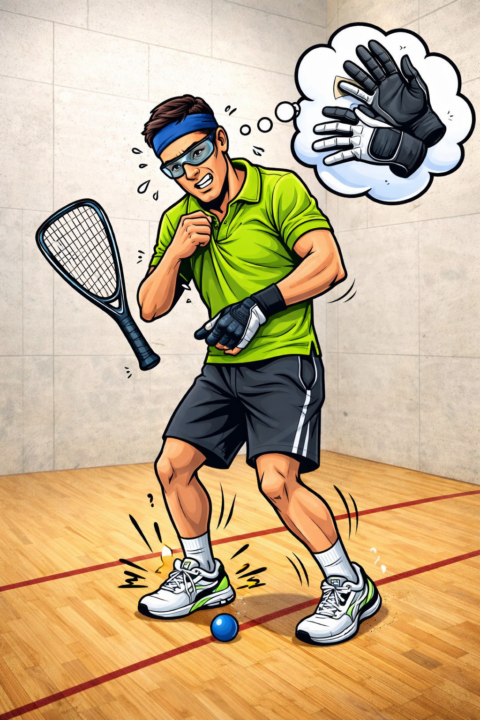
The Invisible Edge: Why Grip Strength and Fit Define Your Game
In the heat of a high-intensity rally, most players focus on their footwork or their swing path. But there is a silent hero—or villain—in every shot you take: your forearm and grip strength. Strength is About Control, Not Tension A common misconception is that you need to squeeze the racquet with all your might. In reality, a "death grip" actually slows your swing down and kills your touch. The goal of strength training for racquetball isn't to squeeze harder; it's to build a higher threshold for fatigue. When your hand and forearm are strong, a "relaxed" grip is still stable. This allows you to: • Make Micro-Adjustments: Snap the wrist at the last second to change the ball’s direction. • Handle Unorthodox Shots: When you’re diving or stretched thin and have to hit from an awkward angle, that extra "reserve" strength allows you to stabilize the racquet and still get a productive result. • Stay Sharp in the Third Game: Fatigue leads to "lazy" shots. If your forearm is tired, your accuracy is the first thing to go. The Goldilocks Zone: Why Grip Size Matters You can have the strongest hands in the world, but if your racquet grip doesn't fit, you are fighting an uphill battle. • The Grip is Too Big: If the handle is too thick for your hand, your fingers can’t wrap around it securely. You’ll find yourself over-squeezing just to keep the racquet from rotating on off-center hits. This leads to massive forearm fatigue and "tennis elbow." • The Grip is Too Small: If the handle is too thin, your fingers will overlap too much, and the racquet will feel unstable. You lose the "leverage" needed for power shots, forcing your wrist to do work it isn't designed for. The Rule of Thumb: When holding your racquet in a standard grip, there should be a small gap (about the width of your index finger) between your fingertips and the palm of your hand. "Couch Training": At-Home Grip & Wrist Exercises The best part about grip training is that you can do it while watching TV. No gym required! Here are five simple ways to build a "pro" forearm from your sofa:
0
0
1-27 of 27
powered by

skool.com/jks-racquetball-academy-7506
“40-year racquetball veteran helping beginners & intermediates improve skills, strategy, and love for the game at JK’s Racquetball Academy.”
Suggested communities
Powered by