
Pinned

🍀
5d •
I'm so excited! the 21 Day Magnetic Love challenge 2026 is here!
whose excited to become more magnetic and attract love and deeper connections?! The main difference between this one and the last ones is that the focus will be on relationships in general... it will be on opening your heart and EXPRESSING the real you this will affect love, money, play, and other aspects of your life too This is not only for people who want to attract love whether you are single and want to attract love... in a relationship and want to go deeper... or want to open your heart to stop abandoning yourself and to experience self-love... We are running a new 21-day Magnetic Love Challenge starting November 3rd! And since you are all here, you get first dibs to set the energy of the group in the space if you can see this take it as a sign that love and deeper connections are about to come into your life once you shift a few patterns and let go! we start November 3rd and its going to be magical! ✔️Break old patterns so love starts chasing you ✔️ Tap into magnetic confidence that attracts aligned relationships ✔️ embrace your "dark side" so that you stop being "nice" and instead become authentic and expressive live hotseat coaching, a 21 day proven process, breathwork, and more in 21 days! learn more here and lets do it! https://www.magneticlovechallenge.com/ whose in?! and what are you most excited to do/learn?
Pinned
🍀
11d •
question... should we run a 21 day Magnetic Love Challenge soon?
It's been a year since the last one! This is the most popular and powerful challenge I've ever done, and I've had over 5,000 people go through it over the last few years Every time I do, afterwards, for MONTHS I get DMs from people who've attracted love, gone deeper in their relationships and stopped abandoning themselves in general The challenge gets to the root of patterns developed in childhood, so it goes much further beyond love and into relationships in general and connection in general We would be doing live meditations, exercises on zoom, live coaching, and a step-by-step process to remove the subconscious patterns that block connection and love If I run this in the next month, would you join? And also, what are your biggest blocks to connection, relationship, etc.?
Poll
200 members have voted

Pinned
🍀
Jan '24 •
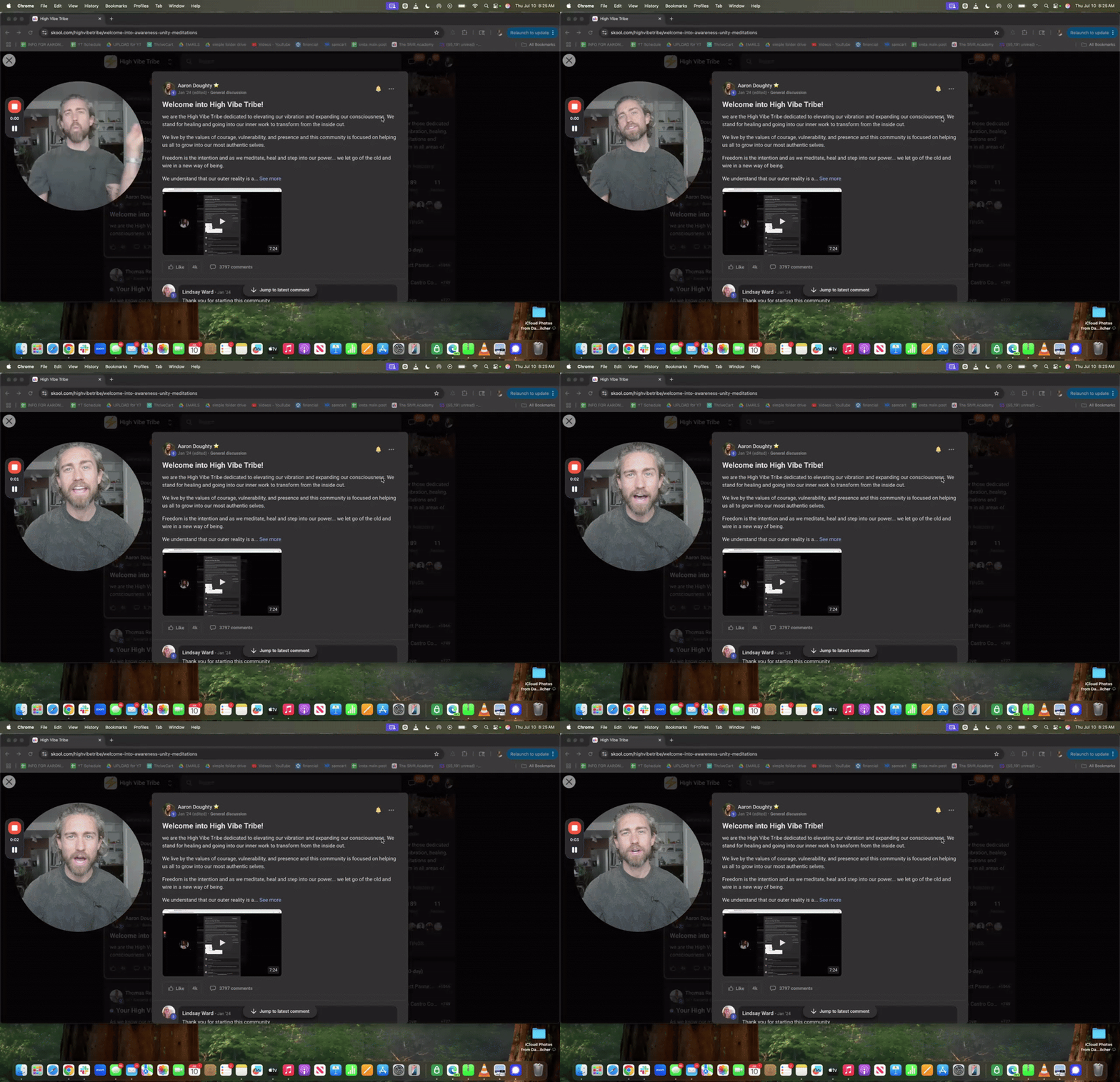
Welcome into High Vibe Tribe!
we are the High Vibe Tribe dedicated to elevating our vibration and expanding our consciousness. We stand for healing and going into our inner work to transform from the inside out. We live by the values of courage, vulnerability, and presence and this community is focused on helping us all to grow into our most authentic selves. Freedom is the intention and as we meditate, heal and step into our power... we let go of the old and wire in a new way of being. We understand that our outer reality is a refection of our inner reality and rather than blame the outside or try to fix it, we look at ourselves and let go of parts of ourselves attached to the beliefs, patterns and past "familiar" energies keeping us locked in the past. When you go through a spiritual awakening many feel like the lone wolves in their family. This community is a way to connect with other people like you… dedicated to healing the past, spiritual growth, and creating their dream life. This is not about surface level change or thinking better thoughts… it’s about doing the inner work, looking at subconscious parts most people avoid (the shadow) and creating inside out transformation. There are some Rules for this community to keep it a safe space… 1. Absolutely no selling or promoting other groups/events. This includes directing messaging other members. Members who break this rule will be banned from the group. 2. Posts should either add value and be well thought out. Lets create a high vibe, supportive community section 3. No posting “who else lives in New York?” Etc these will be deleted as if everyone posted them the group will be flooded with it. if you want to learn how to see who lives in your city I share in the video below 4. Be supportive and accepting of other people. Like posts, support other people and encourage them.


1d •
Vedic Wisdom Bites 🐒: How Do We Recognize a Sādhu? — more specifically Vedic and personal.
There is another important distinction here.
The impersonal conception of the Absolute becomes dominant when all aspects of Truth are ultimately reduced to one undivided Brahman. In schools such as Advaita Vedānta, Ātman and Brahman are understood as fundamentally one and the same non-dual reality. From this perspective, the individual soul is ultimately the Supreme, and the experience of separation is attributed to avidyā, or spiritual ignorance.
This conception is fundamentally different from the personal understanding of the Supreme found in the descriptions of Kṛṣṇa-līlā and Vṛndāvana-līlā.
If everything ultimately becomes one undivided Brahman, then there can be no eternal diversity of persons, relationships, activities, or pastimes.
Kṛṣṇa-līlā, however, is full of diversity. It is described throughout the Bhagavad-Gītā, Śrīmad-Bhāgavatam, and the Upaniṣads. The concept of an indivisible, impersonal Absolute and the concept of eternal spiritual diversity may appear contradictory. Yet, in relation to the Absolute Truth, they need not be.
The Absolute Truth is understood to possess diverse energies and potencies. Through these energies, eternal Kṛṣṇa-līlā manifests within the eternal dhāma (sacred place) of Vṛndāvana.
This is where the concept of acintya-śakti, the inconceivable potency of the Supreme, becomes important. Through this potency, two principles that appear contradictory to the material mind can both be true: we are one with the Supreme and different from the Supreme at the same time. This is the principle of acintya-bhedābheda—simultaneous oneness and difference.
Our ordinary reasoning tends to demand that something must be either one thing or another. But spiritual reality is not necessarily limited by that kind of material logic. By the mercy of the Absolute Truth, we can understand how these apparently opposite principles are reconciled.
So perhaps the more important question is not whether we can find some extraordinary external symptom in a spiritual person.
1-30 of 38,921

skool.com/highvibetribe
a community for those dedicated to raising their vibration, healing, letting go of limitations and creating freedom in all areas of life
Leaderboard (30-day)
1

🔥
+5112
2

🔥
+2350
3

+526
4

+368
5

+355
Powered by