
Write something
Pinned

2h •
Fix Common Mistakes with Gouache
Many people assume that watercolor and gouache can be handled the same way because both are water soluble, and they are compatible in many ways. Actually, watercolor and gouache perform very differently. But once you understand the differences, gouache becomes a joy to use. Combining watercolor and gouache is quite a logical process. Each medium has its own characteristics. Watercolor’s transparency and luminosity are its strength, so it’s best to use watercolor where luminosity is needed–in backgrounds, or skies, or first layers. But if you have used watercolor for very long, you have already discovered that it can be a rather unforgiving medium. Once it has dried, it’s quite difficult to lift off, remove, or change. This is exactly where gouache shines! Because it can be reactivated, it can easily be lifted off or blended into another color or value when a softer edge is needed. In some cases, gouache can be lifted off right down to the white of the paper! Gouache can be used in transparent washes, but because it can be reactivated, its strength lies in its opacity. So using watercolor washes for those pale, transparent, luminous areas and gouache to build up the solid areas right over the dried watercolor makes sense. In this regard, consistency is king–for gouache, use a thicker consistency–think coffee creamer or even soft butter. Use gouache’s velvety consistency and opacity in subsequent layers, but not in the initial transparent layers. So that’s the order of operations–use watercolor for initial 1st layers that you want to remain luminous. Then when that's dry, use gouache in the subsequent layers. Your success in your painting will increase dramatically and you’ll be much more pleased with the results. Enjoy! And until next time, Happy Painting!
0
0

5d •
Thank you for having me
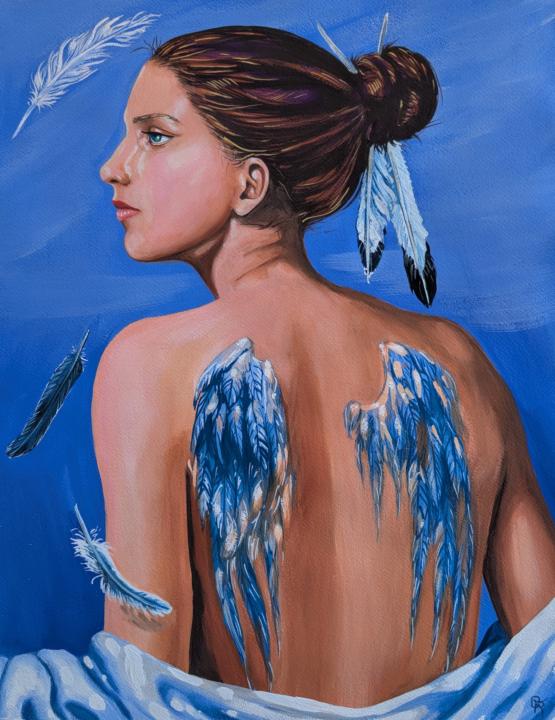
I'm a little disappointed with social media in general, but I hope to find here a community of truly passionate and kind people. Here is a gouache artwork, 20x16" on Arches 300gr watercolour paper. Thank you for your attention.
7d •
Why I love gouache, and why you will too!
If you love the simplicity and portability of watercolor but are frustrated by its limitations, coming home to gouache may be like finding a new best friend. Because gouache dries quickly, it’s entirely possible to complete a finished painting in a single session if you wish, depending on size. But even after a painting is days, weeks, or months old, it is still possible to go back in and rework a finished piece, change it, or add to it. Gouache is portable and lightweight for travel and requires only a few colors, brushes, and some paper to get started. You can always add to them later as your knowledge and preferences grow.
1-3 of 3
powered by

skool.com/gouache-painting-made-easy-3234
Discover a simple process that erases frustrating misconceptions about gouache, and start enjoying this versatile medium to create your next painting.
Suggested communities
Powered by