🔥
Jan 16 • ⭐️ Win
Hola 🤍✨ (Hi)
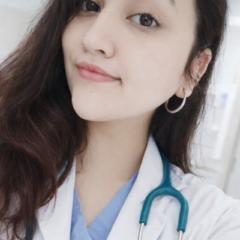
I’m Melody, i'm a physician 👩🏻⚕️🧠
I finished medical school in 2017, specialized in pediatric neurosurgery, and spent years training in one of the most demanding, structured, and hierarchical environments you can imagine.
I loved the science (and I still do) The brain, learning, development, decision-making… all of that genuinely fascinates me ✨
But somewhere along the way… something shifted.
Not because of medicine itself.But because the space started feeling too narrow.
Too narrow for thinking out loud.
Too narrow for questions without a clean protocol answer.
Too narrow for conversations about how people actually learn, decide, organize their lives, and make sense of complexity.
Too narrow for being human, not just “competent”.
Today, outside of what I know as the consulting room, here, in this beautiful network, I received a message from a member of one of my communities.
He lives with a condition on the autism spectrum - and I like to put it this way - yes, HE moves through it; autism does not move through him.
He told me something simple.
He shared the community with his mom.
So now they’re both there.
Learning together. Reading together. Thinking together. Being curious side by side 🤍
And THEN… MY WORLD STOPPED.
Because that message held everything I had been missing.
That quiet, powerful moment of connection.
That reminder that learning is relational.
That knowledge makes more sense when it’s shared with love.
That message filled my entire day with warmth 🫶 And it helped me understand why I had been feeling uncomfortable in my old professional boxes.
I was craving conversations that didn’t fit neatly into my formal training.
Conversations about focus, cognition, mental load, systems, intuition.
About how our brains behave when life gets messy.
About learning that connects knowledge with real life.
So I started learning outside the traditional paths 🌱
I studied more. I explored neurodiversity and disability through a family-centered lens. I worked with teams. I built educational projects.
And quietly, I developed skills that weren’t exactly taught in medical school:
✨ listening deeply
✨ organizing complexity
✨ explaining hard things simply
✨ creating spaces where people feel safe to think
When I joined Skool, I didn’t come here to launch anything.
I came to observe 👀
To learn from people I admire.
To understand how communities actually feel when they’re not performative.
And then… it clicked 💡
I realized the spaces I was missing…
were exactly the spaces I could help build.
That’s how my two communities were born 🤍
Not from strategy.
From a need.
A need for slower thinking 🐢
For depth over noise 🌊
For neuronerdy curiosity without pressure 🤓
For learning that feels human, not optimized to exhaustion.
They’re still small.
And I love that.
They feel like rooms, not stages.
Like conversations, not funnels.
What I want to develop and share is simple, but not easy:
🧠 thinking more clearly
🧭 deciding with less noise
🗂️ organizing ideas without losing yourself
🌱 learning in a way that actually sticks
If something in this story resonates with you…
you’re more than welcome here 🤍✨
I’ll leave you with a mate. Where I live - Argentina - we use it as an excuse to gather with friends or family, or to spend time alone doing something we enjoy, sipping something warm while we talk. It’s a bit like tea. I’m gifting you a small visual journey to my country. Thank you for reading me. 🧉✨
(This one is from Lago Puelo, with the beautiful Andes Mountains in the background.)
And now I’m curious 👀
💬 What has been the most gratifying moment in your community so far?
I’m reading you.
6
5 comments
Hola 🤍✨ (Hi)
Leaderboard (30-day)
1
🔥
+13079
2
+12986
3
🔥
+10834
4
+10121
5
🔥
+7230
Powered by