
12d • General discussion
Stacking the Odds for Your Success
The majority of elk are killed by a small percentage of the same hunters.
These are the guys who know exactly where to go, what to do, and how not to waste time.
They know how to quickly eliminate terrain they will not hunt.
Most importantly, they know how to stack the odds in their favor.
These hunters don’t drive all over the unit hoping for luck. They don’t get a different tag every year thinking the next spot will magically be better.
Instead, they hunt the same unit—or a few of the same units—year after year.
They plan spring bear hunts and scouting trips in the same areas. They hike and camp in or near the places they plan to hunt. They don’t just e-scout from the couch. They understand the value of putting boots on the ground year-round, or as much as possible.
They thoroughly scout and hunt the same areas until they understand what is actually happening in the forest.
Some years, they even have a target bull. They hunt that one bull, and if they don’t kill him, they return the next year to try again.
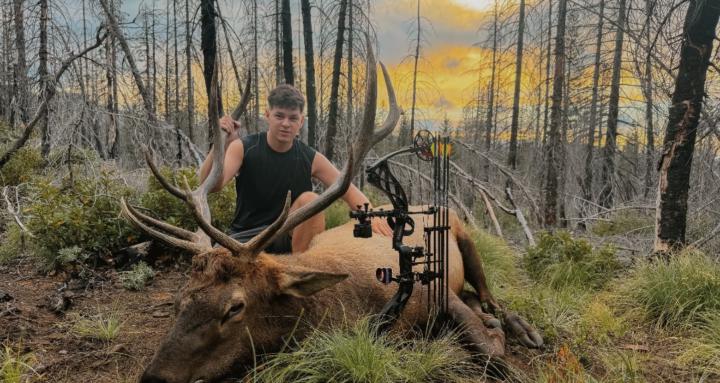
There is a story of an Oregon hunter who hunted the same monster bull for seven years until he finally put an arrow through him. That is the real way to stack the odds in your favor.
When you have a target moving through the mountains and you keep chasing that bull, you understand him better every season. Even if you don’t kill him, your knowledge expands.
This is how I now plan my year around the same unit or two:
Winter: Driving roads looking for cougar tracks
Spring: Bear hunting and shed hunting
Summer: Scouting, camping, and hiking in the unit
August: Archery season scouting
September: Elk season
October: Early October elk are still bugling, and I’m also deer hunting
November: Rifle elk hunting for family and friends
December: Picking up trail cameras from the year
That is how you build knowledge.
And then there are hunters who drop a few pins on a map and think elk will walk through camp on day one.
If you are still trying to kill your first bull on public land, you are probably making many of the same mistakes I made for years.
For non-resident hunters, planning your entire year around one unit may be harder. But you still need to find a way to mentally submerge yourself into the elk world and physically get into their territory if you want to learn fast and avoid wasting years repeating the same mistakes.
For resident hunters, the focus should be simple:
Learn the area.
Learn the animal.
Be consistent.
Knowledge compounds.
Every time you go out there, hike the mountains, hunt the animal, and see things with your own eyes, your knowledge expands and accumulates.
So make time to go in person as much as you can.
Learn.
Learn.
Learn.
Key Takeaways
- Successful elk hunters stack the odds by learning the same areas year after year.
- Constantly switching units or tags prevents hunters from building deep knowledge.
- Boots-on-the-ground scouting throughout the year is more valuable than only e-scouting.
- Targeting the same area or even the same bull builds understanding over time.
- Resident hunters should focus on consistency, area knowledge, and learning the animal.
- Elk knowledge compounds every time you spend time in the mountains.
And remember you can always comment with questions or contact me directly.
I'm here to not just advertise the Paid Online course that will teach you everything you need to know about Elk, Locating them, and Calling Bull
but also to answer as much of your questions for free.
If you are in this group then you either saw my YouTube videos or you found me through Facebook.
I'm not a stranger anymore.
3
1 comment
Stacking the Odds for Your Success
powered by
skool.com/elkspy-hunters-5136
Public land elk hunting for serious hunters. Learn to scout, locate, and call bulls using real experience—no guessing, no wasted seasons.
Suggested communities
Powered by