23d • General discussion
How I Went From My First Ever Interview to 4 Job Offers — Everything I Learned Along the Way
I have had a lot of interviews over the past two years.
Some went great. Some crashed and burned. But every single one taught me something that made the next one better.
Here is the full story, every interview, every mistake, every win, so you can skip the learning curve I had to go through the hard way.
Interview 1 — IKO Glass Fiber | The One That Started Everything
My very first interview ever. A materials engineering co-op at a glass fiber plant in South Carolina.
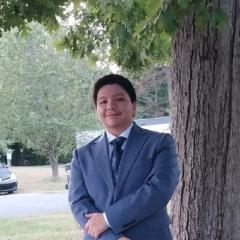
I showed up dressed to the absolute maximum. Suit, gelled hair, clean shave, everything.
When I met the interviewers, Jeff, a senior engineer in a Star Wars hoodie, and Sherrie from HR dressed plainly, they immediately noticed. Jeff actually commented on it.
I told him I wanted to take it seriously.
That moment set the tone for the entire interview. Before a single question was asked, they already knew I came with intention.
Here is my honest take on dressing for interviews: always dress up more than you think you need to. Not because it guarantees you the job, but because it immediately communicates that you respect the opportunity. When someone comments on it, own it. Tell them exactly why you did it.
The interview itself followed my resume. Jeff asked about my landscaping job. I told him I had done it every summer for five years, that I had gotten fast at it, and that I was used to working hard in brutal conditions. He asked about my factory job, which I had for two months, 12-hour shifts, working landscaping at the same time. I explained it plainly. He didn't say much, but I could tell it landed.
Then he asked about my robotics club role as construction captain. I told him the story of building the arena obstacle from wood found under the building, coordinating with others to get it done under constraints.
When he asked about my ceramics knowledge, I was honest; I had covered it in general materials classes but hadn't taken a dedicated ceramics course yet. When he asked about XRF spectroscopy, I talked about my lab experience at NCSU without pretending to know more than I did.
Two days later, I had a job offer.
Lesson: Your non-engineering jobs matter more than you think. Landscaping and factory work told Jeff everything he needed to know about whether I could handle a glass fiber plant next to a 3000-degree furnace. Don't underestimate what your hardest experiences say about you.
Interview 2 — Freudenberg | The Crash and Burn
Between August and October, I began applying for summer internships early, knowing how long responses take.
I got a call back from Freudenberg for a process engineering internship. I researched the company, dressed up, and felt prepared.
I was not prepared.
When they asked about my theory for process improvement, I panicked. I didn't know the Lean 5S methodology. What I knew came entirely from personal experience working in IKO's furnace and batch house. So I started explaining everything I had been doing: the batch calibration, the ACSI contractor work, the process improvements I had made.
It was too much. It didn't answer the question. And I could tell they didn't believe me, not because I was lying, but because I was rambling about responsibilities that sounded too big for an intern. I had a ton of real experience, but I couldn't communicate it cleanly yet. I sounded like I was bragging instead of answering.
I knew the interview went badly before it ended. It was just a feeling.
Lesson: Two things destroyed this interview. First, I didn't have basic textbook knowledge that the interviewer expected. Always research industry standard concepts for the role you're applying to, not just the company. Second, I hadn't yet learned how to translate my experience into clean, believable answers. Knowing a lot means nothing if you can't communicate it clearly. Humility and clarity beat impressive rambling every time.
Interview 3 — Structural Parts Company | The Phone Call That Almost Worked
This one was a phone interview with Helen, an HR representative. We talked for a full hour.
When she asked if I was willing to work outside, I felt a flash of irritation. Did you read my resume? But I didn't show it. Instead, I calmly explained my landscaping background and my current work at a glass fiber plant. The answer spoke for itself.
When she asked about organizing parts, I told her the full story of my refractory brick inventory at IKO. How Jeff had simply asked for a list of bricks. How I went way beyond that — photographing over 600 pallets in a warehouse, building a detailed Excel spreadsheet with dimensions, lot numbers, pallet locations, and photos, then using it on night shift to help masons find bricks faster. I told her it was personally motivated. Jeff asked for a list. I built a system.
She sent me an email afterward saying I was their top candidate.
The second interview was with the president and the hiring manager — a much more technical and direct conversation with no small talk. When they asked about mistakes, I was too honest. I told them how my spreadsheet eventually became useless when masons started moving bricks between pallets without updating anything. When they asked how I would fix it, I said I would have needed more authority to enforce a system.
It was an okay answer, but not a great one. They gave the position to someone else.
There is one thing from these two interviews I want to highlight that nobody ever talks about — the difference between talking to men and women in interviews.
With Helen, the conversation flowed naturally. She was open to rapport, small talk, and exploring different topics. The relationship-building felt natural and worked in my favor.
With the male panel, it was more direct, more confrontational, more technical. I wasn't fully ready for that shift. My answers were good, but not sharp enough for that format.
Lesson: Read the room and adjust. Some interviewers want relationship first, technical second. Others want straight answers with no fluff. The faster you can identify which one you're dealing with and adapt, the better your interviews will go. Also, going above and beyond in your actual work creates stories that win interviews. Jeff asked for a list. I built a system. That decision paid off long after the work was done.
Interview 4 — The Double Interview | Two Offers, Same Company
I had accidentally applied to two different positions at the same company — a health and safety intern and an engineering intern. They called me for both on the same morning. 9 am and 10:30 am back-to-back.
The health and safety interview went smoothly. When they asked about chemical experience, I talked about handling SDS sheets at IKO, contacting companies, organizing materials into binders, and understanding hazard protocols. When they asked about liquid chemicals, I was honest that my direct experience was limited — but then I explained what my coworkers had done and how I had supported them, demonstrating that I understood the process even where I hadn't led it. Showing understanding without overstating your role builds credibility.
The engineering interview was a panel of four men, all clearly in their 50s or older.
When the call started, nobody spoke. Not a word. Just silence and staring.
So I introduced myself.
Once I started talking, I walked them through my experience at IKO from the beginning. Midway through, I paused and asked if they had any questions, giving them space to engage rather than dominating the conversation.
This time, I had learned my lesson from Freudenberg. Instead of presenting my achievements as my own, I framed everything as supporting Jeff and the ACSI contractor. Same stories, same details, same raw information — but positioned as a team player helping senior engineers rather than a solo hero. They still knew I had done significant work. The details made that obvious. But the framing made me look humble and collaborative instead of unbelievable.
Then a younger guy joined the call and spent several minutes warning me about how hot and humid the environment was, how demanding the work would be, and how much there was to do. I watched the faces of the four older men as he talked. Pure bruh energy. They had just spent the last thirty minutes hearing me describe working next to a 3000-degree furnace with airborne glass fibers.
I didn't say a word. I didn't have to.
Before the call ended, one of the older men said directly to me, "Cristian, you interview well. You really know how to articulate yourself. I enjoyed this."
A few days later, I received job offers for both positions and was asked to choose which one I wanted.
Lesson: Framing is everything. The same experience told as "I did this" versus "I helped my team do this" lands completely differently. You don't have to downplay what you did — the details speak for themselves. Let the listener conclude that you're impressive rather than telling them directly. Also, sometimes the best thing you can say is nothing at all.
Interview 5 — East Fork Pottery | The One That Taught Me Connection Beats Credentials
My first call was with Rajun, VP of HR. We started with small talk about the winter storm that had everyone stuck inside for days. It was genuine and easy.
When she asked what I knew about East Fork, I was honest. I had looked at their website and knew they made pottery, but didn't know their process. That honesty prompted her to spend time telling me about the company, how it was founded, and what they were building. She talked for a while, and I listened.
That was intentional. When an interviewer talks, let them. It builds rapport and tells you exactly what they care about.
I kept my technical experience broad with her — she was HR, not an engineer. I emphasized the ceramics connection between glass fiber and pottery and left the details for the next interview. I also asked two strategic questions at the end. First, I asked about their pottery-making process, which naturally prompted her to think that their engineer would be better suited to evaluate me, essentially setting up the second interview myself. Then I asked about future opportunities beyond the internship, signaling that I wanted to return and wasn't just looking for a one-time gig.
Finally, I asked about a housing stipend. It wasn't in the job description. She said she would look into it.
The second interview was with their mechanical engineer. I walked him through my entire IKO experience chronologically — the first three months learning the factory, the refractory inventory, the night shifts auditing the furnace build, working with the ACSI contractor on commissioning.
Then he said something that felt like an opening. He mentioned that East Fork was a small team and wondered if I was used to that kind of environment.
I told him IKO Glass Fiber was a startup. Thirteen people in the front office. Two senior engineers. A small group of co-ops and junior engineers all supporting Jeff and Al.
The conversation completely shifted. Suddenly, we weren't interviewer and candidate, we were two people who understood what it meant to work in a small team inside a factory. We talked about the challenges of communicating with hourly workers, how hard it is to get people to follow new processes, how I had written SOPs to solve that problem, and the struggle it took to make them stick.
He got it. Because he lived it too.
When Rajun called to give me the offer, she told me that she and the engineer had looked at each other and said — It has to be Cristian, right? Yeah, it's Cristian.
The stipend showed up in the offer letter without any further conversation.
Lesson: With HR, connection matters more than credentials. Your skills are checkboxes that they need to confirm. Once confirmed, whether they like you becomes the deciding factor. With engineers, find the shared experience as fast as possible and go deep on it. When you find something you both understand, the interview stops feeling like an evaluation and starts feeling like a conversation between peers. That is when you win.
Interview 6 — The Furniture Company | When Language Becomes a Superpower
Standard interview. HR and an engineer, both of Latin descent.
We went through the usual — education, work experience, the IKO stories I had now told many times, and could deliver cleanly and confidently.
Then the HR representative asked if I spoke Spanish.
I switched languages immediately.
I am a native English and Spanish speaker. I explained how I had been in a dual language program since elementary school and how I had used Spanish every night shift at IKO, communicating with the Hispanic masons and laborers who built the furnace.
I could see the shift in the room instantly. The energy changed completely.
We spent most of the rest of the interview just talking in Spanish. Technical questions became almost secondary. The connection we built through language carried the conversation.
A week later, I had my fourth job offer.
Lesson: This one isn't directly applicable to everyone — but the underlying principle is universal. Whatever gives you a genuine, unexpected connection with your interviewer, use it. Language, shared hometown, mutual experience, and a specific interest. The moment you stop being a candidate and start being a person they relate to, everything gets easier. Always be looking for that moment.
The Bigger Picture Across All Six Interviews
Looking back at every conversation I had, a few things were always true when interviews went well:
The research was done beforehand, always. Even 10 minutes on your phone makes a difference. Know what the company does and why your skills connect to their work.
The outfit was always sharp. Not because clothes win interviews, but because showing up dressed well signals intention before you say a word.
The stories got better every single time. The first time I explained my refractory inventory, it was clunky and too long. By the fifth time I told it, it was clean, confident, and landed perfectly. Practice your stories out loud. They improve with repetition.
Framing matters as much as facts. The same experience told humbly lands better than the same experience told as a personal achievement. Let the details prove what you did. Don't announce it.
Connection wins over credentials at the HR level. With engineers, find the shared experience fast and go deep. With HR, be a human being first and a candidate second.
Honesty builds more trust than trying to sound perfect. Every time I admitted I didn't know something and then showed what I did know instead, it worked better than pretending.
And finally — keep asking questions at the end. Strategic questions show engagement, extend the conversation, and sometimes open doors that weren't even on the table. A housing stipend that wasn't in the job description showed up in my offer letter because I simply asked.
Action step for you right now:
Write down every job, project, class, and experience you have had. Pick the three most interesting stories from that list. Practice telling each one out loud in under two minutes. Time yourself.
That's where interview preparation actually starts — not with rehearsed answers, but with stories you can tell naturally, confidently, and cleanly.
Drop a comment below — what's your biggest fear going into interviews? I'll respond to every single one.
0
0 comments
How I Went From My First Ever Interview to 4 Job Offers — Everything I Learned Along the Way
powered by
skool.com/cristians-group-6586
Real NCSU Students. Real Experience. Built to launch your career in Engineering.
Suggested communities
Powered by