
Nov '25 • General discussion
A Bioartificial Cornea Restores Sight to the Blind /// Une cornée bioartificielle rend la vue à des aveugles
🇨🇵
Officials link:
Cette innovation majeure en ophtalmologie, porte sur le développement et la transplantation réussie d'une cornée bioartificielle qui a permis à des patients aveugles de retrouver la vue. La principale caractéristique de cette alternative est son origine : elle est fabriquée à partir de collagène purifié dérivé de peaux de porc, un sous-produit abondant de l'industrie alimentaire. Ce choix de matériau est crucial, car il permet de contourner le problème mondial de la pénurie de dons de cornées humaines, qui limite sévèrement l'accès aux greffes pour des millions de personnes souffrant de cécité cornéenne, en particulier dans les pays à faible revenu.
Les essais cliniques de cette cornée artificielle, baptisée « Bio-cornea » (ou KeraKlear/KeraPro selon l'article original, souvent désignée par des noms génériques comme Bio-cornea pour le concept), ont été particulièrement probants. L'intervention chirurgicale elle-même s'est révélée moins complexe et moins invasive qu'une greffe traditionnelle. Les résultats, obtenus notamment au Viêt Nam et en Iran, sont spectaculaires : la majorité des participants ayant subi l'implantation ont connu une récupération significative de leur capacité visuelle. Certains patients qui étaient légalement aveugles avant l'opération ont réussi à retrouver une vue si nette qu'ils ont pu atteindre la vision normale de 20/20, transformant radicalement leur qualité de vie.
L'importance de cette technologie va bien au-delà des résultats cliniques immédiats. Elle représente un espoir immense pour les plus de 12 millions de personnes dans le monde dont la cécité est directement imputable à une maladie ou une lésion de la cornée. En offrant une solution de remplacement de la cornée qui est biocompatible et facilement reproductible à grande échelle, les chercheurs espèrent rendre le traitement accessible là où les banques d'yeux sont inexistantes ou sous-équipées. La cornée bioartificielle se positionne ainsi comme une solution universelle, potentiellement moins sujette aux risques de rejet que les tissus humains, ouvrant une nouvelle ère dans le traitement de la cécité cornéenne.
. Cette cornée est fabriquée à partir de collagène d'origine porcine, ce qui la rend plus facilement disponible et moins dépendante des dons humains.
. L'intervention chirurgicale est moins invasive que la transplantation de cornée traditionnelle.
. Les résultats de l'essai clinique, mené principalement sur des patients au Viêt Nam et en Iran, sont très encourageants : la majorité des participants ont retrouvé une vision significative, et certains sont même parvenus à atteindre une vision de 20/20 (normale).
. L'objectif principal de cette technologie est de fournir une solution aux millions de personnes dans le monde qui souffrent de cécité cornéenne et n'ont pas accès aux greffes traditionnelles.
En bref, il s'agit d'une alternative prometteuse, plus accessible et potentiellement moins risquée à la greffe de cornée humaine
🇺🇲
A Bioartificial Cornea Restores Sight to the Blind
This major innovation in ophthalmology involves the development and successful transplantation of a bioartificial cornea, which has allowed blind patients to regain their sight. The main characteristic of this alternative is its origin: it is made from purified collagen derived from pig skin, an abundant byproduct of the food industry. This choice of material is crucial because it bypasses the global problem of the shortage of human cornea donations, which severely limits access to transplants for millions of people suffering from corneal blindness, particularly in low-income countries.
Clinical trials of this artificial cornea, named "Bio-cornea" (or KeraKlear/KeraPro according to the original article, often referred to by generic names like Bio-cornea for the concept), have been particularly successful. The surgical procedure itself proved to be less complex and less invasive than a traditional transplant. The results, obtained notably in Vietnam and Iran, are spectacular: the majority of participants who underwent the implantation experienced a significant recovery of their visual capacity. Some patients who were legally blind before the operation managed to regain such clear vision that they achieved 20/20 vision, radically transforming their quality of life.
The importance of this technology extends far beyond the immediate clinical results. It represents immense hope for the more than 12 million people worldwide whose blindness is directly attributable to corneal disease or injury. By offering a corneal replacement solution that is biocompatible and easily reproducible on a large scale, researchers hope to make treatment accessible where eye banks are non-existent or underequipped. The bioartificial cornea is thus positioned as a universal solution, potentially less prone to rejection than human tissue, opening a new era in the treatment of corneal blindness.
. This cornea is made from collagen of porcine origin, making it more readily available and less dependent on human donations.
. The surgical procedure is less invasive than traditional corneal transplantation.
. The results of the clinical trial, conducted primarily on patients in Vietnam and Iran, are very encouraging: the majority of participants regained significant vision, and some even achieved 20/20 (normal) vision.
. The main objective of this technology is to provide a solution for the millions of people worldwide who suffer from corneal blindness and do not have access to traditional transplants.
In short, it is a promising, more accessible, and potentially less risky alternative to human corneal transplantation.
4
3 comments
A Bioartificial Cornea Restores Sight to the Blind /// Une cornée bioartificielle rend la vue à des aveugles
powered by
skool.com/biohacking-1528
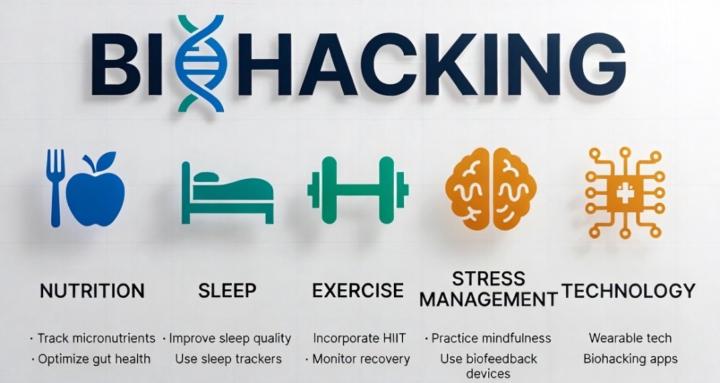
A set of practices aimed at optimizing a person's health and physical and mental performance, using scientific knowledge, technology, experimentation.
Suggested communities
Powered by