
Pinned

6d •
Genesis 3:12–24 — The Consequences of Separation Consciousness
Genesis 3:12–24 — The Consequences of Separation Consciousness The Architecture of Becoming | Part VI: From Blame to Responsibility, From Shame to Wholeness What happens when humanity begins living from a consciousness of fear, shame, and separation rather than the awareness of its divine identity? In this powerful continuation of The Architecture of Becoming, Dr. Joshua D. Mills takes us deeper into Genesis 3:12–24, examining the psychological, philosophical, and spiritual consequences of humanity's changing perception of itself, God, and the world. Building upon our previous teaching, “Who Told You That You Were Naked?”, we move beyond the awakening of shame into the emergence of blame, distorted relationships, personal responsibility, suffering, mortality, and the experience of separation from Eden. Through our signature exploration of Aramaic and Hebraic etymology, psychology, philosophy, metaphysics, quantum-physics analogies, and the ASCEND Framework, we challenge inherited religious interpretations while uncovering transformative principles concerning consciousness, identity, accountability, and the journey toward wholeness. We examine how blame becomes a defense against responsibility, how inherited beliefs and unconscious patterns influence our decisions, and how fear can transform relationships from places of connection into struggles for control. We also explore the deeper significance of humanity's relationship with the ground, the reality
1
0

Pinned
6d •
Stop Waiting to Feel Ready
“Readiness is not always something you feel before you begin. Sometimes it is something you develop because you had the courage to begin.” The Diagnosis One of the most convincing excuses we give ourselves for postponing our lives is the belief that we are simply not ready. We tell ourselves that we need more information, greater confidence, additional resources, better timing, or some unmistakable confirmation that everything is going to work out before we take the next step. On the surface, these explanations sound reasonable because preparation is important, and wisdom does require us to consider the consequences of our decisions. However, there is a point where preparation stops serving our progress and begins protecting our fear. The human mind has an interesting relationship with uncertainty. Because our brains are constantly attempting to anticipate outcomes and protect us from potential threats, unfamiliar experiences can create discomfort even when those experiences represent positive opportunities. We may interpret that discomfort as evidence that something is wrong, when in reality we are simply encountering something we have never experienced before. This is why people can spend years preparing for opportunities they are already capable of pursuing. They continue researching the business instead of launching it, studying the subject instead of teaching it, imagining the conversation instead of having it, or waiting for confidence before making a decision that would actually help develop their confidence. What makes this pattern particularly dangerous is that procrastination can disguise itself as responsibility. We convince ourselves that we are being cautious, strategic, or patient, while avoiding the vulnerability that comes with taking action. Sometimes the problem isn't that you aren't ready. It's that you've made feeling ready a requirement for getting started. The Prescription This week, I want you to reconsider your relationship with readiness. Rather than treating confidence as a prerequisite for action, begin recognizing that confidence is often developed through experience. You become more comfortable doing something by actually doing it, evaluating what happened, making adjustments, and allowing your competence to grow over time.
2
0

Pinned
Jun 25 •
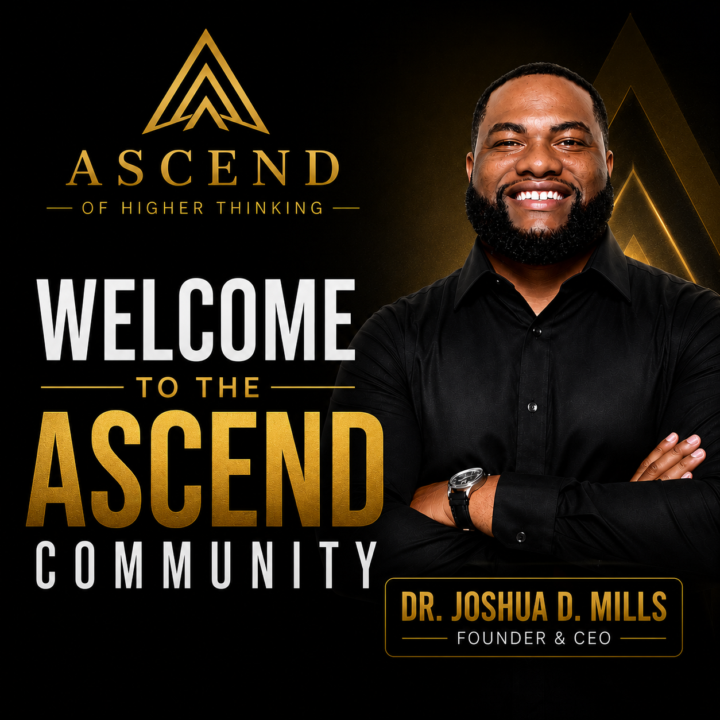
🚀 Welcome to ASCEND!
First, I want to personally thank you for being here. Out of all the communities you could have joined, you've chosen to invest in yourself—and I don't take that lightly. ASCEND isn't just another online group filled with information. It's a transformational community built around one belief: When you change the way you think, you change the way you live. Over the coming weeks and months, we're going to challenge assumptions, ask deeper questions, grow spiritually, develop practical skills, and help one another become the people we were created to be. Everything we do is built around the ASCEND Framework: 🔥 A — Actualization Discover who you truly are. Growth begins with identity. Before you can change your life, you must first understand yourself. "Know yourself, and you'll begin to understand your purpose." 💡 S — Stimulation Expand your thinking. Transformation starts in the mind. We'll challenge limiting beliefs, introduce new perspectives, and awaken possibilities you may have never considered. 🌱 C — Cultivation Develop the habits that sustain growth. Potential means very little without consistency. Here, we'll cultivate wisdom, character, discipline, and healthy patterns that produce lasting transformation. ⚡ E — Execution Put truth into action. Knowledge without action changes nothing. Every lesson is designed to help you apply what you learn to your life, relationships, faith, career, ministry, and business. 👉🏾 N — Navigation Move through life with clarity and confidence. Every season brings new challenges. Together, we'll develop the wisdom and discernment needed to navigate life's opportunities and obstacles with purpose. 🏆 D — Demonstration Become living proof of what's possible. The goal isn't simply to know more. It's to live differently. When transformation becomes visible in your life, you inspire others to begin their own journey. 🔥 Ready to ASCEND? Comment “I’m ALL IN” below. Again, Welcome to ASCEND. Let's grow. Let's lead. Let's ASCEND.— Dr. Joshua D. Mills
15d •
Stop Mistaking Movement for Progress
THE DOCTOR'S PRESCRIPTION Stop Mistaking Movement for Progress “Just because your life is moving doesn't mean you're moving toward the life you desire.” The Diagnosis There is a dangerous illusion that many people live under, and it is the belief that activity is the same as accomplishment. We wake up every morning with an overwhelming list of responsibilities, appointments, conversations, obligations, and expectations. By the time the day ends, we are physically exhausted, mentally drained, and emotionally depleted. Yet when we pause long enough to evaluate what we have actually accomplished, we sometimes discover that we have spent an entire day responding to everything around us without intentionally advancing anything within us. We have become exceptionally skilled at being busy, but not always effective at being purposeful. One of the greatest challenges of modern life is that our attention is constantly being requested, redirected, and consumed. There is always another notification, another opportunity, another conversation, another responsibility, or another problem demanding our immediate attention. Without realizing it, we can become so occupied with managing the demands of our environment that we neglect the development of our own lives. The danger is that busyness can provide a false sense of significance. We begin measuring our value by how much we have to do, how many people need us, and how little time we have available. Eventually, exhaustion becomes something we wear as a badge of honor, and rest begins to feel like irresponsibility. But I want you to consider something: What if the reason you're exhausted isn't because you're doing too much, but because you're doing too much that doesn't align with where you're going? There is a difference between being productive and being preoccupied. One produces meaningful advancement; the other simply consumes your energy. The Prescription This week, I want you to stop evaluating your days exclusively by how much you accomplished and begin examining whether your accomplishments are actually connected to your intentions.

15d •
Genesis 3:1–11 — The Birth of Separation Consciousness
Genesis 3:1–11 — The Birth of Separation Consciousness The Architecture of Becoming | Part V: From Innocence to Self-Awareness What if the greatest shift in the Garden of Eden wasn't simply what humanity did, but how humanity began to perceive itself? In this thought-provoking continuation of The Architecture of Becoming, Dr. Joshua D. Mills explores Genesis 3:1–11, challenging traditional interpretations of the fall of humanity while uncovering the deeper relationship between consciousness, perception, knowledge, fear, shame, and identity. Through an exploration of Aramaic and Hebraic etymology, psychology, philosophy, metaphysics, quantum-physics analogies, and the ASCEND Framework, we examine the serpent's introduction of suggestion, the psychological influence of questioning, and the process through which information becomes belief, belief shapes perception, and perception influences human experience. We explore the profound significance of the Tree of Knowledge of Good and Evil, examining the distinction between acquiring knowledge and developing wisdom. What happens when human beings begin interpreting their existence through judgment, comparison, and fear rather than simply experiencing life? One of the most compelling moments occurs when Scripture declares that Adam and Eve's eyes were opened and they recognized their nakedness. Yet, according to Genesis 2:25, they were already naked and unashamed. Their physical condition had not changed. Their perception of that condition had. This raises a transformative question: Did humanity lose its divine identity, or did humanity begin experiencing itself through a different consciousness? As we examine the emergence of fear, shame, and concealment, we confront the psychological consequences of internalized beliefs and inherited conditioning. We also explore the extraordinary question God asks in Genesis 3:11: “Who told you that you were naked?” This question becomes an invitation to examine the origins of our beliefs, the authority we have given to other people's interpretations, and the narratives we have accepted about ourselves without conscious examination.
1
0

1-30 of 41

skool.com/ascend-institue
The community where identity becomes action, purpose becomes strategy, and potential becomes legacy.
Leaderboard (30-day)
1

+2
2

+2
Powered by