Activity
Mon
Wed
Fri
Sun
Jan
Feb
Mar
Apr
May
Jun
Jul
Aug
Sep
Oct
Nov
What is this?
Less
More
Memberships
Educated Meatheads
2.3k members • Free
Castore: Built to Adapt
492 members • Free
11 contributions to Castore: Built to Adapt

9d •
You’re Fit, Lean… and Foggy? The Hidden Form of Insulin Resistance No One Is Talking About.
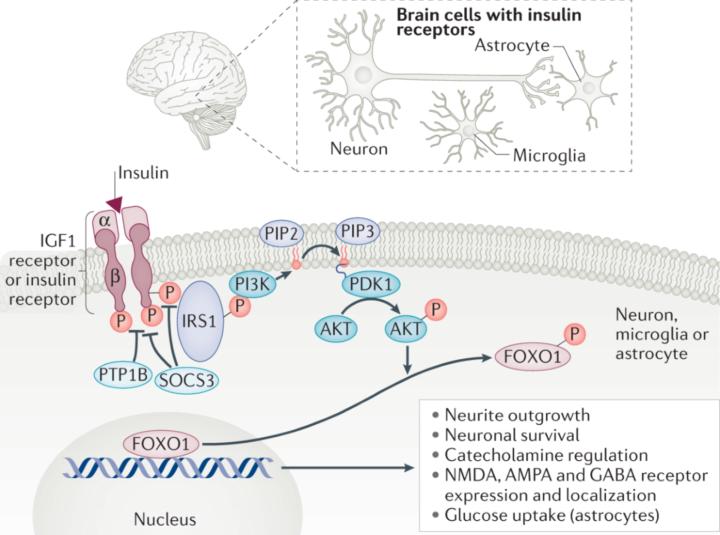
Thanksgiving has a way of slowing life down just enough for you to actually notice what’s been happening underneath all the noise. You sit with people you love, share a big meal, breathe for the first time in weeks, and suddenly you’re able to feel things you usually ignore. Maybe this year, in that moment of stillness, you noticed something strange: your body feels strong, your training is dialed in, your glucose looks perfect… but your brain doesn’t match how good the rest of you feels. Maybe you felt foggy after a meal, mentally slower than usual, overwhelmed for no reason, or just “not as sharp,” even though everything on paper says you’re metabolically healthy. If that sounds familiar, you are not alone and there’s a real physiological explanation behind it. How can someone be physically insulin-sensitive yet mentally sluggish? How can your muscles get the fuel they need while your brain feels like it’s running on fumes? This article is written for you, to answer exactly that question. Central insulin resistance is the phenomenon where your brain becomes insulin-resistant even when the rest of your body remains highly insulin-sensitive. Many people experience this as a strange mismatch: they feel physically strong, metabolically healthy, and steady during training, yet their cognition feels foggy, slow, unpredictable, overwhelmed, or “under-powered.” This article explains why that happens, what the mechanisms are, how to recognize the patterns, and how to fix them, using simple language without sacrificing the biochemical accuracy that clinicians and experts expect. The first thing to understand is that the brain handles insulin differently from the rest of the body. Your muscles and liver respond directly to insulin in the bloodstream. The brain does not. For insulin to have any effect in the brain, it must cross the blood–brain barrier, bind to receptors on neurons, activate the PI3K-Akt pathway, and allow neurons to take up and use glucose. If anything disrupts that sequence, neurons will be under-fueled even if the entire rest of the body is functioning perfectly. This is why someone can have excellent fasting glucose, low insulin, perfect CGM curves, and still feel terrible cognitively. The brain can become insulin-resistant before the body gives any signal.

3 likes • 9d
@Anthony Castore wow, this is eye-opening! I feel like I have stress induced brain fog… Not that this is related exactly, but it made me think about it: is there a condition that would cause loss of coordination and always dropping things, when you’re seemingly in good health, good training regimen and good body composition? Just wondered if it would have something to do with the brain being under fueled.
3 likes • 9d
@Anthony Castore OMG, I totally have this! The amount of times I drop things these days is so irritating, ugh. And my proprioception seems to be a little off too. I went to smell raw chicken to see if it was still good and hit myself in the face with it. Gross! Lol.
26d •
Peptides for hypothyroidism
Curious, if there are Peptides to improve thyroid function for hypothyroidism. And/or if there are ones in particular that should be avoided
1
0
26d •
Peptides for Hypothyroidism
Curious, if there are Peptides to improve thyroid function for hypothyroidism. And/or if there are ones in particular that should be avoided
1
0
Nov 5 •
BPC-157 plantar fasciitis
Hi all! I’m looking for advice regarding dosing and injection site recommendations for plantar fasciitis. I know it can be beneficial when injected close to the injury, but not sure how that would work sub Q on a foot. 😄 Thanks!
1 like • Nov 5
@Drew Wurst thanks! I only have the BPC 157. It sounds like I can inject it anywhere sub q, but what about dosing and frequency?
1 like • Nov 5
@Drew Wurst Right. I meant in conjunction
Oct 20 •
October Q&A Saturday 25th 12 noon EST (link posted at the bottom of this announcement)
Join me for our October Live Q&A on Saturday, October 25 at 12:00 p.m. EST. We’ll dig into peptides, mitochondrial medicine, training and recovery design, and real-world protocol troubleshooting. Bring your questions (big or small), wins, sticking points, and labs or metrics you want decoded. Come ready to learn, take notes, and leave with clear next steps you can use the same day. To submit a question in advance, reply to this post with “Q&A” at the top and a concise summary of your question; live questions will be taken in order after pre-submissions. Save the date, invite a friend who’d benefit, and I’ll see you Saturday at noon. Here is the link to watch the replay of the Q&A thank you everone for joining and thank you for sending your questions in! https://us06web.zoom.us/rec/share/pcj7EkP9JA9hgj2SIcHeiFFgml4klErn_CRj33Nbb10OM0gmzh7itR_vKyHGXXwd.Cs3mioaqFw2jbYHe?startTime=1761407862000 Passcode: e4T2tR!l
0 likes • Oct 30
I’m still a little bit confused on if and when to use NAD… how do you know if you’re in a state that needs it? Or would benefit from it? If you’re taking it along with mot C, glutathione, and SS – 31, would it do harm?
1 like • Oct 31
@Katharina Clig hi! Thank you! That does help! I just wasn’t sure if he had said there was a circumstance where it was appropriate to include it. Appreciate your help :-)
1-10 of 11