Activity
Mon
Wed
Fri
Sun
Oct
Nov
Dec
Jan
Feb
Mar
Apr
May
Jun
Jul
Aug
Sep
What is this?
Less
More
Deconstructing with Aleeza
48 members • Free
5 contributions to Deconstructing with Aleeza

Jul 21 •
YOU THINK I TALK ABOUT RACE TOO MUCH.
June Christian: "What you mean is that white people should have veto power over how plainly I name it. Racism may remain brutal, but the language describing it must be washed, folded, and placed gently beside white innocence. The harm may stay raw. The conversation must arrive moisturized and speaking in a soothing voice. Nobody calls racism divisive. They call the person who interrupts it divisive. The building may burn for generations without becoming impolite, but the alarm is accused of ruining the atmosphere. Apparently, the emergency is not the fire. It is that somebody interrupted brunch to mention the smoke. “Playing the race card” admits there is a game, that the cards carry power, and that outcomes involve more than effort. “Reverse racism” confesses even more. It reveals a belief that racial harm becomes unacceptable only when white people imagine it might travel in their direction. White people are not angry that race has power. They are angry that they might not control all of it. Toni Morrison wrote in *Playing in the Dark* about how Blackness helped construct the American imagination while whiteness remained unnamed, unexamined, and mistaken for universal. Black people became racial while white people simply became people. Black writing became identity literature while white writing became literature. Black anger became a problem while white comfort became the atmosphere everybody else was expected to breathe. Did you notice who “you” was? Until now, I had not explicitly said white people. I did not need to. Everybody knew that the unnamed person whose discomfort organized the argument, whose innocence required protection, and whose objections demanded an answer was white. That is how thoroughly whiteness has been standardized. It does not merely occupy the center. It removes its name from the seating chart, calls the center neutral, and treats everybody else like a special interest group requesting five minutes on the agenda. The unnamed leader, scholar, homeowner, expert, candidate, and citizen is white until an adjective announces otherwise. Black writer. Latina executive. Asian candidate. Indigenous scholar. Woman president.


1 like • Jul 22
ya 'master race' my ass Great and informative material "Racism is not inherited through blood"
1 like • Jul 22
Something i found is that whiteness simultaneously keeps me miserable while saying i'm the best. This yes AND no mindset scrambled the brain, many people's cognition may be blind to this because it doesn't make any sense, people will be trained to overlook this
Jun 17 •
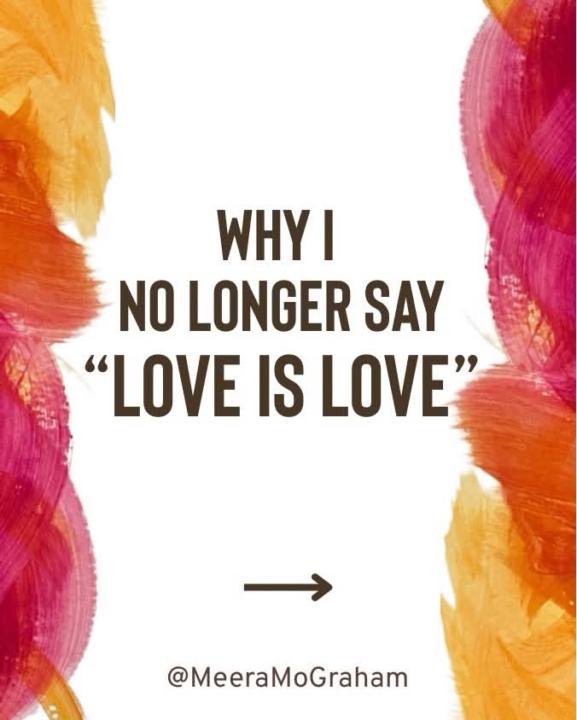
Why I no longer say “love is love”
Here’s why I no longer say “love is love”: For the longest time, I used stories about my life to “educate” straight folks and cis folks (and yt folks, but we can talk about that another time) I’d share precious anecdotes: “look at my husband doing lovely, mundane things - yup, he’s trans, and gosh darn it, he’s a person just like you!” “Look at us - a Queer Woman of Color and a white trans guy doing life together: we love each other, just like cis-het couples do!!” “LOVE IS LOVE!” But then I realized - through the work I do - that most dominant-identity people are socialized to only feel comfortable with marginalized people when they find a way to relate to us; when they notice “sameness.” In this paradigm...difference is treated like a social threat. “BUT look at how UN-different you are!” becomes a way to avoid looking that in the eye. So every time I tried to prove how relatable we were, I was feeding that pattern. Upholding and enabling it through my own actions. And giving that message to MYSELF. So that’s why I’ve stopped saying “love is love.” And replaced it with things like: Difference is sacred. Dignity is universal. This is who I f*cking am. I’m not asking for your approval. Happy Pride, fam. Stay bold and true. Meera ✊🏽🏳️🌈 https://www.facebook.com/share/1CuP5GeXuA/ ______________________________ I'll add that plenty of racist people say they "love" Black people. So I willadd that my list of reasons not to say love is love, too.
0 likes • Jun 20
Great way to put this!
Feb 22 •
🎬 Take the Stage: Introduce Yourself!
Welcome to Deconstructing Race, Racism & Theatre! Drop: 🎭 Your name & pronouns 📍 Where you’re joining from 🖤 One reason you joined 📸 A photo of your workspace, rehearsal room, or favorite creative corner Bonus: If your life were a play right now, what would this chapter be called?

1 like • Jun 16
Hi, Sam, she/they, joining from wherever my VPN says I am. Joined to craft a healthy identity, humanize myself and humainze everyone. Humanization was bred and conditioned out of me and I'm taking in and absorbing all that I can
Jun 15 •
90 day fiancé Kim about her adoptions
Kim really deserves her own post as it is A LOT to unpack. Kim had two children before Jamal. Jamal believed he was an only child. Kim pretending to be Jamal, catfished her other son until she couldn't keep up the lie and had to confess. She got them both together and revealed she had yet another child, a daughter. In the entire situation, it is about "her" and not her children's feelings. she simultaneously uses her children to process her emotions through. Centers herself as the victim in the situation, because she feels bad for lying and keeping secrets. Then proceeds to urgently speed past the topic into trying to find her daughter. It is very selfish.
1 like • Jun 16
My wife knows all about 90 day, i read this to her and she was like "YUP, she is very weird around Black men. She made everything about herself and cried for support"
Jun 7 •
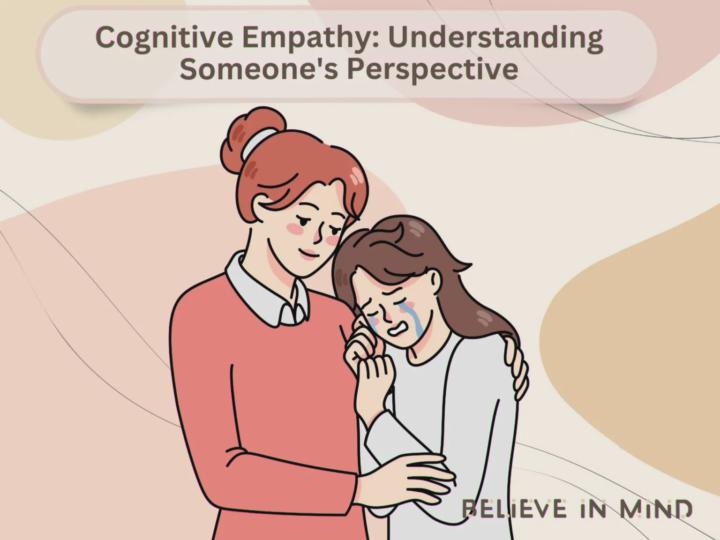
Defining Empathy: What Is It and Why Does It Matter?
Empathy is the ability to understand and share the feelings of others. It involves recognizing, understanding, and sharing the thoughts and emotions of another person. There are different levels of empathy, but at its core, empathy allows you to connect with others on a human level. Why does empathy matter? Developing empathy gives you perspective, allowing you to see issues from multiple sides. It helps build trust and strengthen relationships. People prefer to interact with those who show they understand and care about their thoughts and feelings. Empathy reduces conflict and fosters cooperation, as you can see an issue from another’s viewpoint. And empathy makes the world a more humane place overall – when more of us strive to understand each other, humanity as a whole benefits. So empathy is a crucial skill. The more you can understand what others are thinking and feeling, the better you can communicate and connect. Empathy lubricates the gears of human interaction, allowing relationships to run more smoothly. The different types of empathy just give you more tools to develop this ability. Types of Empathy: Cognitive, Emotional and 6 More Types
0 likes • Jun 7
Great read! Really detailed and expanded my understanding of empathy. Thanks for sharing!
1-5 of 5

Active 43d ago
Joined Jun 7, 2026