Activity
Mon
Wed
Fri
Sun
Jan
Feb
Mar
Apr
May
Jun
Jul
Aug
Sep
Oct
Nov
Dec
What is this?
Less
More
Memberships
Rishab Academy
32.4k members • Free
291 contributions to Rishab Academy

Oct 29 •
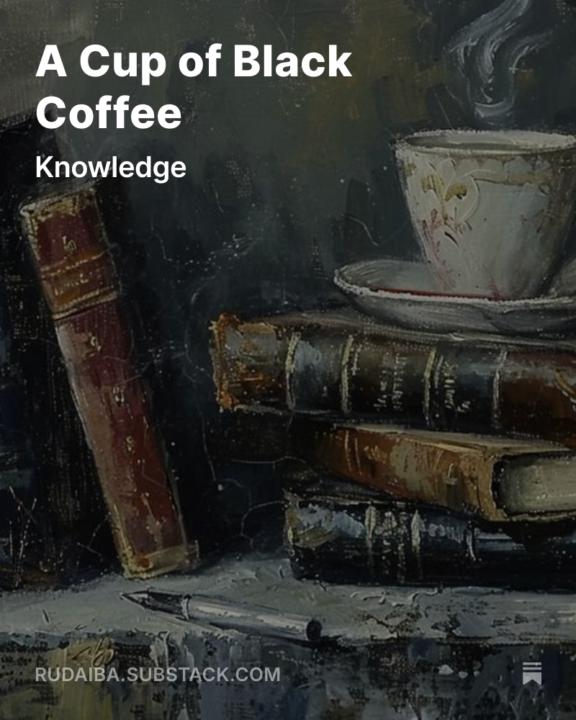
A Cup of Black Coffee
Song of the post: https://open.spotify.com/track/5T8Qmcwch4KzE8uDvAKJ42?si=645a6beacd854286 Everyone’s hungry. Hungry for knowledge. Some more, some less. But at the end of the day, when you ask a group who wants knowledge, every single hand goes up. Blind hands, that is. Now, ask the same group why they want knowledge. How many do you think would have a real answer? Zero. Absolute zero. Why? Because at the end of knowledge lies emptiness, so vast and so full it’s inconceivable. Knowledge does not equal intelligence; it does not make you clever. Knowledge is simply a herd of information you’ve learned to interpret. And anyone can do that. Get a guy, any guy with zero experience with literature, someone who hates reading, for example. Hand him a copy of James Joyce's Finnegans Wake, one of the hardest pieces of literature ever produced by man. It explores the collective unconscious and the interplay of myth and history, something we still can’t grasp to this day. The language in the book follows such a dream-like narrative that to even try to read it, you need to know three languages— Irish, English, and German, and even then, some words are so phonetically written that it is said that to understand it, you must read it out loud. Or, if you want to focus more on the quantity of information, hand him a copy of the Mahabharata, the whole thing, not just one division(out of 18). In Bangla, we say, “যাহা নাই ভারতে তাহা নাই ভারতে” [jaha nai bharat e, taha nai bharat e] (What’s not in Bharat, is not in Bharat) Here, the first Bharat is referring to the Mahabharat, and the second Bharat translates to India, in direct translation, but when it was written, they would’ve been talking about not just the India we know today, but the entire Indian subcontinent from before. This subcontinent was divided into three main parts: Bangladesh, Pakistan, and India. Among them, Bangladesh was the smallest. Yet if you just look at Bangladesh, you’ll find all four major religions well established, more than fifty indigenous communities with sizable populations, and even within the Bengali people, an ancient lineage that is deeply diverse. Just imagine the cultural heritage packed into this smallest piece of the subcontinent.
1
0

Oct 14 •
From Struggle to Strength: My Journey
There was a time not too long ago when life felt like it was closing in on me. I was working a 9 to 5 job, doing everything I could to keep things together. I jumped from one job to another, warehouse shifts, delivery runs, late-night security, you name it. But no matter how hard I worked, it always felt like I was running in circles. I’m a father of two beautiful kids, my son, Ethan, and my little princess, Mia. They’re my whole world. Their smiles were the only thing that kept me going when I was falling apart inside. Their mother and I went our separate ways some years ago, so it’s just been the three of us. And to be honest, raising two kids alone while trying to make ends meet wasn’t just hard, it was exhausting. Then one day, everything seemed to crash. Mia got sick. It wasn’t something I could ignore; she needed help, fast. I remember standing in the hospital parking lot, holding my head in my hands, realizing I didn’t have enough money to cover her treatment. The worst part? People around me, friends, coworkers, even family, started judging, laughing, saying things like You should’ve planned better. That night, I broke down. I felt like a failure as a man, as a father, and in every aspect. But that same week, something unexpected happened. A guy I once worked with reached out. He said, Man, I’ve been exactly where you are. I know that pain. I was stuck, broke, and hopeless until I found a way out through online business. At first, I didn’t believe him. I thought it was just another empty promise. But something in me said, What if this is the chance you’ve been praying for? I decided to listen. I decided to learn. I decided to fight back. Fast forward a few months and no, it wasn’t easy. But today, I’m grateful to say I’ve built something real. Something that lets me be there for my kids. Something that brings in income even when I’m home helping with homework or cooking dinner. It’s not just about money anymore. It’s about freedom. It’s about hope. It’s about proving to myself that I can rise again no matter how hard life hits.
1 like • Oct 14
Goodluck with your journey! I believe you can rise too!
1 like • Oct 29
@Ralf Becker I uhh never had a business...?...??..
Oct 8 •
Science Fair
How long does it usually take to finish a science fair project (studying a disease), and when should I start preparing for next year?
0 likes • Oct 14
I think it depends on you. You can get a perfect project in 3 months if you know what you're doing. But, there's always room to improve. You can, for example, make higher-quality deliverables, maybe you can finish your initial research ahead of time so you can get it reviewed by other experts, or you can send your work to someone in that field and request a chat/mentorship. I have projects I did the night before the science fair and won, too. So, there's really no timeframe. Just try to give yourself a realistic timeline. For example, if I have something and I'm just putting it into words, it should be done in a week; if I have a research ready and I just need to reassemble a small/simple model, it should take a day; If I'm working on a topic that I have some experience in, it could take 6 months; if I'm working on a topic I never touched, it could take an year; if I work on something where, my initial studies are done and I can start real work/building phase, it could take 3 months and so on. These times are just estimates for me. They change based on experience and circumstances. One thing I would say, though, is SCOPE DOWN. Don't just study a disease like that. There's so much work into these prominent diseases that you can't study them in a lifetime. So, I would suggest focusing on scoping down to maybe 1 cause, 1 approach, or 1 part of the disease. For example, if I'm working with Alzheimer's disease, one of the things that causes it is glycation. Glycation produces AGEs, which are chemical bonds, so we should find a way to break these chemical bonds. The most abundant AGE is Glucosepane. Glucosepane can be hard to reach if it's deep inside arterial walls; there are a lot of barriers with nano targeting these. A catalytic approach is better, maybe use an enzyme, but getting that enzyme to reach there is hard, so maybe we can do a catheter approach. So, my study would be on increasing the binding affinity of engineered enzymes to glucosepane to reduce glycation damages, making a positive counter for aging issues such as muscle stiffness and Alzheimer's.

Oct 9 •
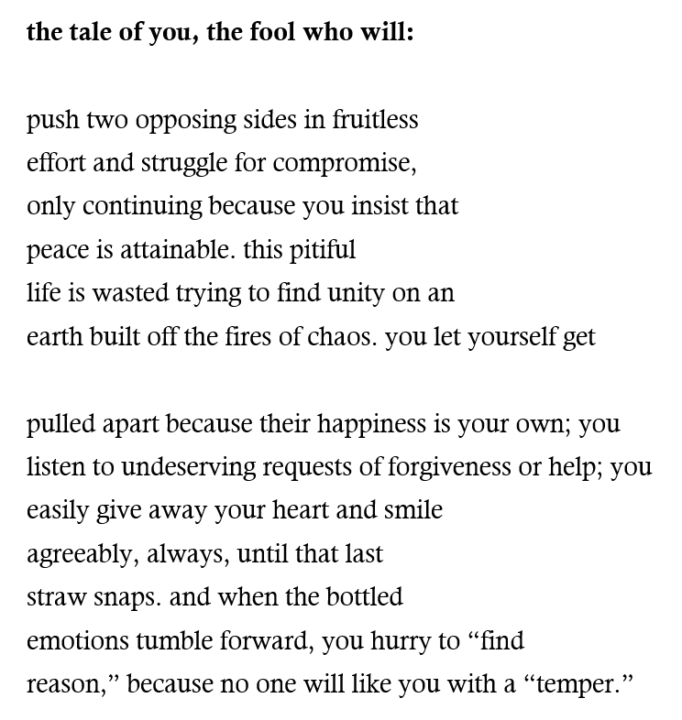
reflection
i think it's an interesting phenomenon, where we want to be lazy but also can't stand it. i think it's because we feel like we have to find some purpose or meaning in life, or we'll basically go insane, and when you can't find it within yourself, you cling onto any opportunity given by others to have some role in society. honestly, i'm guilty of this myself. it's not bad, per se, but relying on others to find your purpose makes it harder to find it on your own. it's not impossible. just a lot more difficult to get into the mindset that puts you first.
0 likes • Oct 14
EMILY TT
0 likes • Oct 14
I miss you soo much!!

Oct 13 •
STEM journals
Hi, this is Richard. I’m looking for ambitious high school students that are willing to work on writing short essays or paragraphs on STEM, including mathematics, physics, computer science, chemistry, biology, etc. This will be a great opportunity to demonstrate your interest and knowledge in your specific field of STEM, and your articles will be read by your fellows or even younger kids. This is an opportunity to make a difference. If you’re interested in collaboration, leadership positions, or just writers, please dm me. Keep in mind that there would be a selection process where we find experts in each of the fields. Look forward to working with you!
0 likes • Oct 14
Can you elaborate on what you're offering? I could start writing articles and blogs for people online today and make money. Even when it comes to making an impact, those websites have a great readership. So, what makes you different and worth it?
1-10 of 291
Active 7d ago
Joined Jun 15, 2024
ENTP
Dhaka, Bangladesh
Powered by