Activity
Mon
Wed
Fri
Sun
Aug
Sep
Oct
Nov
Dec
Jan
Feb
Mar
Apr
May
Jun
Jul
What is this?
Less
More
Memberships
130 contributions to AI Automation Society

Sep '25 •
European AI Amid the Clash of Titans
If you believe the headlines, European AI and Europe are on the brink of an AI breakthrough. Every week, there’s another press release about a “European champion” – Mistral AI in France, Aleph Alpha in Germany, Silo AI in Finland, the latest pan-European initiative. Add in German Telekom partnering with NVIDIA, Norwegian OpenAI infrastructure build, and it all looks like we are catching up with the US giants. But the European boardroom question looms large: Are we really building independent, sovereign and SECURE European AI, or just rebranding imported technology and feeding our company secrets to intelligence services and calling it progress? Let’s cut through the marketing, the regulatory fanfare, and the unicorn hype to get to the facts that actually matter for Europe’s future. 𝔼𝕦𝕣𝕠𝕡𝕖'𝕤 "ℕ𝕒𝕥𝕚𝕠𝕟𝕒𝕝 ℂ𝕙𝕒𝕞𝕡𝕚𝕠𝕟𝕤" - 𝕆𝕣 ℕ𝕒𝕥𝕚𝕠𝕟𝕒𝕝 ℍ𝕠𝕤𝕥𝕒𝕘𝕖𝕤? Let’s start with the reality behind the leading names: - Mistral AI (France): The poster child for French AI innovation, with strong government backing and big funding rounds. - Aleph Alpha (Germany): Promoted as the German alternative to OpenAI, focused on explainable, enterprise-ready LLMs. - Silo AI (Finland): Now positioning itself as Europe’s largest private AI lab, recently going all-in with AMD for its compute stack. - German Telekom + NVIDIA: Germany’s “sovereign” AI cloud partnership, meant to offer European businesses an alternative to the US Big Tech clouds. On the surface, these all sound pretty good, and they sound like real progress. But a closer look exposes a much more complicated, and, for the cautious board member, a worrying landscape. 𝕋𝕙𝕖 𝕀𝕟𝕥𝕖𝕝𝕝𝕚𝕘𝕖𝕟𝕔𝕖 𝕃𝕒𝕨 ℙ𝕣𝕠𝕓𝕝𝕖𝕞: 𝕎𝕙𝕠 ℝ𝕖𝕒𝕝𝕝𝕪 𝕆𝕨𝕟𝕤 "𝕊𝕠𝕧𝕖𝕣𝕖𝕚𝕘𝕟𝕥𝕪"? Few outside the deep compliance and infosec world are talking openly about this: Any European AI company headquartered in France or Germany is directly subject to local intelligence and surveillance laws. - In France, the Intelligence Act (“Loi Renseignement”) gives state agencies sweeping powers to require data access from local tech companies, even in the name of “national security” (see itnews). - In Germany, the new Federal Intelligence Service Act (BND law, as amended in 2022) also mandates cooperation and data sharing with the intelligence agencies when required, allowing state trojans and telephone hacking, among other “perks”, completely without cause (see freiheitsrechte).

1 like • Sep '25
Europe is indeed facing tough choices. The vast majority of its tech, be it cloud, AI, software or whatnot, is American. I can only assume this trend is global, yet I can only speak for Europe. The old continent is driving itself into a corner. Europe is making legislation that excludes the only provider that would keep it in the game. Schrems II annulled Privacy Shield, Data Privacy Framework excludes high-sec, European companies are left alone at large. AI is no exception. We need more builders who see the big picture, more voices to speak for sovereignty. It's tough to create a new market alone, I welcome you all to join us. It's not an easy path, but Europe is the second-largest economic area in the world. For Europeans, the option is to stay at flipping burgers. Sure, you can make a quid in fast automations, but what happens when the regulators audit your processes? Hyperscalers won't get you far in Europe, you need sovereign solutions. Talk is cheap. Start building. Don't know how? Find someone who does and team up.
Sep '25 •
OpenAI released report on why LLMs hallucinate
Hallucinations are a predictable byproduct of the way models are tested and rewarded during training. Models guess rather than admit uncertainty because testing in training rewards accuracy - not honesty. This report is a milestone because it shifts hallucinations from a mystical flaw that's something inevitable and poorly understood to a solvable engineering problem. It means LLMs can be trained to say "I don’t know", if, and only if, we reward them for it. Now that we know why, 𝘸𝘦 𝘤𝘢𝘯 𝘢𝘤𝘵𝘶𝘢𝘭𝘭𝘺 𝘥𝘰 𝘴𝘰𝘮𝘦𝘵𝘩𝘪𝘯𝘨 𝘢𝘣𝘰𝘶𝘵 𝘪𝘵. https://cdn.openai.com/pdf/d04913be-3f6f-4d2b-b283-ff432ef4aaa5/why-language-models-hallucinate.pdf
Sep '25 •
𝗘𝗨 𝗳𝗶𝗻𝗲𝘀 𝗚𝗼𝗼𝗴𝗹𝗲 €𝟮.𝟵𝟱𝗕. 𝗧𝗿𝘂𝗺𝗽 𝘁𝗵𝗿𝗲𝗮𝘁𝗲𝗻𝘀 𝗿𝗲𝘁𝗮𝗹𝗶𝗮𝘁𝗶𝗼𝗻.
Today it’s tariffs and trade threats - tomorrow, who knows? Europe’s entire digital stack still runs on American platforms. True digital sovereignty means Europe isn’t left exposed, no matter who’s in the White House. It’s not about fear, it’s about realism. What happens if the political climate shifts and "business as usual" is off the table? Are we ready for that day? https://www.euronews.com/my-europe/2025/09/06/trump-threatens-retaliation-after-eu-hits-google-with-antitrust-fine
0 likes • Sep '25
Unfortunately, @James Thornton, you couldn't be further off. EU is not competing in the "AI Arms Race", as you put it. And while the EU fined Google, so did Australia and the US govt itself, too. The US govt itself is demanding of dividing of the company. The bottom line is, Google is making contracts against the law, not following previous court orders and is, well, generally, not giving a rat's ass about the law. The news in this circus is Trump and his reaction.
0 likes • Sep '25
An all-time low, @James Thornton, to assume and to jump into Ad Hominem. I'm not even going to amuse myself with your poor arguments about "hate"; let's just agree that my feelings are irrelevant to the facts. A question: What exactly is the EU in with the "AI Arms Race", as you put it? With Mistral? Aleph Alpha? Please... We both know neither has anything to race the US leaders with. I repeat, you couldn't be further off. And let me explain why. The fine has nothing to do with AI. The causality is your subjective view, and most likely fueled by your personal views of the world: "AI is the new oil, hence everyone's competing for it." Here's a newsflash for you, though: The law in the EU is not altered by the national interests, as in some third-world countries. You break the law, you pay the price - it really is that simple. There are plenty of summits in the EU every year. That's not proof of anything. Like I mentioned above, and like Guy also stated above, the real news is Trump (a head of state) threatening an allied continent for daring to apply its own laws to an American company. - This isn’t about Europe’s digital weakness. - It’s not a tech arms race. - It’s not even about who wins in AI. It’s about political interference, double standards, and the breakdown of respect for the rule of law when the law applies to the "wrong" company. All while the "national prides" sits at the dinner table with the head of state. https://www.euronews.com/2025/09/05/elon-musk-sidelined-from-donald-trumps-white-house-dinner-with-us-tech-executives If you're about to argue, at least keep it civil and to the facts.
Sep '25 •
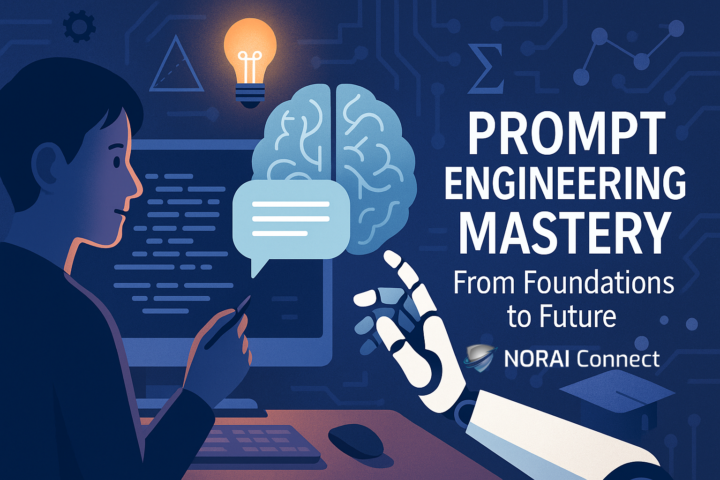
𝗡𝗲𝘄 𝗥𝗲𝘃𝗶𝗲𝘄𝘀 𝗥𝗮𝗶𝗻𝗶𝗻𝗴. 𝗔𝗹𝗹 𝗥𝗲𝘃𝗶𝗲𝘄𝘀 𝟰 𝗼𝗿 𝟱 𝗦𝘁𝗮𝗿𝘀!
Here's just a few: "Curso que te ayuda a ser consciente de la importancia de un buen prompt." "This course is a great starting point for someone with zero technical or AI background" "The content is clear, concise, and well-organized, making practical application easier." "enjoyed it. learned a lot. Grateful it was free" 👇 Share with your team, great way to upskill the entire crew - for free! https://www.norai.fi/courses/prompt-engineering-mastery-from-foundations-to-future/
3
0
Sep '25 •
Why European builders fail
As a European, I can't help but be amazed by the sheer ignorance the European builders pose across the industry. Without throwing stones or pointing fingers (as it is important to support and encourage, rather than look for flaws), it seems that the average Joe is in his 20s, watched a few videos and is thinking "how hard can this be", without acknowledging the compliance wall in Europe. GDPR and the EU AI Act are not jokes or something to bypass because everyone else does so too. The average European builder doesn't seem to realise that "everyone else" are not European, and hence, are not bound by the same laws. European companies cannot risk their business by breaking the law, and most of the API spaghetti wrappers do exactly that. Then the average European builder wonders why no one buys, without realising that while there's possibly nothing wrong with the offer and build, it's the market that's wrong. European companies will not risk permanent reputation loss and possibly millions in fines just to automate document handling and save a few hours. It's simply not worth the risk. Another chapter is the South Asian builders who think they can enter Europe with their own set of rules and build in Europe what they're building in South Asia. Newsflash: Epic Fail. Not knowing the market is calling for trouble. These builders won't last a year.
0 likes • Sep '25
@James Thompson or even more so, compliance-product-market fit. Not caring about the regulations is a dead-sure way to exclude oneself from the serious business. Tinkering aside, if all you can say about GDPR-compliance is "Voiceflow says it's compliant" without understanding that compliance isn't a checkbox, the McD awaits. the regulations are not getting any looser, and the rest of the world is watching - and catching.
0 likes • Sep '25
@Jantore Suleimenov You misread my post. I'm not criticising the regulation, I'm criticising the builders who don't bother to study the market. Furthermore, your statement about "over-regulation" in the West is simply a distortion of perception, most likely caused by a subjective point of view. Mistral is French, Aleph Alpha is German, NVIDIA is partnering with Deutsche Telekom, and so on and so forth. Every Single Major AI initiative and venture comes from... where? From the West. It is plausible that the VC-bias affects the market, but unlikely so much - any initiative worth investing gets funded (again, subjective opinion about what is worth the investment does not count). It's not regulation that's holding European builders back, it's the lack of understanding and respect for the unique demands of this market. If no-code tools and API spaghetti is all the builders have to offer, they'll be flipping burgers after 2027. because the EU AI Act isn't a suggestion. It's the new reality.
1-10 of 130

@viclausas
Father, CEO, Chair, Author, Entrepreneur, 7x Founder
🇫🇮 🇬🇧 🇪🇸
- CEO @ northatlantic.fi
- Free AI Courses @ norai.fi
Active 11d ago
Joined Jan 7, 2025
INTJ
Finland
Powered by