Activity
Mon
Wed
Fri
Sun
Aug
Sep
Oct
Nov
Dec
Jan
Feb
Mar
Apr
May
Jun
What is this?
Less
More
Memberships
Stock Options Strike Zone
17 members • Free
60 contributions to Future Producer Society

2d •
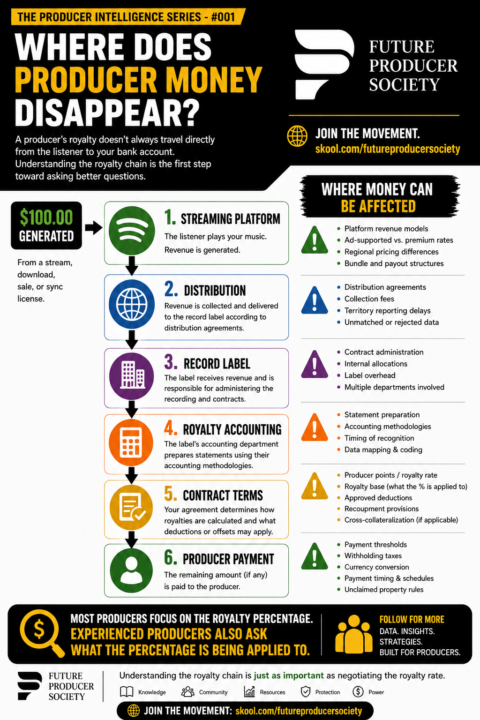
Where Does Producer Money Disappear?
🚨 Producer Intelligence Series #001 - Where Does Producer Money Disappear? One of the biggest mistakes I made early in my career was believing the royalty percentage told the whole story. It doesn't. Your royalty percentage is only one piece of a much larger system. Before a producer payment is calculated, money typically passes through multiple stages: • Streaming Platform • Distribution • Record Label • Royalty Accounting • Contract Terms • Producer Payment Each stage has its own contracts, reporting processes, accounting rules, and business decisions. Understanding that chain can completely change the questions you ask when reviewing agreements or royalty statements. This infographic is just an introduction. Inside Future Producer Society, we'll go much deeper into topics like: ✅ Producer royalty calculations ✅ Royalty bases ✅ Accounting terminology ✅ Common contract provisions ✅ Metadata & payment workflows ✅ AI-assisted royalty analysis Discussion Question If you could ask a royalty accountant, entertainment attorney, or label executive one question about producer royalties... What would it be? Drop it below. I may answer it in the next Producer Intelligence Series post.
1
0

3d •
Introduce yourself
Wuz Hatnin my fellow music makers. SS Uhnk checking in. It's been a minute. Live in metro Atlanta area and yeah I'm ready to keep leveling up. Hopefully some of us can link. 🫡
0 likes • 2d
Welcome!

0 likes • 2d
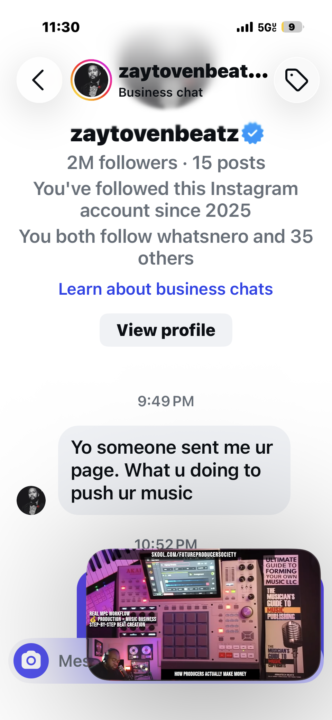
Most often these are bots trying to sell you fake streams or promo services. Beware, and definitely DO NOT CLICK on any links as it may compromise you account.
5d •
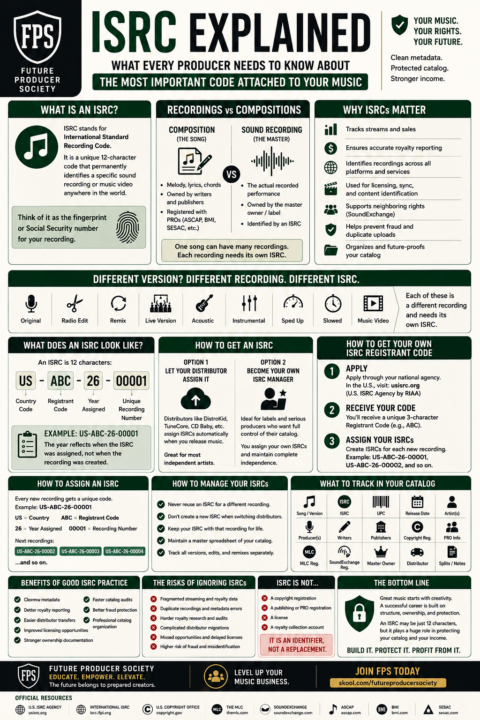
ISRC Explained: What Every Producer Needs to Know About the Most Important Code Attached to Your Music
If you've ever distributed a song through DistroKid, TuneCore, CD Baby, Symphonic, or another distributor, you've probably noticed something called an ISRC. Most producers see it, accept it, and move on. The problem is that very few creators actually understand what an ISRC is, why it matters, or how it affects their ability to collect royalties, organize their catalog, and prove ownership of their recordings. In today's AI-driven music industry, understanding metadata is no longer optional. Your music is competing in an ecosystem where millions of tracks are uploaded every month, and every recording needs a digital identity that follows it wherever it goes. That's exactly what an ISRC does. What Is an ISRC? ISRC stands for International Standard Recording Code. Think of it as the fingerprint or Social Security number for a sound recording. Every commercially released recording receives its own unique ISRC that permanently identifies that recording anywhere it appears in the world. Whether your music is streamed on Spotify, sold on Apple Music, licensed for television, uploaded to YouTube, or distributed to dozens of digital platforms, the ISRC is one of the primary identifiers that tells the industry exactly which recording is being used. One of the biggest misconceptions among independent artists is believing an ISRC identifies the song itself. It doesn't. It identifies the recording. That's an important distinction. Songs and Recordings Are Not the Same Thing Imagine you write a song called Never Looking Back. That song is the composition. Now imagine you create: - The original studio version - An acoustic version - A live version - A remix - An instrumental - A radio edit - A sped-up version - A slowed version They're all based on the same composition. But they are different recordings. Each recording should have its own ISRC because each one represents a unique master recording. This is why you'll often hear music professionals refer to "the composition side" and "the master side."
8d •
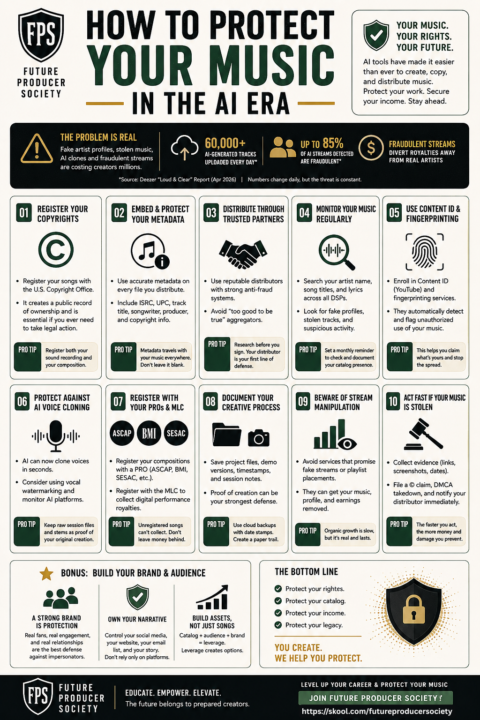
How to Protect Your Music in the AI Era
AI is creating incredible opportunities for producers—but it's also creating new ways for your music, identity, and income to be exploited. Every week we're seeing: - Fake artist profiles - AI voice cloning - Stolen uploads - Metadata abuse - Stream manipulation - Copyright confusion The good news? Most of these problems are preventable if you build your music business the right way from the beginning. That's why I put together this infographic. Inside you'll learn 10 practical steps every producer should be taking right now to protect their catalog, rights, royalties, and long-term career. Remember: Your catalog isn't just music. It's an asset. Protect it like one. 👇 After reading it, let me know: Which of these 10 steps have you already implemented, and which one surprised you the most?
1-10 of 60

@arkatech-beatz-7757
Multi-platinum producers Arkatech Beatz (Pun, Nas, Jadakiss, Prodigy, Gibbs, Killer Mike) teaching creators to win in today’s music industry.
Active 1d ago
Joined Aug 23, 2025
Atlanta, GA
Powered by